Departamento de Biotecnología Microbiana y de Plantas, Centro de Investigaciones Biológicas Margarita Salas, Madrid, Spain.
Centro de Investigación Biomédica en Red de Enfermedades Respiratorias, Madrid, Spain.
J Virol. 2021 Jun 24;95(14):e0032121. doi: 10.1128/JVI.00321-21.
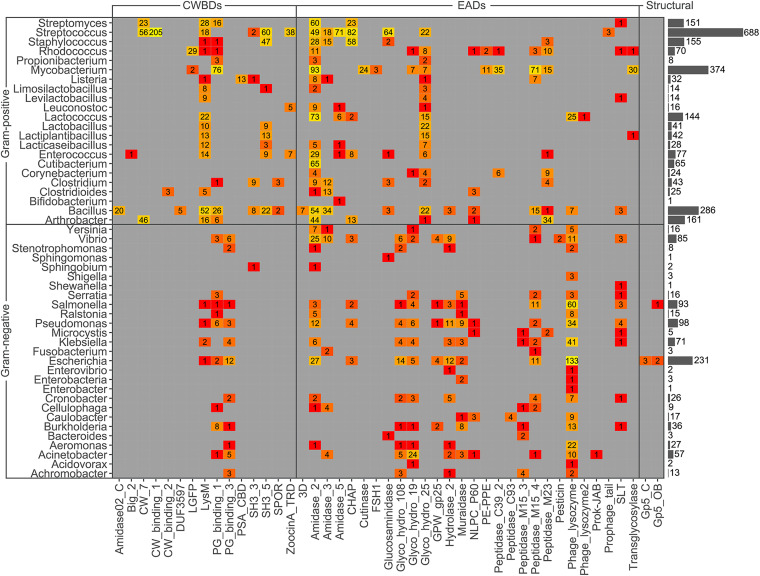
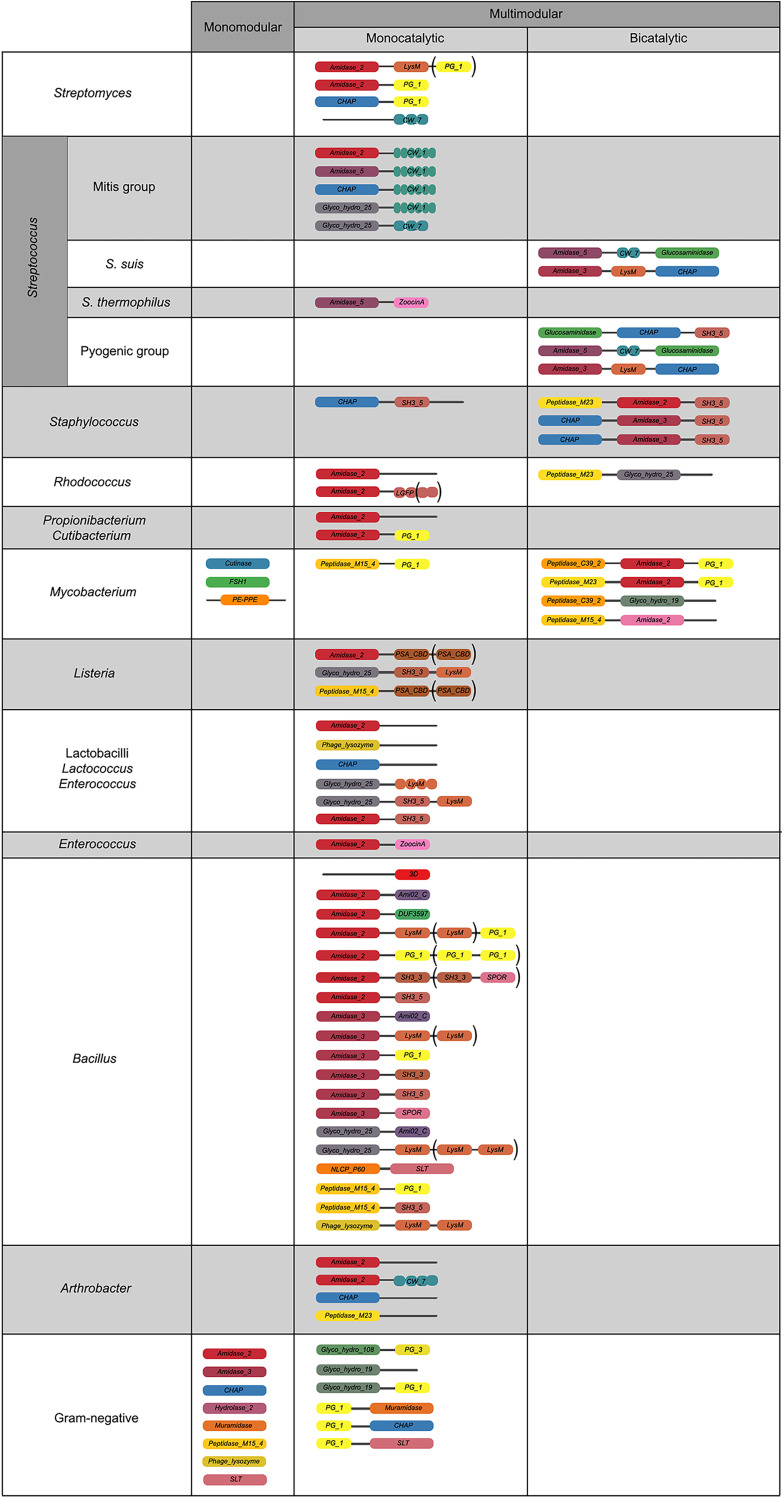
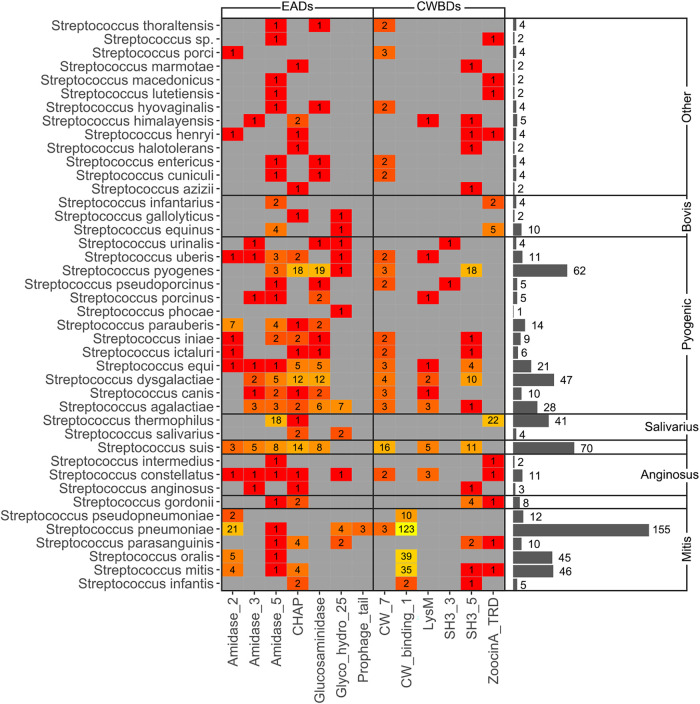
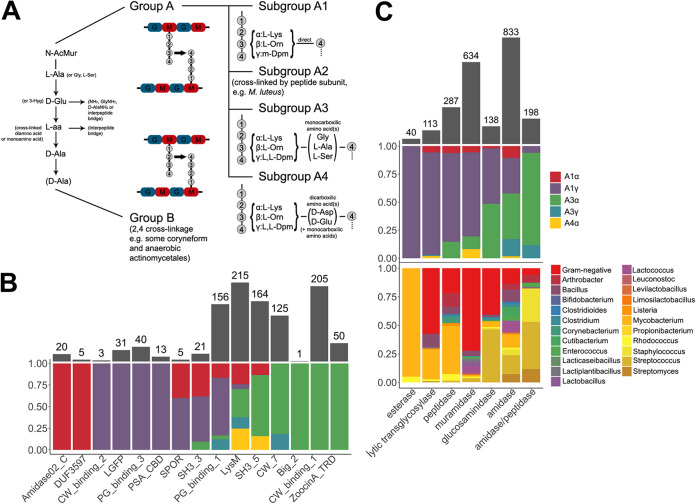
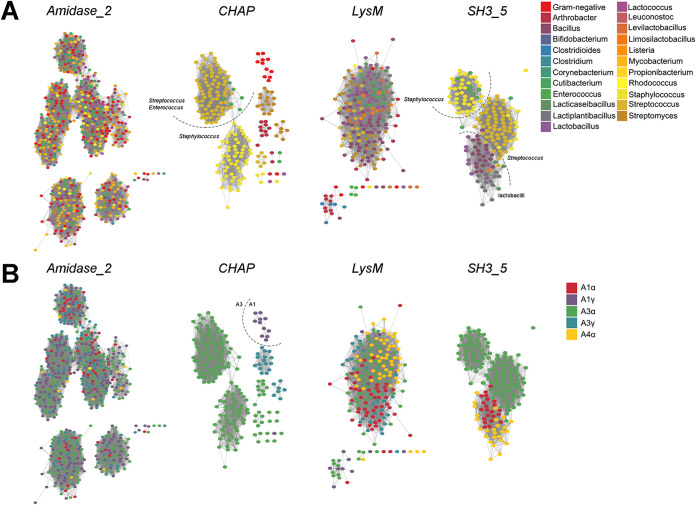
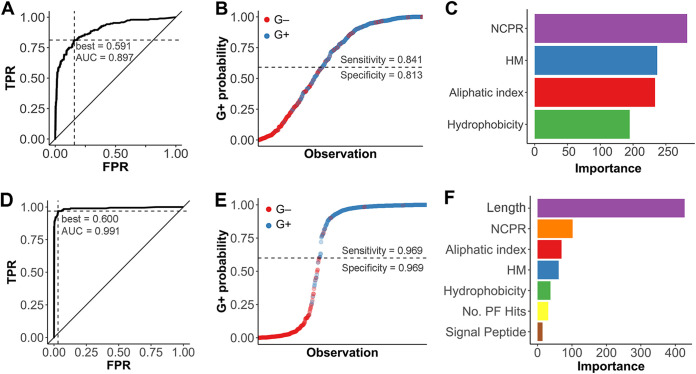
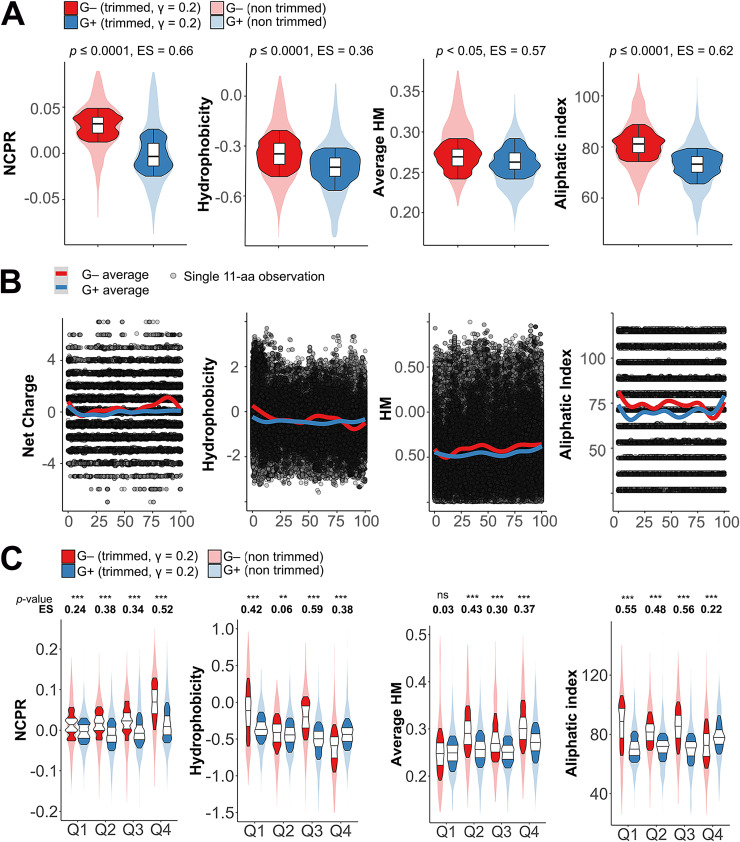
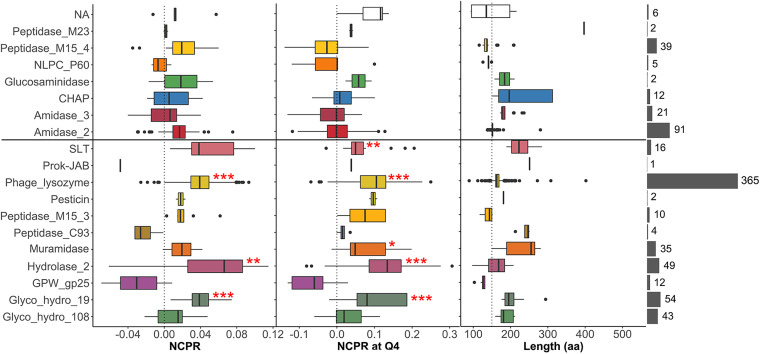
Phage (endo)lysins are thought to be a viable alternative to usual antibiotic chemotherapy to fight resistant bacterial infections. However, a comprehensive view of lysins' structure and properties regarding their function, with an applied focus, is somewhat lacking. Current literature suggests that specific features typical of lysins from phages infecting Gram-negative bacteria (G-) (higher net charge and amphipathic helices) are responsible for improved interaction with the G- envelope. Such antimicrobial peptide (AMP)-like elements are also of interest for antimicrobial molecule design. Thus, this study aims to provide an updated view on the primary structural landscape of phage lysins to clarify the evolutionary importance of several sequence-predicted properties, particularly for the interaction with the G- surface. A database of 2,182 lysin sequences was compiled, containing relevant information such as domain architectures, data on the phages' host bacteria, and sequence-predicted physicochemical properties. Based on such classifiers, an investigation of the differential appearance of certain features was conducted. This analysis revealed different lysin architectural variants that are preferably found in phages infecting certain bacterial hosts. In particular, some physicochemical properties (higher net charge, hydrophobicity, hydrophobic moment, and aliphatic index) were associated with G- phage lysins, appearing specifically at their C-terminal end. Information on the remarkable genetic specialization of lysins regarding the features of the bacterial hosts is provided, specifically supporting the nowadays-common hypothesis that lysins from G- usually contain AMP-like regions. Phage-encoded lytic enzymes, also called lysins, are one of the most promising alternatives to common antibiotics. The potential of lysins as novel antimicrobials to tackle antibiotic-resistant bacteria not only arises from features such as a lower chance to provoke resistance but also from their versatility as synthetic biology parts. Functional modules derived from lysins are currently being used for the design of novel antimicrobials with desired properties. This study provides a view of the lysin diversity landscape by examining a set of phage lysin genes. We have uncovered the fundamental differences between the lysins from phages that infect bacteria with different superficial architectures and, thus, the reach of their specialization regarding cell wall structures. These results provide clarity and evidence to sustain some of the common hypotheses in current literature, as well as making available an updated and characterized database of lysins sequences for further developments.
噬菌体(内溶)溶菌酶被认为是一种有前途的替代通常的抗生素化疗来对抗耐药细菌感染的方法。然而,对于溶菌酶的结构和功能的全面了解,特别是针对其应用的关注,还存在一些欠缺。目前的文献表明,来自感染革兰氏阴性菌(G-)噬菌体的溶菌酶的一些特定特征(更高的净电荷和两亲性螺旋)负责改善与 G-包膜的相互作用。这种抗菌肽(AMP)样元件也引起了对抗菌分子设计的关注。因此,本研究旨在提供一个关于噬菌体溶菌酶的一级结构景观的最新观点,以阐明几个序列预测特性的进化重要性,特别是与 G-表面的相互作用。我们编译了一个包含 2182 个溶菌酶序列的数据库,其中包含有关信息,如结构域架构、噬菌体宿主细菌的数据以及序列预测的理化性质。基于这些分类器,我们对某些特征的差异出现进行了调查。这项分析揭示了在感染某些细菌宿主的噬菌体中发现的不同的溶菌酶结构变体。特别是,一些理化性质(更高的净电荷、疏水性、疏水力矩和脂肪指数)与 G-噬菌体溶菌酶相关,特别是出现在它们的 C 末端。我们提供了有关溶菌酶针对细菌宿主特征的显著遗传专业化的信息,特别是支持了目前普遍的假设,即 G-溶菌酶通常含有 AMP 样区域。噬菌体编码的溶菌酶,也称为溶菌酶,是替代常用抗生素的最有前途的方法之一。溶菌酶作为新型抗菌药物对抗抗生素耐药菌的潜力不仅源于其引起耐药性的可能性较低等特征,还源于其作为合成生物学部件的多功能性。目前正在使用从溶菌酶中衍生的功能模块来设计具有所需特性的新型抗菌药物。通过检查一组噬菌体溶菌酶基因,本研究提供了一个溶菌酶多样性景观的视图。我们已经发现了感染具有不同表面结构的细菌的噬菌体的溶菌酶之间的基本差异,因此,它们在细胞壁结构方面的专业化程度也不同。这些结果提供了清晰度和证据,以支持当前文献中的一些常见假设,同时还提供了一个更新的、经过特征描述的溶菌酶序列数据库,以供进一步开发。