Department of Cardiology, The Second Hospital of Jilin University, 218 Ziqiang Road, Changchun, China 130041.
Department of Nephrology, The Second Hospital of Jilin University, 218 Ziqiang Road, Changchun, China 130041.
Oxid Med Cell Longev. 2021 Apr 5;2021:8889123. doi: 10.1155/2021/8889123. eCollection 2021.
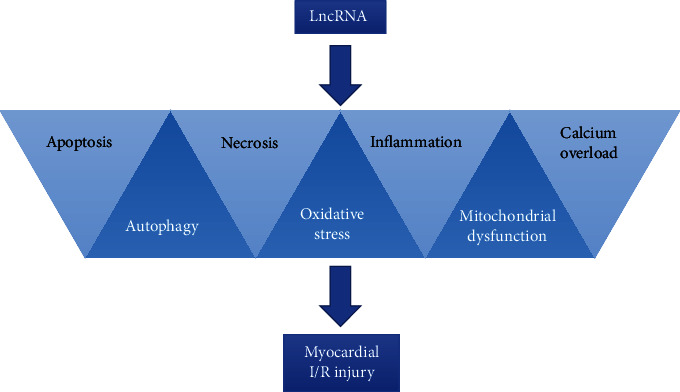
Following an acute myocardial infarction, reperfusion therapy is currently the most effective way to save the ischemic myocardium; however, restoring blood flow may lead to a myocardial ischemia-reperfusion injury (MIRI). Recent studies have confirmed that long-chain noncoding RNAs (LncRNAs) play important roles in the pathophysiology of MIRIs. These LncRNA-mediated roles include cardiomyocyte apoptosis, autophagy, necrosis, oxidative stress, inflammation, mitochondrial dysfunction, and calcium overload, which are regulated through the expression of target genes. Thus, LncRNAs may be used as clinical diagnostic markers and therapeutic targets to treat or prevent MIRI. This review evaluates the research on LncRNAs involved in MIRIs and provides new ideas for preventing and treating this type of injury.
急性心肌梗死后,再灌注治疗目前是拯救缺血心肌最有效的方法;然而,恢复血流可能导致心肌缺血再灌注损伤(MIRI)。最近的研究证实,长链非编码 RNA(lncRNA)在 MIRI 的病理生理学中发挥重要作用。这些 lncRNA 介导的作用包括心肌细胞凋亡、自噬、坏死、氧化应激、炎症、线粒体功能障碍和钙超载,它们通过靶基因的表达来调节。因此,lncRNA 可以作为临床诊断标志物和治疗靶点,用于治疗或预防 MIRI。本综述评估了与 MIRI 相关的 lncRNA 的研究,并为预防和治疗这种损伤提供了新的思路。