Department of Laboratory Medicine, Peking University Third Hospital, Beijing, 100191, China.
Department of Urology, Peking University Third Hospital, Beijing, 100191, China.
Sci Rep. 2021 Apr 22;11(1):8723. doi: 10.1038/s41598-021-87733-7.
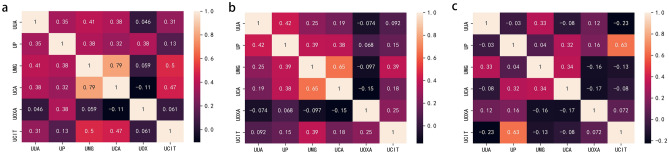
Urolithiasis is a common urinary disease with high recurrence. The risk factor for the recurrence of calculi is not very clear. The object of the present study was to evaluate the association between calculi composition and urine component and analyse the risk factor for the recurrence of urolithiasis. In this study, a total of 223 patients with calculi and healthy control were enrolled, and the components of the calculi and urina sanguinis collected before surgery were analysed. Of the 223 patients, 157 were males and 66 were females. According to the stone composition, the case group was subdivided into three groups. 129 patients had single calcium oxalate stones, 72 had calcium oxalate stones mixed with other stones and 22 had other type of stones excluding calcium oxalate stones. Urine biochemicals were analysed and the associations were found between the chemicals in each group. Multivariate logistic analysis demonstrated that reduced urinary magnesium and uric oxalic acid were independent risk factors when comparing all cases with normal controls. Only decreased urinary magnesium was found to be a risk factor comparing the single calcium oxalate group with normal control group. Low level of urinary magnesium and uric oxalic acid were found to be risk factors comparing the mixed calcium oxalate group with normal control group. No risk factor was found comparing the other stone group with normal control group. In conclusion, there were clear relationships between stone components and urine chemicals. Urine chemicals might be risk factors to predicate the occurrence of urolithiasis.
尿石症是一种常见的泌尿系统疾病,复发率高。结石复发的危险因素尚不清楚。本研究旨在评估结石成分与尿液成分的关系,并分析尿石症复发的危险因素。本研究共纳入 223 例结石患者和健康对照者,分析了术前采集的结石和血尿成分。223 例患者中,男 157 例,女 66 例。根据结石成分,将病例组分为三组。129 例为单纯草酸钙结石,72 例为草酸钙结石混合其他结石,22 例为草酸钙结石以外的其他类型结石。分析尿液生化指标,并比较各组化学物质之间的相关性。多因素 logistic 分析显示,与正常对照组相比,所有病例组尿镁减少和尿尿酸草酸减少是独立的危险因素。与正常对照组相比,仅发现单纯草酸钙组尿镁减少是危险因素。与正常对照组相比,混合草酸钙组尿镁和尿酸草酸减少是危险因素。与正常对照组相比,其他结石组未发现危险因素。结论:结石成分与尿液化学成分之间存在明确关系。尿液化学物质可能是预测尿石症发生的危险因素。