Krzywanski Jaroslaw, Kuchar Ernest, Mierzynski Rafal
National Centre for Sports Medicine, 63A Zwirki & Wigury, 02-091 Warsaw, Poland.
Department of Pediatrics with Clinical Assessment Unit, Medical University of Warsaw, 63A Zwirki & Wigury, 02-091 Warsaw, Poland.
IDCases. 2021 Mar 24;24:e01084. doi: 10.1016/j.idcr.2021.e01084. eCollection 2021.
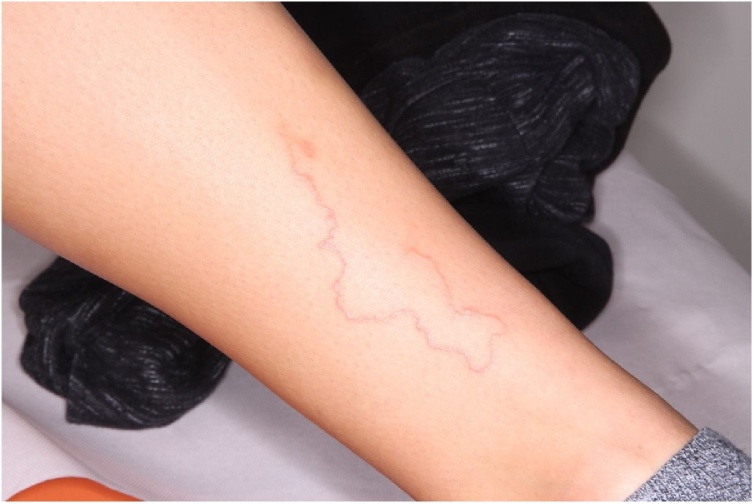
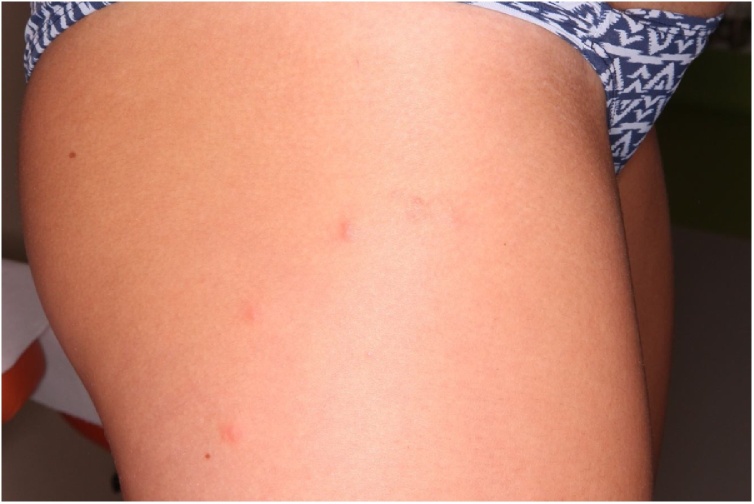
Athletes playing beach volleyball come into contact with sand and may contract skin parasites. We present a case of in a 20-year-old Polish female beach volleyball player. The athlete participated in The World Tour in Asia (China, Malaysia, Cambodia) a month before. In the beginning, her skin lesions were misdiagnosed as allergic reactions and treated with antihistamines. The disease in the form of a pruritic, migratory serpiginous skin eruption on legs was diagnosed during routine medical examination at the National Centre for Sports Medicine in Warsaw. She was treated successfully with albendazole and cetirizine. The skin lesions resolved entirely within two weeks.
从事沙滩排球运动的运动员会接触沙子,可能感染皮肤寄生虫。我们报告一例20岁波兰女子沙滩排球运动员的病例。该运动员一个月前参加了在亚洲(中国、马来西亚、柬埔寨)举行的世界巡回赛。起初,她的皮肤病变被误诊为过敏反应,并使用抗组胺药进行治疗。在华沙国家运动医学中心的常规体检中,诊断出腿部出现瘙痒性、游走性匐行性皮肤疹。她使用阿苯达唑和西替利嗪成功治愈。皮肤病变在两周内完全消退。