Faculty of Medicine, University of Oslo, Oslo, Norway.
Section of Vascular Investigations, Department of Vascular Surgery, Oslo University Hospital, 0424, Oslo, Norway.
Eur J Appl Physiol. 2021 Aug;121(8):2207-2217. doi: 10.1007/s00421-021-04693-6. Epub 2021 Apr 22.
Cerebral blood flow (CBF) needs to be precisely controlled to maintain brain functions. While previously believed to be autoregulated and near constant over a wide blood pressure range, CBF is now understood as more pressure passive. However, there are still questions regarding the integrated nature of CBF regulation and more specifically the role of cardiac output. Our aim was, therefore, to explore the effects of MAP and cardiac output on CBF in a combined model of reduced preload and increased afterload.
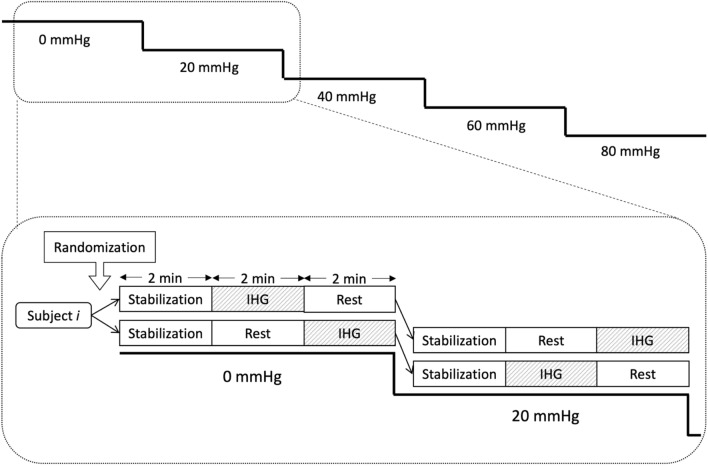
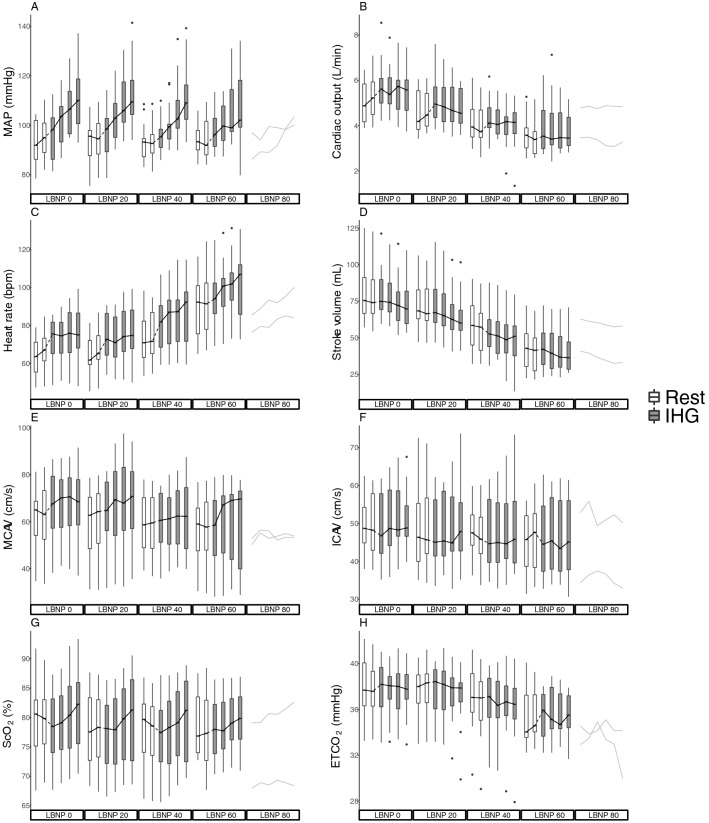
16 healthy volunteers were exposed to combinations of different levels of simultaneous lower body negative pressure and isometric hand grip. We measured blood velocity in the middle cerebral artery (MCAV) and internal carotid artery (ICAV) by Doppler ultrasound, and cerebral oxygen saturation (ScO) by near-infrared spectroscopy, as surrogates for CBF. The effect of changes in MAP and cardiac output on CBF was estimated with mixed multiple regression.
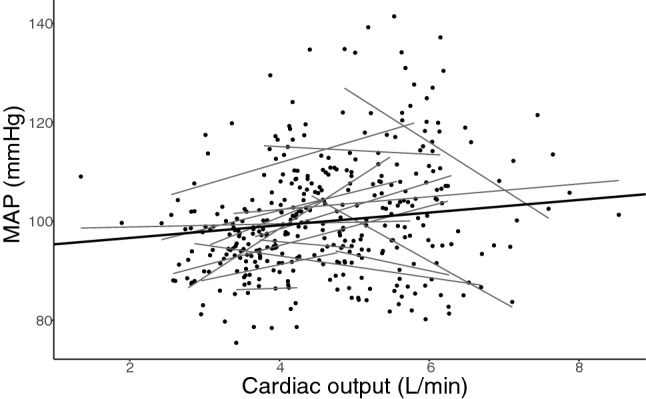
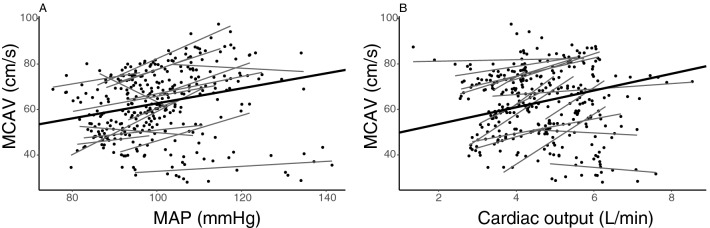
Both MAP and cardiac output had independent effects on MCAV, ICAV and ScO. For ICAV and ScO there was also a statistically significant interaction effect between MAP and cardiac output. The estimated effect of a change of 10 mmHg in MAP on MCAV was 3.11 cm/s (95% CI 2.51-3.71, P < 0.001), and the effect of a change of 1 L/min in cardiac output was 3.41 cm/s (95% CI 2.82-4.00, P < 0.001).
The present study indicates that during reductions in cardiac output, both MAP and cardiac output have independent effects on CBF.
为了维持大脑功能,脑血流(CBF)需要精确控制。尽管此前认为 CBF 在较宽的血压范围内是自动调节且接近恒定的,但现在认为它更具压力被动性。然而,关于 CBF 调节的综合性质,特别是心输出量的作用,仍存在一些问题。因此,我们的目的是在降低前负荷和增加后负荷的综合模型中探索 MAP 和心输出量对 CBF 的影响。
16 名健康志愿者接受不同水平的同时下肢负压和等长手握的组合暴露。我们通过多普勒超声测量大脑中动脉(MCAV)和颈内动脉(ICAV)的血流速度,并通过近红外光谱测量脑氧饱和度(ScO),作为 CBF 的替代指标。使用混合多元回归估计 MAP 和心输出量变化对 CBF 的影响。
MAP 和心输出量对 MCAV、ICAV 和 ScO 均有独立影响。对于 ICAV 和 ScO,MAP 和心输出量之间也存在统计学上显著的相互作用效应。估计 MAP 变化 10mmHg 对 MCAV 的影响为 3.11cm/s(95%置信区间 2.51-3.71,P<0.001),心输出量变化 1L/min 的影响为 3.41cm/s(95%置信区间 2.82-4.00,P<0.001)。
本研究表明,在心输出量降低时,MAP 和心输出量对 CBF 均有独立影响。