Guangdong Key Laboratory of Genome Stability and Human Disease Prevention, Department of Pathophysiology, Shenzhen University Health Science Center, Shenzhen, 518060, China.
Guangdong Key Laboratory of Regional Immunity and Diseases, Department of Pathology, Shenzhen University Health Science Center, Shenzhen, 518060, China.
Basic Res Cardiol. 2021 Apr 23;116(1):30. doi: 10.1007/s00395-021-00867-7.
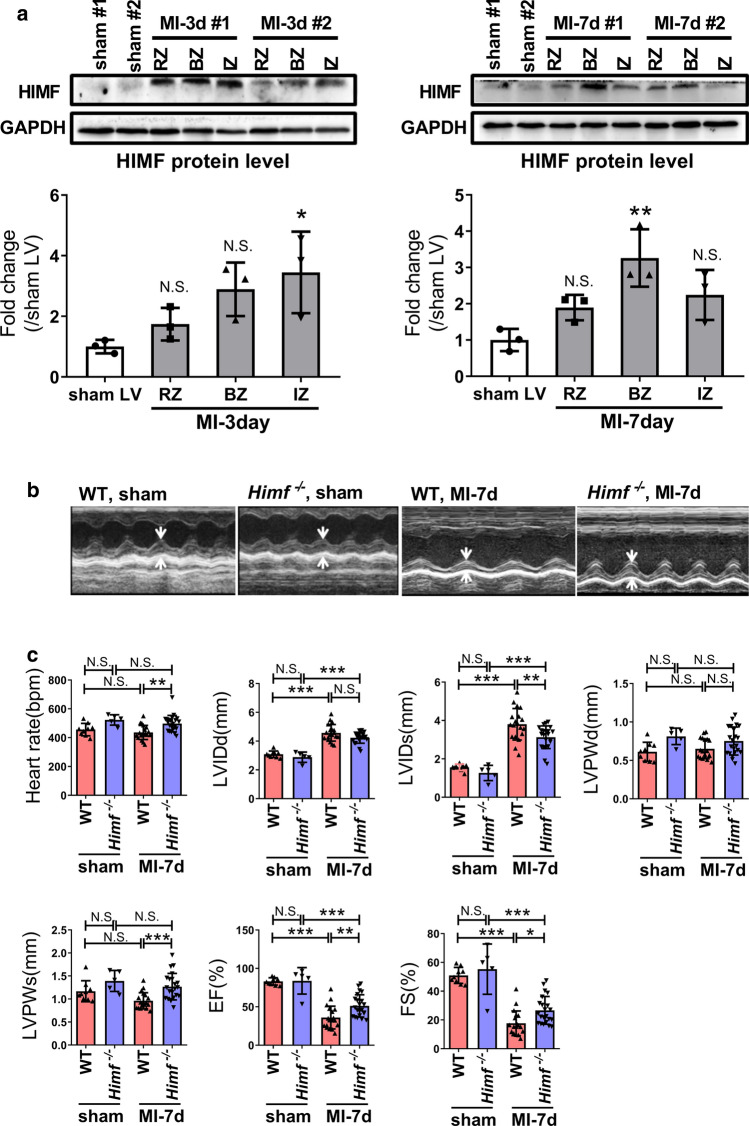
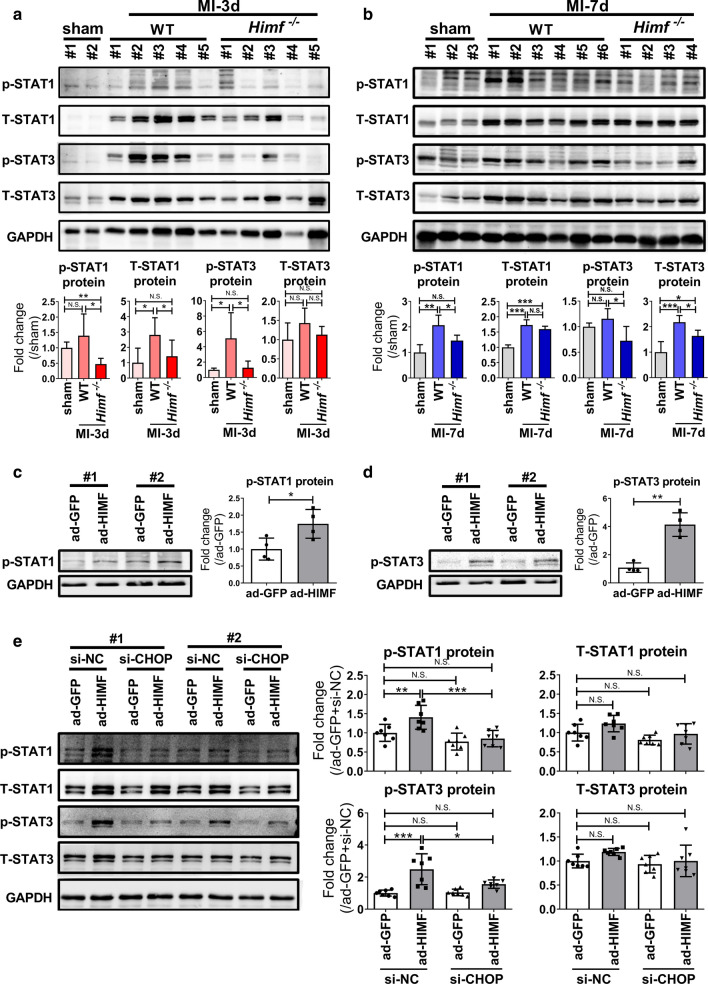
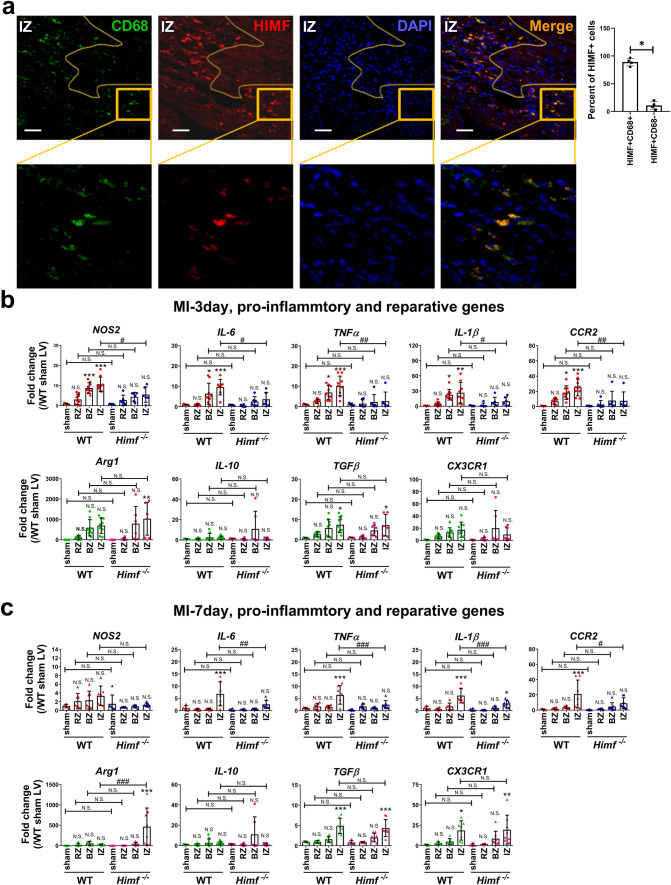
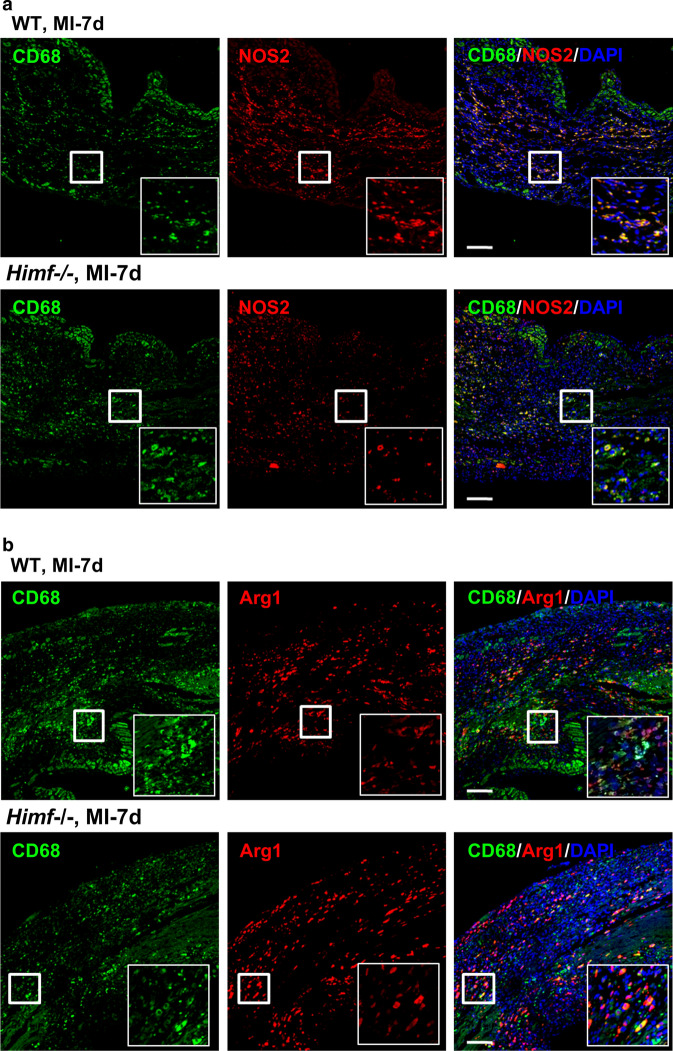
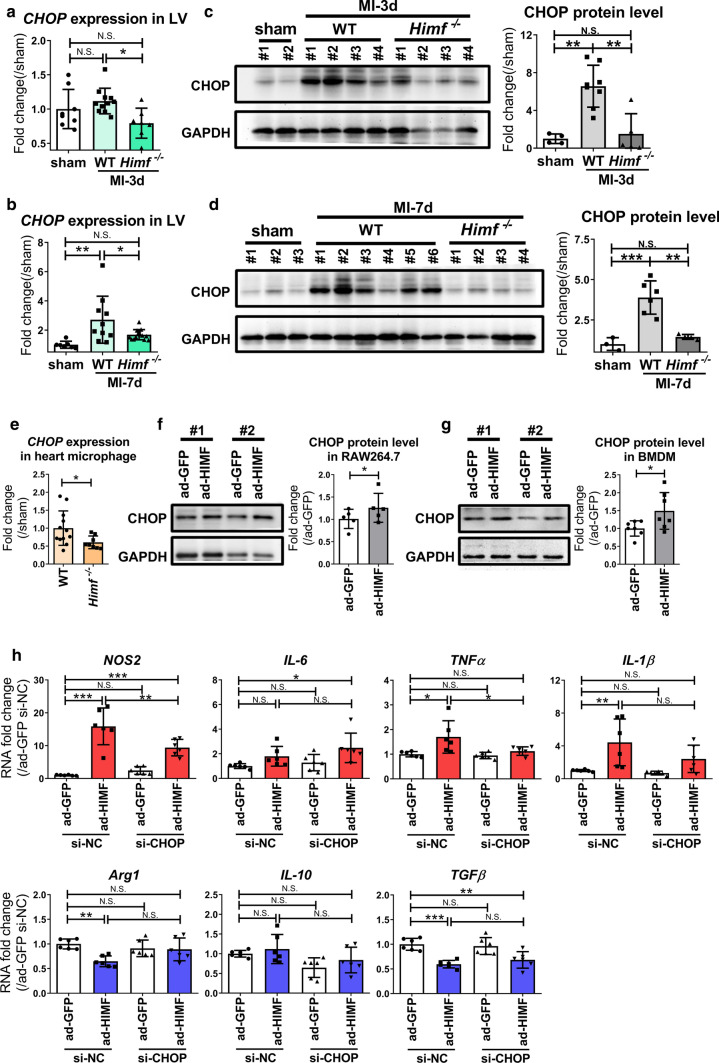
Appropriately manipulating macrophage M1/M2 phenotypic transition is a promising therapeutic strategy for tissue repair after myocardial infarction (MI). Here we showed that gene ablation of hypoxia-induced mitogenic factor (HIMF) in mice (Himf and HIMF;Lyz2-Cre) attenuated M1 macrophage-dominated inflammatory response and promoted M2 macrophage accumulation in infarcted hearts. This in turn reduced myocardial infarct size and improved cardiac function after MI. Correspondingly, expression of HIMF in macrophages induced expression of pro-inflammatory cytokines; the culturing medium of HIMF-overexpressing macrophages impaired the cardiac fibroblast viability and function. Furthermore, macrophage HIMF was found to up-regulate C/EBP-homologous protein (CHOP) expression, which exaggerated the release of pro-inflammatory cytokines via activating signal transducer of activator of transcription 1 (STAT1) and 3 (STAT3) signaling. Together these data suggested that HIMF promotes M1-type and prohibits M2-type macrophage polarization by activating the CHOP-STAT1/STAT3 signaling pathway to negatively regulate myocardial repair. HIMF might thus constitute a novel target to treat MI.
适当调控巨噬细胞 M1/M2 表型转化是心肌梗死后组织修复的一种有前途的治疗策略。本研究显示,在小鼠中敲除缺氧诱导的有丝分裂原因子(HIMF)(Himf 和 HIMF;Lyz2-Cre)可减轻 M1 型巨噬细胞主导的炎症反应,并促进梗死心脏中 M2 型巨噬细胞的积累。这反过来又减少了心肌梗死面积并改善了 MI 后的心脏功能。相应地,巨噬细胞中 HIMF 的表达诱导了促炎细胞因子的表达;HIMF 过表达的巨噬细胞的培养物降低了心肌成纤维细胞的活力和功能。此外,发现巨噬细胞 HIMF 上调 C/EBP 同源蛋白(CHOP)的表达,通过激活转录激活物 1(STAT1)和 3(STAT3)信号通路,过度释放促炎细胞因子。这些数据表明,HIMF 通过激活 CHOP-STAT1/STAT3 信号通路促进 M1 型而抑制 M2 型巨噬细胞极化,从而负性调控心肌修复。因此,HIMF 可能成为治疗心肌梗死的新靶点。