Handebo Simegnew, Adugna Asmamaw, Kassie Ayenew, Shitu Kegnie
Department of Health Education and Behavioral Sciences, Institute of public health, College of Medicine and Health Sciences, University of Gondar, Gondar, Ethiopia
Department of Health Education and Behavioral Sciences, Institute of public health, College of Medicine and Health Sciences, University of Gondar, Gondar, Ethiopia.
BMJ Open. 2021 Apr 24;11(4):e050189. doi: 10.1136/bmjopen-2021-050189.
In Ethiopia, more than 26 million students have been out of the classroom for nearly 9 months. On 18 September, the Ethiopian Minister of Health advised the Parliament the possibility of reopening schools provided certain conditions were met. Schools are currently reopening in the country for the first time since March 2020.
This study assessed the knowledge and preventive health behaviours toward COVID-19 and associated factors among secondary school students.
DESIGN, SETTING, PARTICIPANTS AND OUTCOME MEASURES: An institution-based cross-sectional study was conducted from October to December 2020 in Gondar city, Northwest Ethiopia. A total of 370 secondary school students were included. Bivariable and multivariable ordinal logistic regression model were fitted to identify the predictors of knowledge about COVID-19. Simple and multiple linear regression analysis were done to identify factors associated with preventive behaviour. A p<0.05 was used to declare statistical significance.
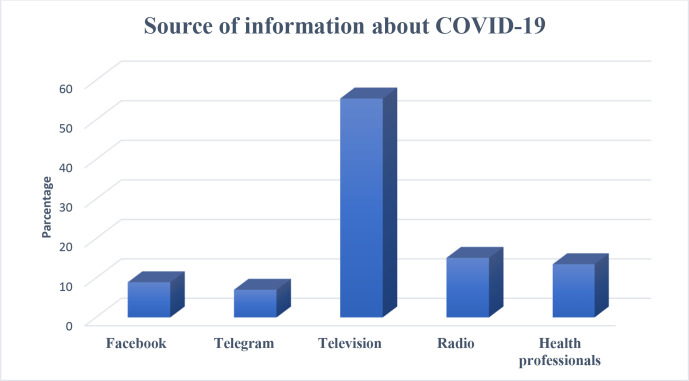
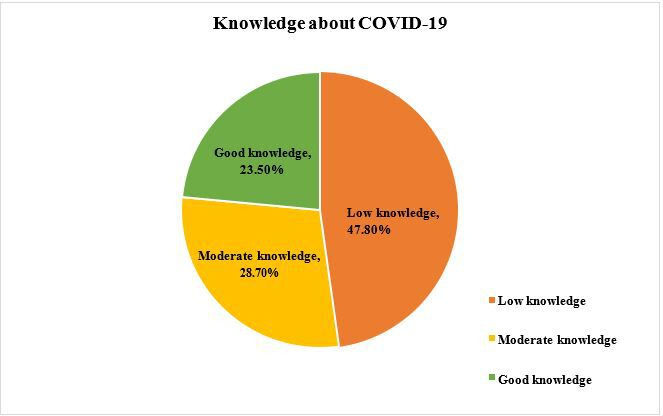
Only one-fourth (23.5%, 95% CI 19.5% to 28.1%) of the participants had a good knowledge about COVID-19. The mean score of preventive behaviour was 22.8±SD 6.2. Marital status, religion, father education, living arrangement and sources of information were significantly associated with knowledge about COVID-19. Being female and using health professionals as source of information increased the engagement in preventive behaviours. On the other hand, student whose father employed in non-governmental organisation and other jobs had decreased engagement in preventive health behaviours.
Significant number of the students had inadequate knowledge about COVID-19 and poorly engaged in COVID-19 preventive behaviour. Thus, it is suggested to include and disseminate about COVID-19 in related academic sessions, using school clubs and minimedias. The sources of COVID-19-related information need to strengthen the dissemination of tailored, credible and timely message to enhance the knowledge and engagement of the students in preventive behaviours.
在埃塞俄比亚,超过2600万学生已停课近9个月。9月18日,埃塞俄比亚卫生部长向议会通报了在满足某些条件的情况下重新开学的可能性。该国学校目前自2020年3月以来首次重新开学。
本研究评估了中学生对新冠病毒病(COVID-19)的认知和预防健康行为及其相关因素。
设计、地点、参与者和结果测量:2020年10月至12月在埃塞俄比亚西北部的贡德尔市开展了一项基于机构的横断面研究。共纳入370名中学生。采用双变量和多变量有序逻辑回归模型来确定新冠病毒病知识的预测因素。进行单因素和多因素线性回归分析以确定与预防行为相关的因素。采用p<0.05表示具有统计学意义。
只有四分之一(23.5%,95%置信区间19.5%至28.1%)的参与者对新冠病毒病有良好认知。预防行为的平均得分为22.8±标准差6.2。婚姻状况、宗教信仰、父亲的教育程度、居住安排和信息来源与新冠病毒病知识显著相关。女性以及将卫生专业人员作为信息来源会增加预防行为的参与度。另一方面,父亲受雇于非政府组织和其他工作的学生预防健康行为的参与度较低。
相当数量的学生对新冠病毒病知识了解不足,且新冠病毒病预防行为参与度较低。因此,建议在相关学术课程中纳入并传播有关新冠病毒病的知识,利用学校俱乐部和小型媒体进行宣传。与新冠病毒病相关的信息来源需要加强传播针对性强、可信且及时的信息,以提高学生对预防行为的认知和参与度。