Pawlik-Gwozdecka Dorota, Górska-Ponikowska Magdalena, Adamkiewicz-Drożyńska Elżbieta, Niedźwiecki Maciej
Department of Pediatrics, Hematology, Oncology and Endocrinology, Medical University of Gdansk, Poland.
Department of Medical Chemistry, Medical University of Gdansk, Poland.
Cent Eur J Immunol. 2021;46(1):63-67. doi: 10.5114/ceji.2020.95114. Epub 2020 Jun 8.
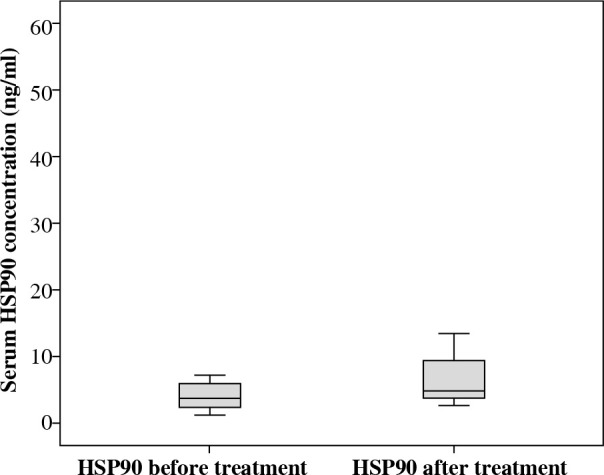
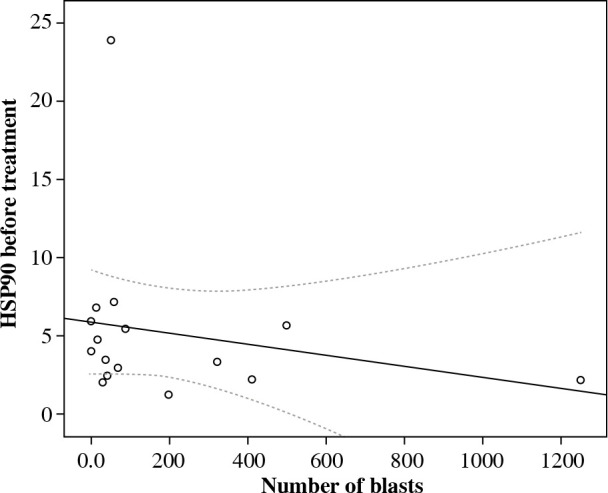
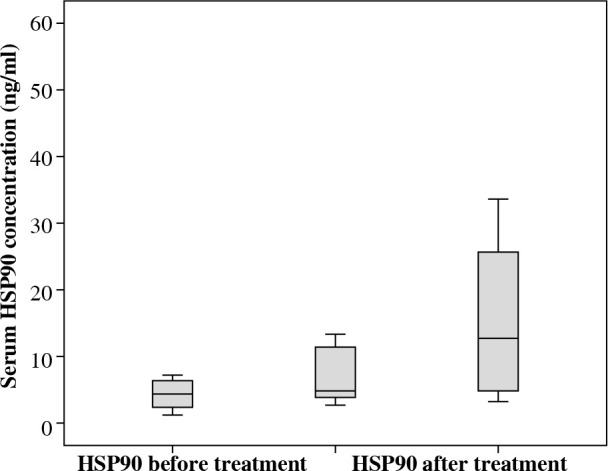
Heat shock proteins (HSPs) attract the attention of scientists and clinicians due to their potential role as diagnostic and prognostic factors in a variety of cancers. HSP90 is one of the most important and well-known family members, necessary for maintaining intracellular homeostasis. In the extracellular space, it is responsible for the transmission of alarm signals to the immune system. Numerous reports have indicated that the level of intra - and extracellular HSP90 can correlate either with a poorer prognosis or with a better outcome, depending on the type of cancer. Still, little is known why the level of this chaperone is increased in some tumors and decreased in others, reflecting dual role of protein in cell death processes. Currently, there is no database reporting levels of serum HSP90 in children with acute lymphoblastic leukemia (ALL). As such, using enzyme-linked immunosorbent assay (ELISA) method, we aimed to determine this parameter in a group of 21 patients with newly diagnosed ALL. We found decreased protein serum levels in patients at disease presentation and after induction block of chemotherapy in comparison to healthy controls. Furthermore, we observed a negative correlation between HSP90 serum levels and one of the earliest prognostic factors of the treatment response - peripheral blood lymphoblasts on the 8 day of treatment. Our results indicate that HSP90 serum may play an important role in leukemogenesis and could be used as a marker to predict treatment failure in children with ALL.
热休克蛋白(HSPs)因其在多种癌症中作为诊断和预后因素的潜在作用而引起了科学家和临床医生的关注。HSP90是最重要且最知名的家族成员之一,对于维持细胞内稳态必不可少。在细胞外空间,它负责向免疫系统传递警报信号。众多报告表明,细胞内和细胞外HSP90的水平可能与预后较差或较好相关,这取决于癌症的类型。然而,对于这种伴侣蛋白在某些肿瘤中水平升高而在其他肿瘤中水平降低的原因,人们仍然知之甚少,这反映了该蛋白在细胞死亡过程中的双重作用。目前,尚无数据库报告急性淋巴细胞白血病(ALL)患儿的血清HSP90水平。因此,我们采用酶联免疫吸附测定(ELISA)方法,旨在测定21例新诊断ALL患者的这一参数。我们发现,与健康对照组相比,患者在疾病初发时以及诱导化疗阻断后血清蛋白水平降低。此外,我们观察到HSP90血清水平与治疗反应的最早预后因素之一——治疗第8天的外周血淋巴细胞之间存在负相关。我们的结果表明,血清HSP90可能在白血病发生过程中起重要作用,并可作为预测ALL患儿治疗失败的标志物。