Department of Biological Science and Technology, Faculty of Industrial Science and Technology, Tokyo University of Science, Katsushika-Ku, Japan.
Atopy (Allergy) Research Center, Juntendo University Graduate School of Medicine, Bunkyo-ku, Japan.
Front Immunol. 2021 Apr 7;12:649572. doi: 10.3389/fimmu.2021.649572. eCollection 2021.
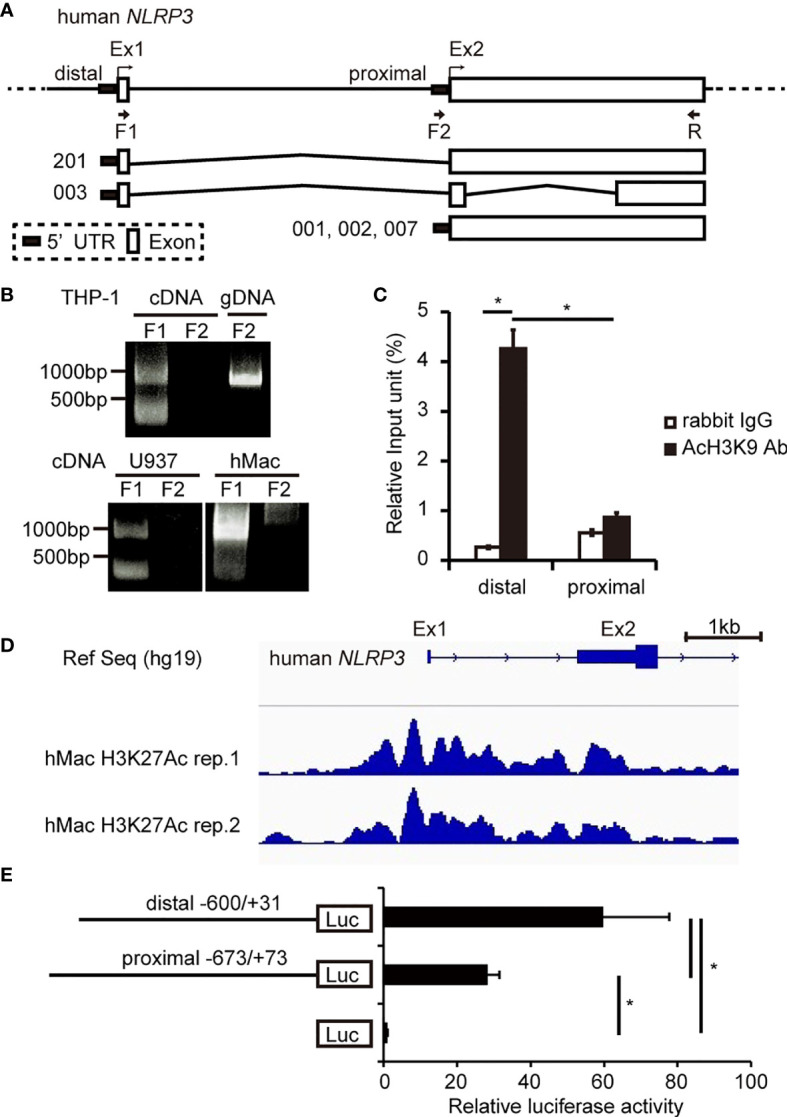
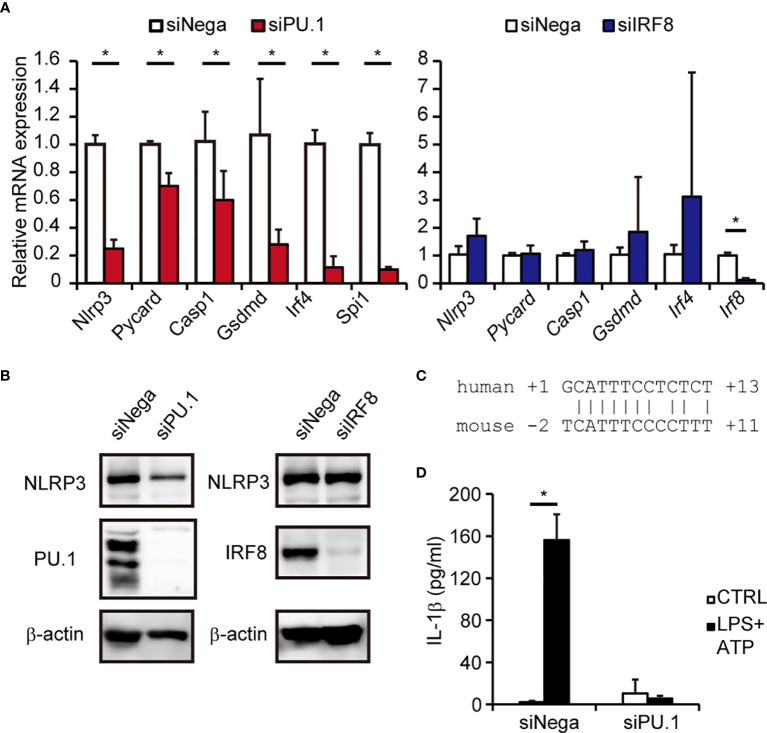
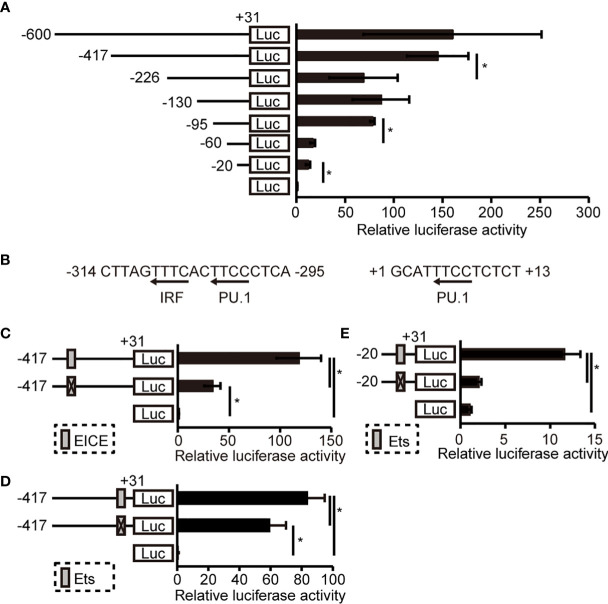
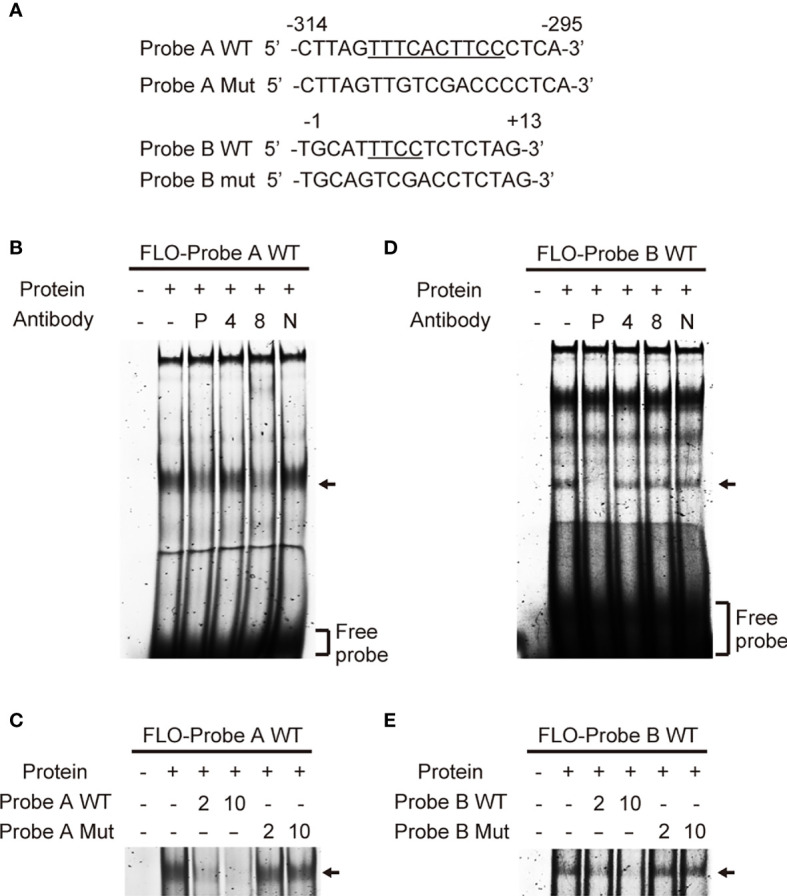
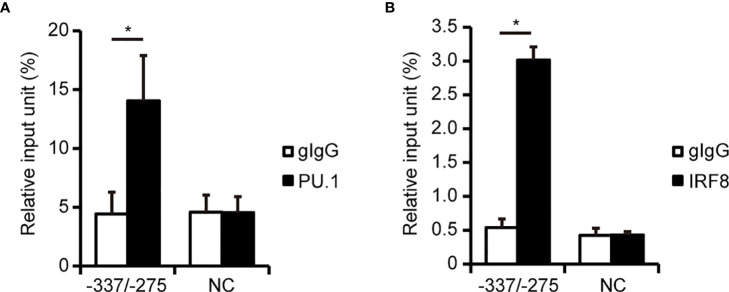
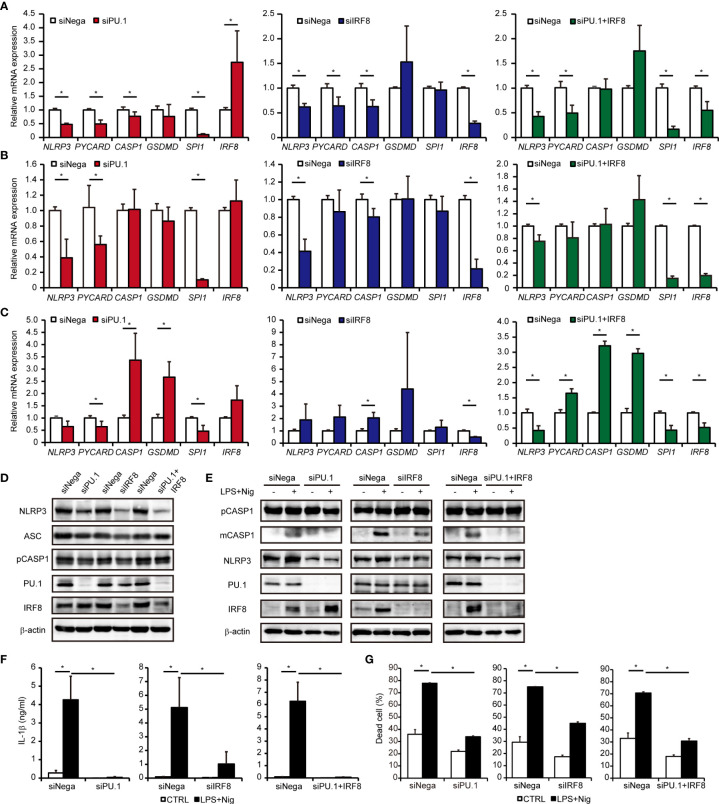
NLRP3 inflammasomes play crucial roles in the initiation of host defense by converting pro-Caspase-1 to mature Caspase-1, which in turn processes immature IL-1β and IL-18 into their biologically active forms. Although NLRP3 expression is restricted to monocytic lineages such as monocytes, macrophages, and dendritic cells, the mechanisms determining the lineage-specific expression of NLRP3 remain largely unknown. In this study, we investigated the transcription factors involved in cell-type-specific transcription of . We found that a distal, rather than a proximal, promoter of human was predominantly used in the human monocytic cell lines and macrophages. Reporter analysis showed that an Ets/IRF composite element (EICE) at -309/-300 and an Ets motif at +5/+8 were critical for transcriptional activity of the distal promoter. Electrophoretic mobility shift assays and chromatin immunoprecipitation assays demonstrated that two transcription factors, PU.1 and IRF8, both of which play essential roles in development and gene expression of the monocytic lineage, were bound to the EICE site, whereas PU.1 alone was bound to the Ets site. Knockdown of PU.1 and/or IRF8 mediated by small interfering RNA downregulated expression of NLRP3 and related molecules and markedly diminished the LPS-induced release of IL-1β in THP-1, suggesting that activity of the NLRP3 inflammasome was suppressed by knockdown of PU.1 and IRF8. Taken together, these results indicate that PU.1 and IRF8 are involved in the monocytic lineage-specific expression of NLRP3 by binding to regulatory elements within its promoter and that PU.1 and IRF8 are potential targets for regulating the activity of the NLRP3 inflammasome.
NLRP3 炎性小体在宿主防御的启动中发挥关键作用,将前胱天蛋白酶-1转化为成熟的胱天蛋白酶-1,后者反过来将不成熟的 IL-1β 和 IL-18 加工成其生物活性形式。虽然 NLRP3 的表达仅限于单核谱系细胞,如单核细胞、巨噬细胞和树突状细胞,但决定 NLRP3 谱系特异性表达的机制在很大程度上仍不清楚。在这项研究中,我们研究了参与. 细胞类型特异性转录的转录因子。我们发现,人类. 的远端启动子而非近端启动子主要在人类单核细胞系和巨噬细胞中使用。报告基因分析表明,-309/-300 处的 Ets/IRF 复合元件 (EICE) 和+5/+8 处的 Ets 基序对于远端启动子的转录活性至关重要。电泳迁移率变动分析和染色质免疫沉淀分析表明,两个转录因子,PU.1 和 IRF8,它们在单核谱系的发育和基因表达中都发挥着重要作用,结合到 EICE 位点,而只有 PU.1 结合到 Ets 位点。通过小干扰 RNA 介导的 PU.1 和/或 IRF8 敲低下调了 NLRP3 和相关分子的表达,并显著减少了 LPS 诱导的 THP-1 中 IL-1β 的释放,表明 NLRP3 炎性小体的活性被 PU.1 和 IRF8 的敲低抑制。总之,这些结果表明,PU.1 和 IRF8 通过结合其启动子内的调节元件参与 NLRP3 的单核谱系特异性表达,并且 PU.1 和 IRF8 是调节 NLRP3 炎性小体活性的潜在靶点。