Department of Microbiology and Molecular Genetics, Michigan State University, East Lansing, MI, United States.
Department of Food Science and Human Nutrition, East Lansing, MI, United States.
Front Immunol. 2021 Apr 7;12:653464. doi: 10.3389/fimmu.2021.653464. eCollection 2021.
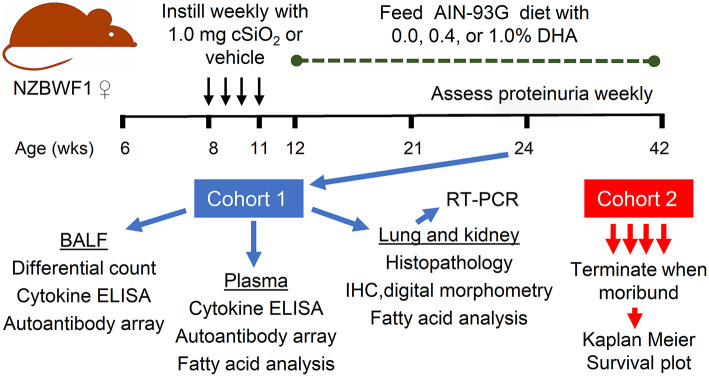
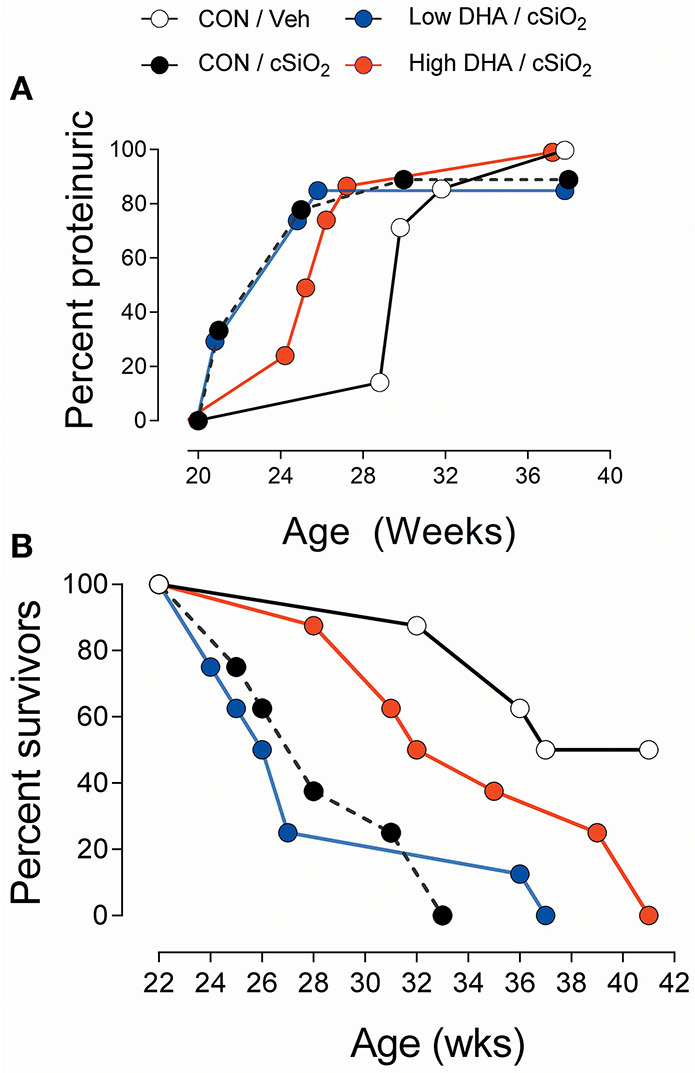
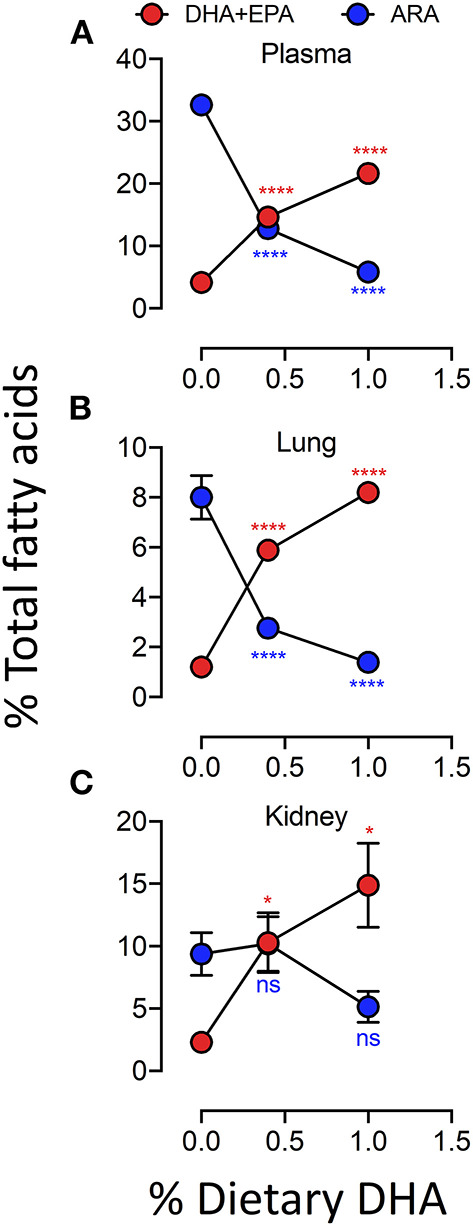
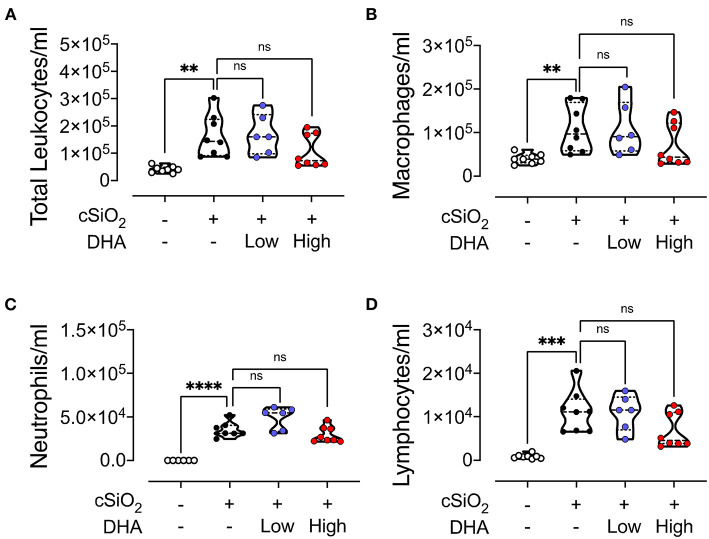
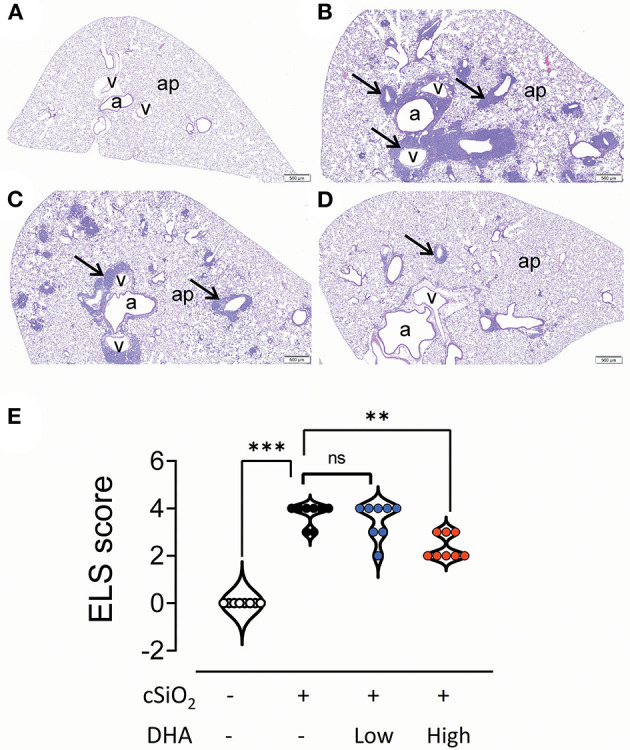
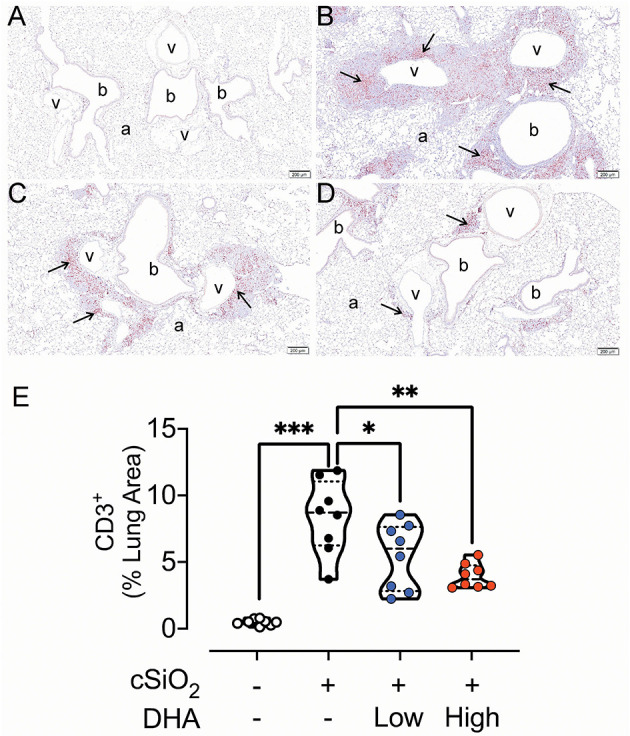
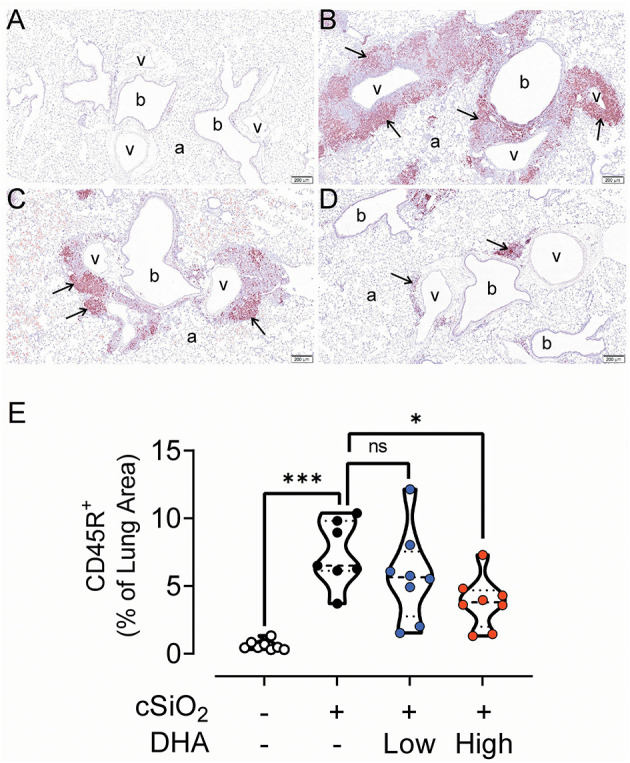
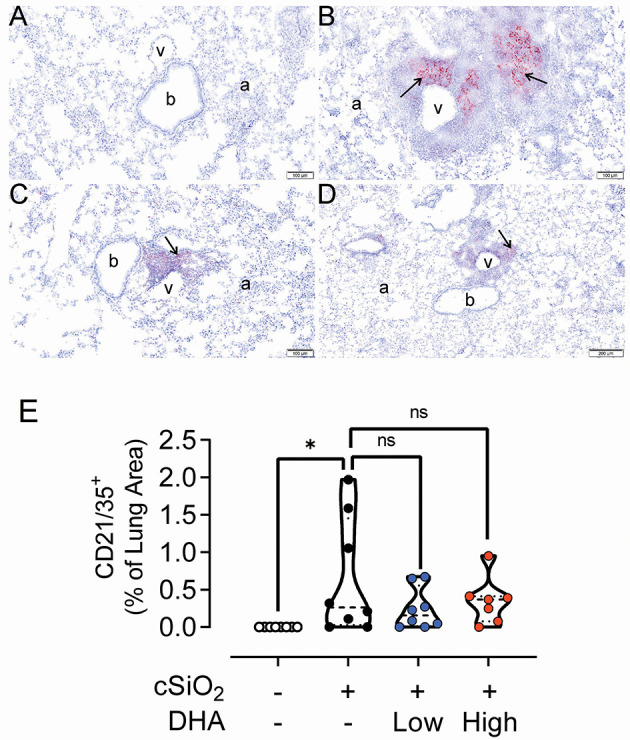
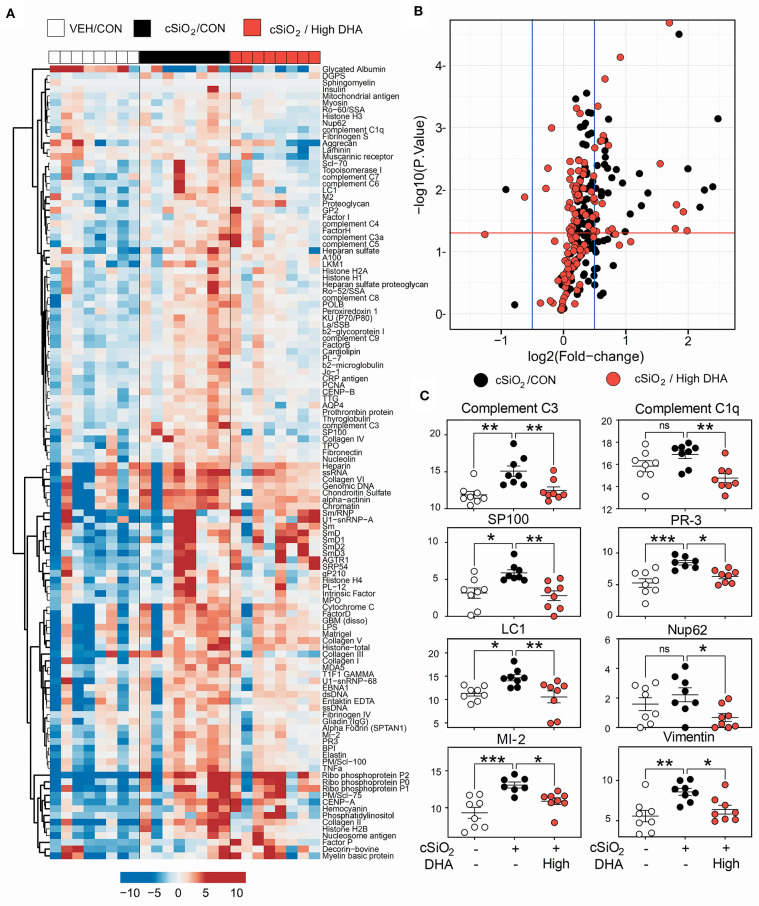
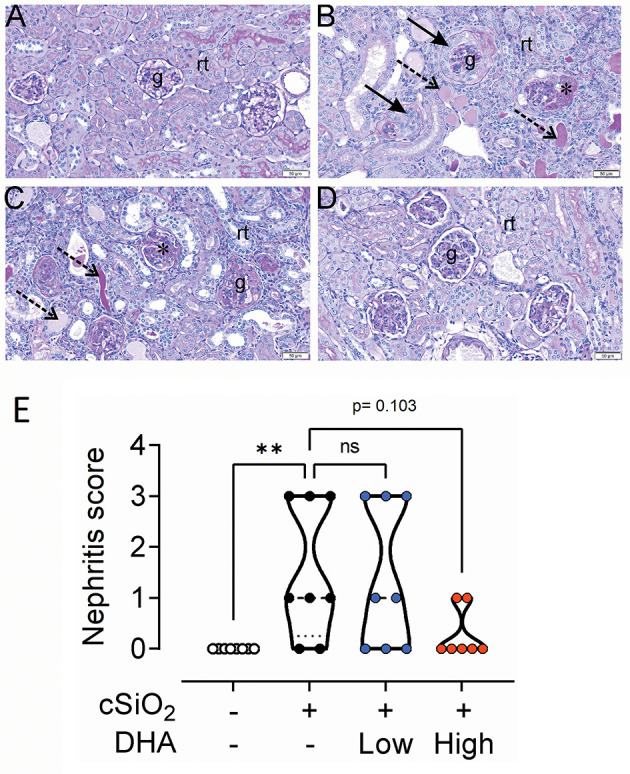
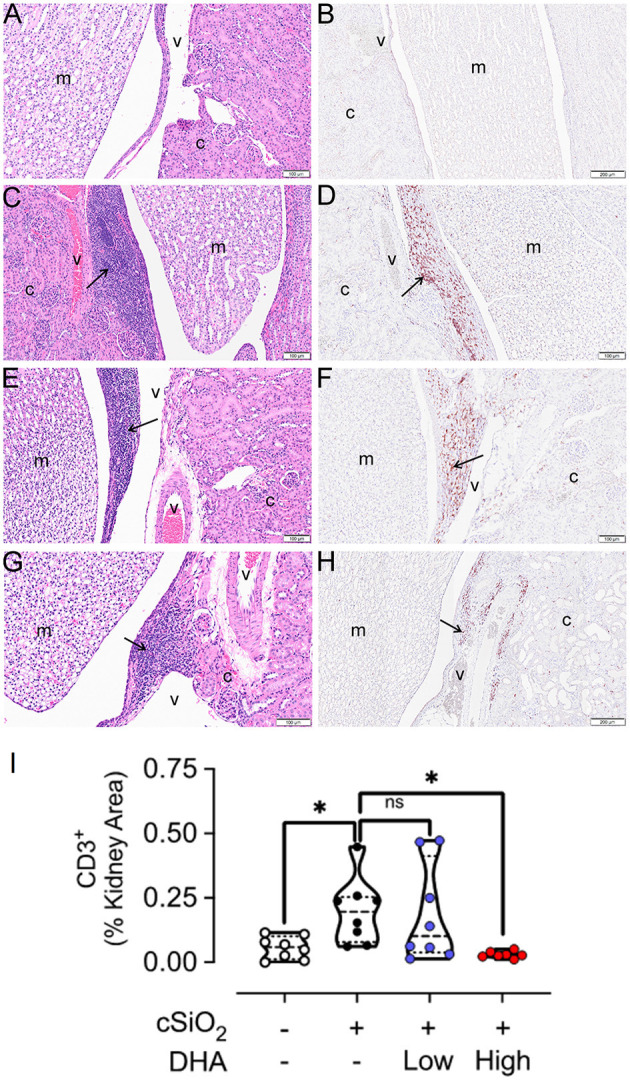
Workplace exposure to respirable crystalline silica dust (cSiO) has been etiologically linked to the development of lupus and other human autoimmune diseases. Lupus triggering can be recapitulated in female NZBWF1 mice by four weekly intranasal instillations with 1 mg cSiO This elicits inflammatory/autoimmune gene expression and ectopic lymphoid structure (ELS) development in the lung within 1 week, ultimately driving early onset of systemic autoimmunity and glomerulonephritis. Intriguingly, dietary supplementation with docosahexaenoic acid (DHA), an ω-3 polyunsaturated fatty acid (PUFA) found in fish oil, beginning 2 week prior to cSiO challenge, prevented inflammation and autoimmune flaring in this novel model. However, it is not yet known how ω-3 PUFA intervention influences established autoimmunity in this murine model of toxicant-triggered lupus. Here we tested the hypothesis that DHA intervention after cSiO-initiated intrapulmonary autoimmunity will suppress lupus progression in the NZBWF1 mouse. Six-week old NZWBF1 female mice were fed purified isocaloric diet for 2 weeks and then intranasally instilled with 1 mg cSiO or saline vehicle weekly for 4 consecutive weeks. One week after the final instillation, which marks onset of ELS formation, mice were fed diets supplemented with 0, 4, or 10 g/kg DHA. One cohort of mice ( = 8/group) was terminated 13 weeks after the last cSiO instillation and assessed for autoimmune hallmarks. A second cohort of mice ( = 8/group) remained on experimental diets and was monitored for proteinuria and moribund criteria to ascertain progression of glomerulonephritis and survival, respectively. DHA consumption dose-dependently increased ω-3 PUFA content in the plasma, lung, and kidney at the expense of the ω-6 PUFA arachidonic acid. Dietary intervention with high but not low DHA after cSiO treatment suppressed or delayed: (i) recruitment of T cells and B cells to the lung, (ii) development of pulmonary ELS, (iii) elevation of a wide spectrum of plasma autoantibodies associated with lupus and other autoimmune diseases, (iv) initiation and progression of glomerulonephritis, and (v) onset of the moribund state. Taken together, these preclinical findings suggest that DHA supplementation at a human caloric equivalent of 5 g/d was an effective therapeutic regimen for slowing progression of established autoimmunity triggered by the environmental toxicant cSiO.
工作场所接触可吸入结晶二氧化硅(cSiO)已被确定与狼疮和其他人类自身免疫性疾病的发展有关。通过每周四次向雌性 NZBWF1 小鼠鼻腔内滴注 1 毫克 cSiO,可以在 1 周内引发炎症/自身免疫基因表达和肺部异位淋巴样结构(ELS)的发展,最终导致系统性自身免疫和肾小球肾炎的早期发病。有趣的是,在 cSiO 攻击前 2 周开始用二十二碳六烯酸(DHA)进行饮食补充,即鱼油中的一种 ω-3 多不饱和脂肪酸(PUFA),可预防该新型模型中的炎症和自身免疫发作。然而,目前尚不清楚 ω-3 PUFA 干预如何影响这种毒剂引发狼疮的小鼠模型中的已建立的自身免疫。在这里,我们检验了以下假设:在 cSiO 引发的肺内自身免疫后进行 DHA 干预将抑制 NZBWF1 小鼠的狼疮进展。将 6 周龄的 NZWBF1 雌性小鼠用等热量的纯化饮食喂养 2 周,然后每周通过鼻腔内滴注 1 毫克 cSiO 或生理盐水连续 4 周。在最后一次滴注后 1 周,即 ELS 形成开始时,用补充 0、4 或 10 g/kg DHA 的饮食喂养小鼠。一组小鼠(每组 8 只)在最后一次 cSiO 滴注后 13 周终止,评估自身免疫标志物。另一组小鼠(每组 8 只)继续用实验饮食喂养,并监测蛋白尿和濒死标准,以分别确定肾小球肾炎的进展和存活率。DHA 消耗以剂量依赖的方式增加了血浆、肺和肾脏中 ω-3 PUFA 的含量,而以 ω-6 PUFA 花生四烯酸为代价。在 cSiO 治疗后进行高剂量而非低剂量 DHA 的饮食干预抑制或延迟了:(i)T 细胞和 B 细胞向肺的募集,(ii)肺 ELS 的发展,(iii)与狼疮和其他自身免疫性疾病相关的多种血浆自身抗体的升高,(iv)肾小球肾炎的起始和进展,以及(v)濒死状态的出现。综上所述,这些临床前发现表明,以人类每天 5 克热量当量补充 DHA 是一种有效的治疗方案,可减缓环境毒物 cSiO 引发的已建立的自身免疫进展。