Mulinge Erastus, Mbae Cecilia, Ngugi Benjamin, Irungu Tabitha, Matey Elizabeth, Kariuki Samuel
Centre for Microbiology Research, Kenya Medical Research Institute, P.O. Box 19464 00202, Nairobi, Kenya.
Food Waterborne Parasitol. 2021 Mar 29;23:e00122. doi: 10.1016/j.fawpar.2021.e00122. eCollection 2021 Jun.
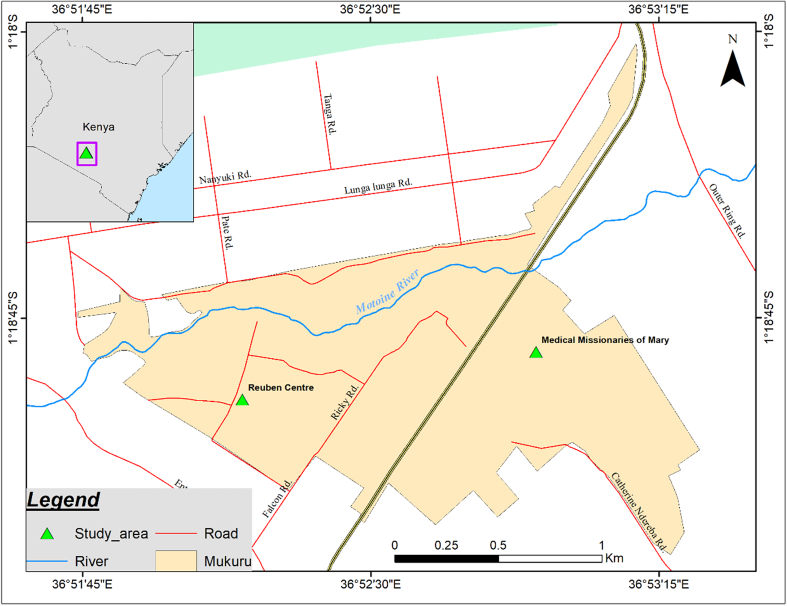
is the only pathogenic species of the genus and is morphologically identical to / ( complex) hence cannot be microscopically differentiated. The other spp. found in humans ( and ) can be differentiated morphologically from this complex. However, some of their morphologic features overlap making differential diagnosis difficult. This study aimed at determining the occurrence of spp. in patients seeking treatment for diarrhea and/or abdominal discomfort at two clinics in Mukuru informal settlement in Nairobi, Kenya. Faecal samples were collected from 895 patients, examined microscopically following direct wet smear and formal-ether concentration methods. spp. positive faecal samples were subjected to DNA extraction and species-specific nested polymerase chain reaction of the 18S ribosomal RNA (rRNA). By microscopy, spp. cysts or trophozoites were detected in 114/895 (12.7%, 95% Confidence Interval (CI) 10.6-15.1) faecal samples. By nested PCR, the prevalence was: (7.5%, 95% CI 5.9-9.4, 67/895) and (8.2%, 95% CI 6.5-10.2, 73/895). Among the spp. complex positive samples, nested PCR detected and DNA in 63/114 (55.3%) and 37/114 (32.5%), samples respectively. Among the / PCR negative samples (32.5%), 21 (18.4%) contained cysts of either (19) or (2) by nested PCR. spp. infections were most common among participants aged 21-30 years; however it was not significant ( = 0.7). spp. infections showed an inverse relationship with diarrhea being most common among participants without diarrhea ( = 0.0). The difference was significant for ( = 0.0) but not significant for ( = 0.1). Only infections were significantly associated with sex ( = 0.0). This study highlights the need for differentiation of from other spp. by molecular tools for better management of amoebiasis.
是该属唯一的致病物种,在形态上与/(复合体)相同,因此无法通过显微镜进行区分。在人类中发现的其他物种(和)在形态上可与该复合体区分开来。然而,它们的一些形态特征存在重叠,使得鉴别诊断变得困难。本研究旨在确定在肯尼亚内罗毕穆库鲁非正式定居点的两家诊所中,因腹泻和/或腹部不适寻求治疗的患者中物种的出现情况。从895名患者中采集粪便样本,采用直接湿涂片法和甲醛-乙醚浓缩法进行显微镜检查。对物种阳性的粪便样本进行DNA提取和18S核糖体RNA(rRNA)的物种特异性巢式聚合酶链反应。通过显微镜检查,在114/895(12.7%,95%置信区间(CI)10.6 - 15.1)份粪便样本中检测到物种的包囊或滋养体。通过巢式PCR,患病率为:(7.5%,95% CI 5.9 - 9.4,67/895)和(8.2%,95% CI 6.5 - 10.2,73/895)。在物种复合体阳性样本中,巢式PCR分别在63/114(55.3%)和37/114(32.5%)的样本中检测到和的DNA。在/ PCR阴性样本(32.5%)中,21份(18.4%)通过巢式PCR检测到含有(19份)或(2份)的包囊。物种感染在21 - 30岁的参与者中最为常见;然而差异不显著(= 0.7)。物种感染与腹泻呈负相关,在无腹泻的参与者中最为常见(= 0.0)。对于差异显著(= 0.0),但对于差异不显著(= 0.1)。只有感染与性别显著相关(= 0.0)。本研究强调需要通过分子工具将与其他物种区分开来,以便更好地管理阿米巴病。