Department of Biological Sciences, University of Calgary, Calgary, Canada.
McCaig Institute for Bone and Joint Health, Calgary, Canada.
Elife. 2021 Apr 26;10:e67612. doi: 10.7554/eLife.67612.
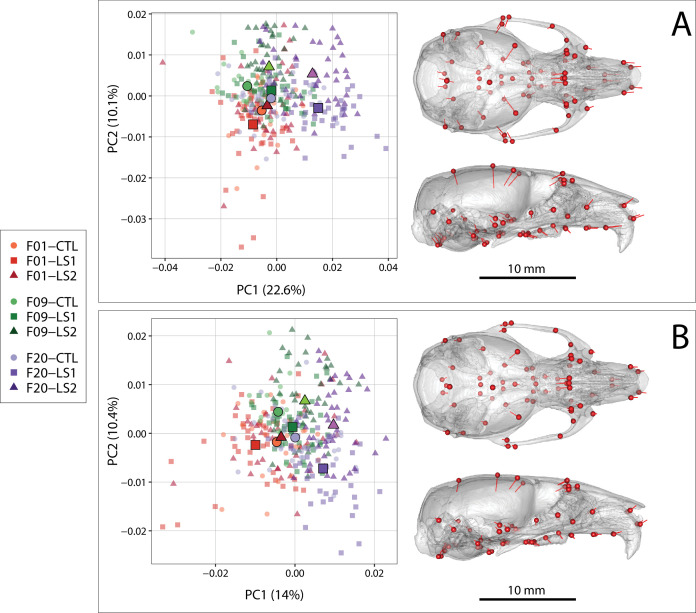
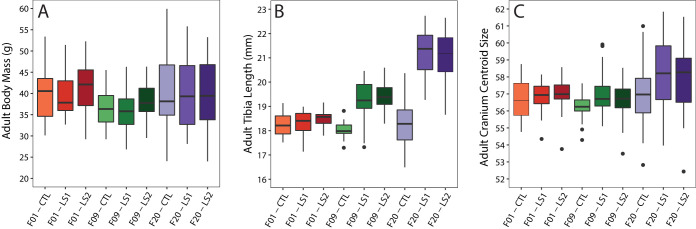
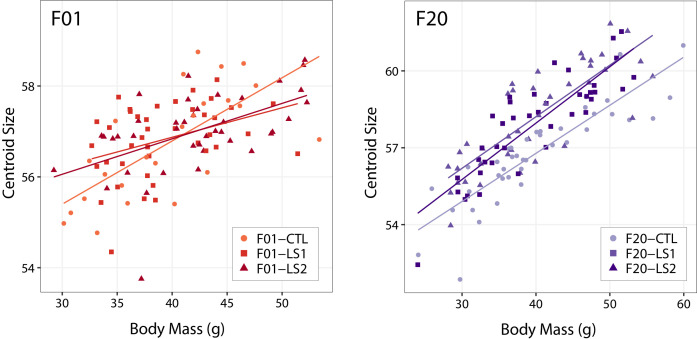
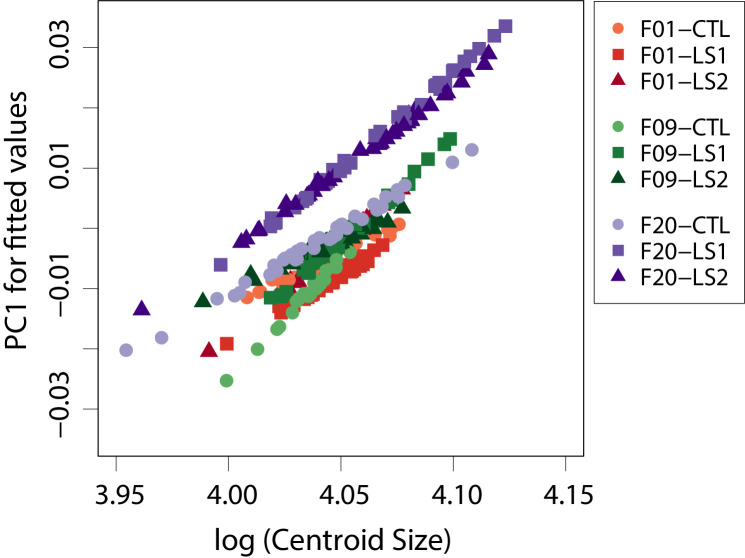
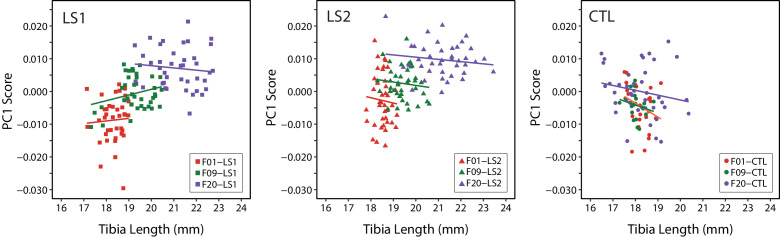
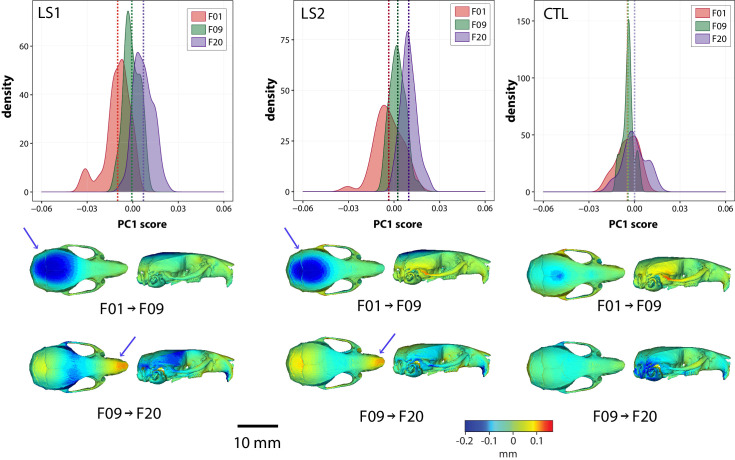
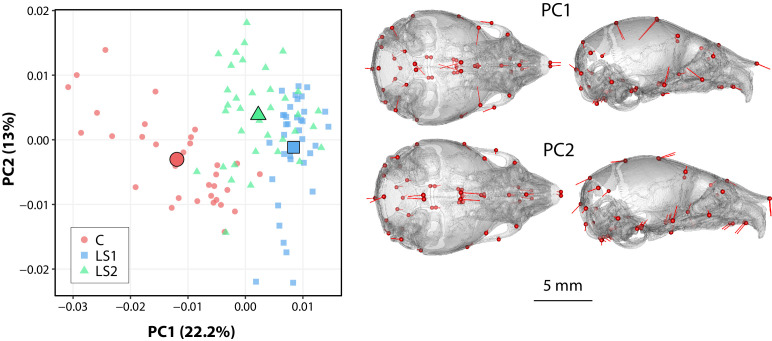
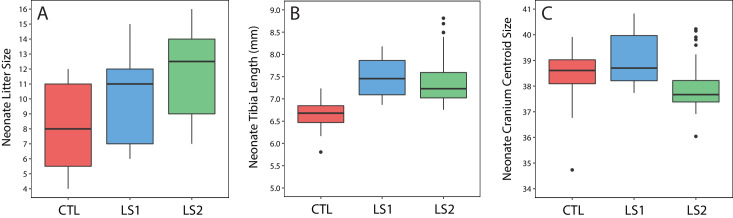
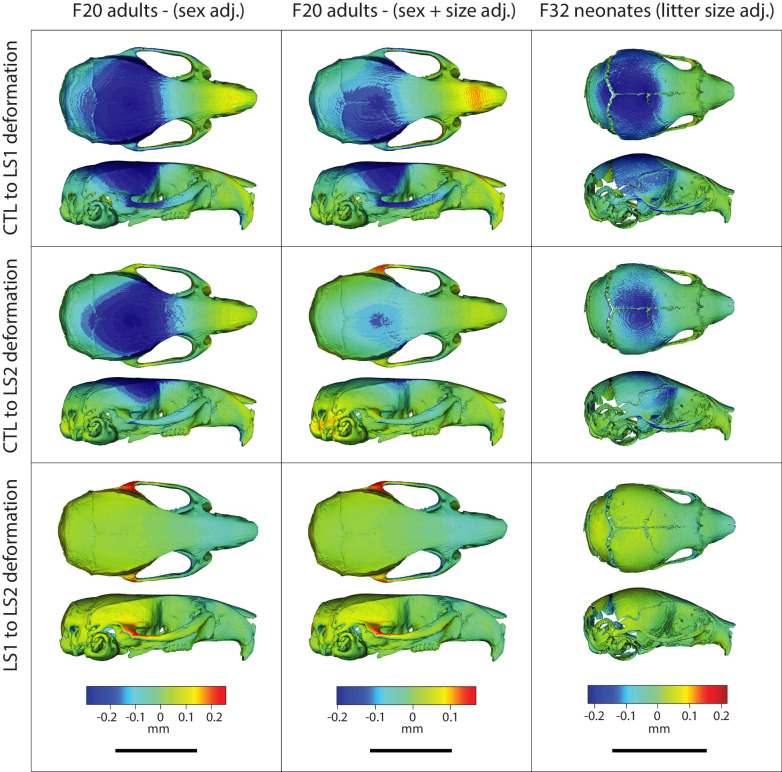
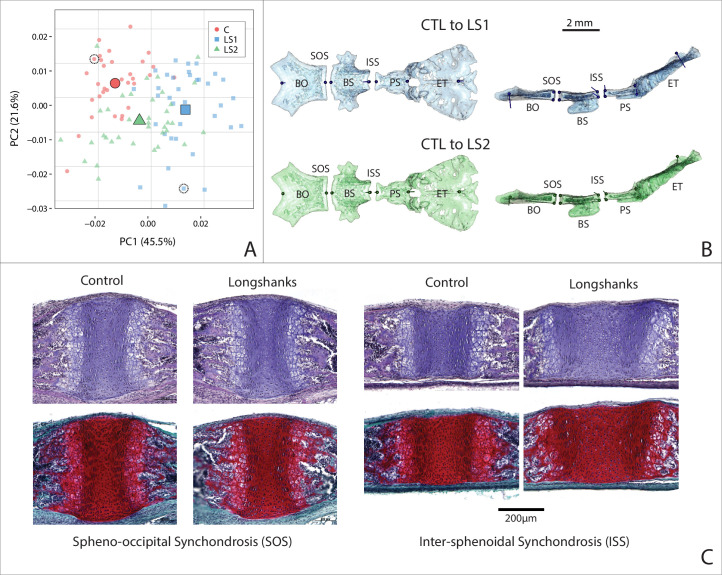
Bones in the vertebrate cranial base and limb skeleton grow by endochondral ossification, under the control of growth plates. Mechanisms of endochondral ossification are conserved across growth plates, which increases covariation in size and shape among bones, and in turn may lead to correlated changes in skeletal traits not under direct selection. We used micro-CT and geometric morphometrics to characterize shape changes in the cranium of the Longshanks mouse, which was selectively bred for longer tibiae. We show that Longshanks skulls became longer, flatter, and narrower in a stepwise process. Moreover, we show that these morphological changes likely resulted from developmental changes in the growth plates of the Longshanks cranial base, mirroring changes observed in its tibia. Thus, indirect and non-adaptive morphological changes can occur due to developmental overlap among distant skeletal elements, with important implications for interpreting the evolutionary history of vertebrate skeletal form.
脊椎动物颅底和附肢骨骼中的骨头通过软骨内骨化生长,受生长板的控制。软骨内骨化的机制在生长板中是保守的,这增加了骨头之间大小和形状的协变,进而可能导致不在直接选择下的骨骼特征的相关变化。我们使用 micro-CT 和几何形态测量学来描述经过选择性繁殖具有更长胫骨的长胫骨鼠的颅骨形状变化。我们表明,长胫骨鼠的颅骨逐渐变长、变平、变窄。此外,我们表明这些形态变化可能是由于长胫骨颅底生长板的发育变化引起的,与在其胫骨中观察到的变化相呼应。因此,由于远距离骨骼元素之间的发育重叠,可能会发生间接的和非适应性的形态变化,这对解释脊椎动物骨骼形态的进化历史具有重要意义。