Special Hospital for Pulmonary Diseases, Rockefellerova 3, 10000 Zagreb, Croatia.
University of Zagreb, Centre for Research and Knowledge Transfer in Biotechnology, Rockefellerova 10, 10000 Zagreb, Croatia; Centre of Excellence for Virus Immunology and Vaccines, Zagreb, Croatia.
Transfus Clin Biol. 2021 Aug;28(3):264-270. doi: 10.1016/j.tracli.2021.04.004. Epub 2021 Apr 24.
The patients with hematological malignancies are a vulnerable group to COVID-19, due to the immunodeficiency resulting from the underlying disease and oncological treatment that significantly impair cellular and humoral immunity. Here we report on a beneficial impact of a passive immunotherapy with convalescent plasma to treat a prolonged, active COVID-19 infection in a patient with a history of nasopharyngeal diffuse large B-cell lymphoma treated with the therapy inducing substantial impairment of particularly humoral arm of immune system. The specific aim was to quantify SARS-CoV2 neutralizing antibodies in a patient plasma during the course of therapy.
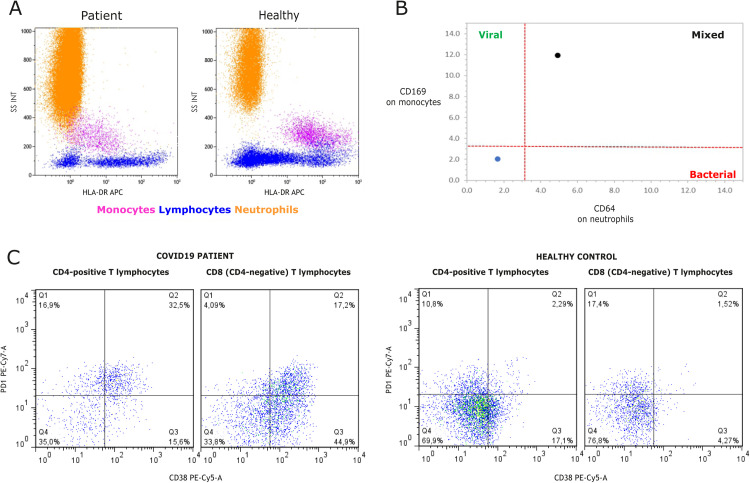
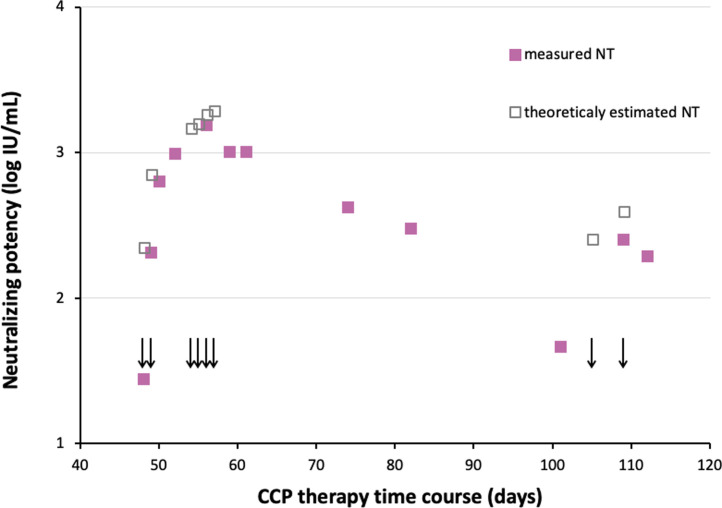
Besides the standard of care treatment and monitoring, neutralizing antibody titers in patient's serum samples, calibrated according to the First WHO International Standard for anti-SARS-CoV-2 immunoglobulin (human), were quantified in a time-dependent manner. During the immunotherapy period peripheral blood flow cytometry immunophenotyping was conducted to characterize lymphocyte subpopulations.
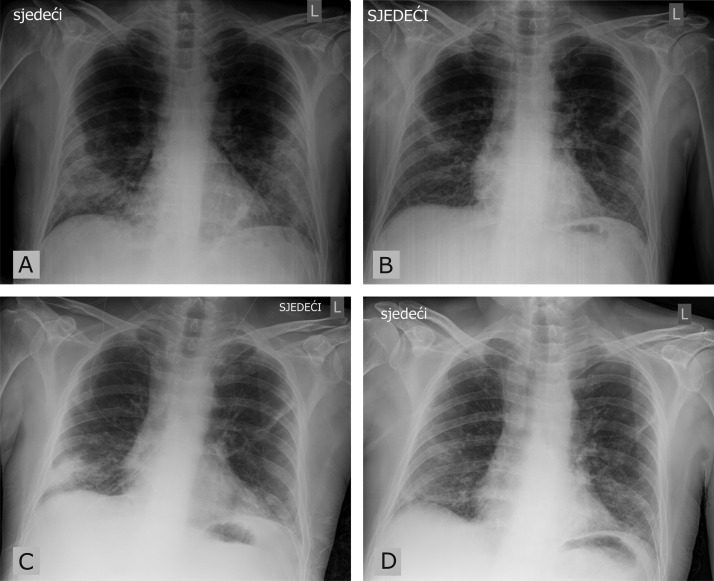
The waves of clinical improvements and worsening coincided with transfused neutralizing antibodies rises and drops in the patient's systemic circulation, proving their contribution in controlling the disease progress. Besides the patient's lack of own humoral immune system, immunophenotyping analysis revealed also the reduced level of helper T-lymphocytes and immune exhaustion of monocytes.
Therapeutic approach based on convalescent plasma transfusion transformed a prolonged, active COVID-19 infection into a manageable chronic disease.
由于基础疾病和肿瘤治疗导致的免疫缺陷,严重损害细胞和体液免疫,血液系统恶性肿瘤患者是 COVID-19 的易感人群。在此,我们报告了一例接受恢复期血浆被动免疫疗法的患者,该患者患有持续性、活动性 COVID-19 感染,既往患有经治疗后会显著损害免疫系统体液免疫的鼻咽弥漫性大 B 细胞淋巴瘤。本研究的具体目的是在治疗过程中定量测定患者血浆中的 SARS-CoV2 中和抗体。
除了标准的治疗和监测外,还根据第一份世界卫生组织 SARS-CoV-2 免疫球蛋白(人)国际标准校准,对患者血清样本中的中和抗体滴度进行了时间依赖性定量分析。在免疫治疗期间,通过外周血流式细胞术免疫表型分析来描述淋巴细胞亚群。
临床改善和恶化的波动与患者全身循环中中和抗体的升高和下降相吻合,证明了它们对控制疾病进展的贡献。除了患者缺乏自身的体液免疫系统外,免疫表型分析还显示辅助性 T 淋巴细胞水平降低和单核细胞免疫耗竭。
基于恢复期血浆输注的治疗方法将持续性、活动性 COVID-19 感染转变为可管理的慢性疾病。