Institute for Transfusion Medicine, University Hospital Essen, Essen, Germany.
Department of Infectious Diseases, West German Centre of Infectious Diseases, Universitätsmedizin Essen, University Duisburg-Essen, Essen, Germany.
Transfusion. 2021 May;61(5):1394-1403. doi: 10.1111/trf.16392. Epub 2021 Apr 8.
Infection with severe acute respiratory syndrome coronavirus 2 (SARS-CoV-2) may be life-threatening, and specific antiviral drugs are currently not available. However, first studies indicated that convalescent plasma treatment might improve the clinical outcome of coronavirus disease 2019 (COVID-19) patients.
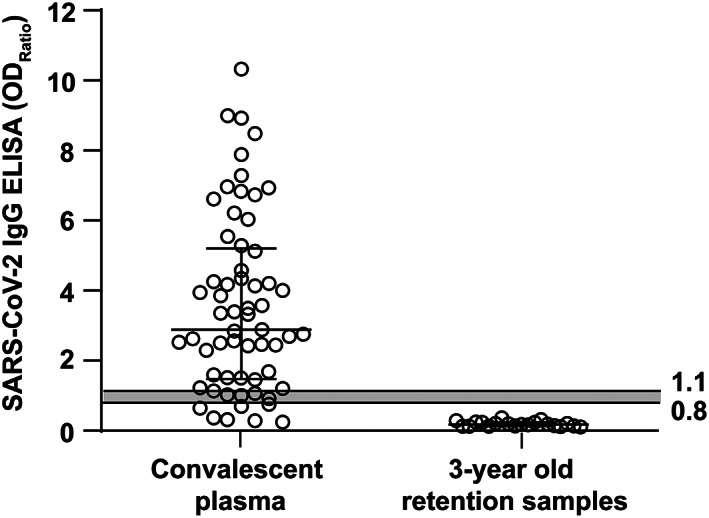
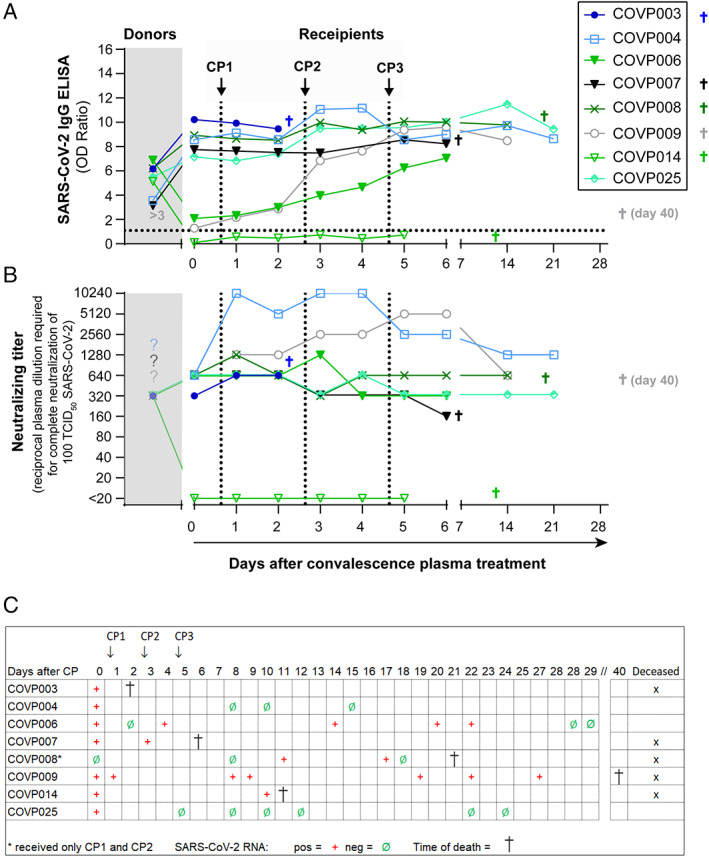
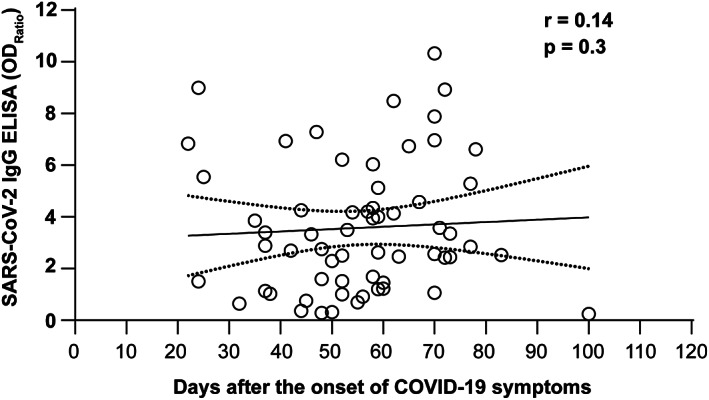
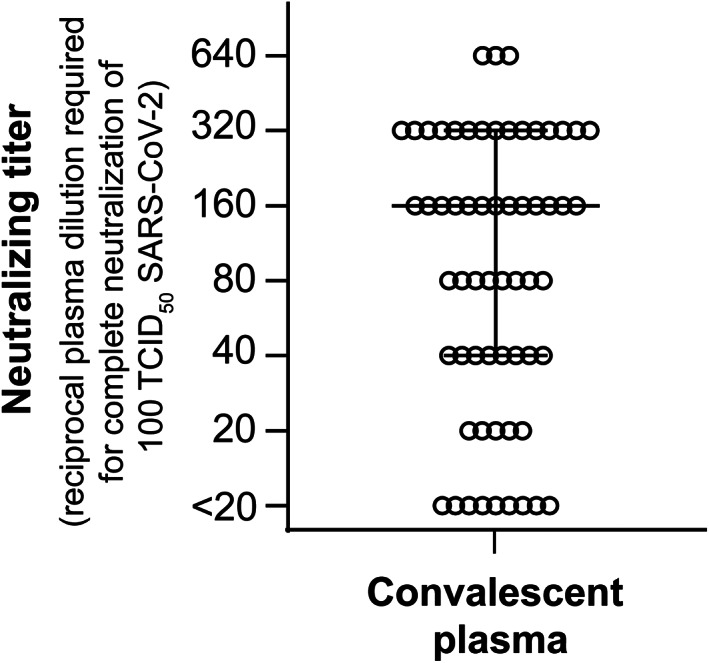
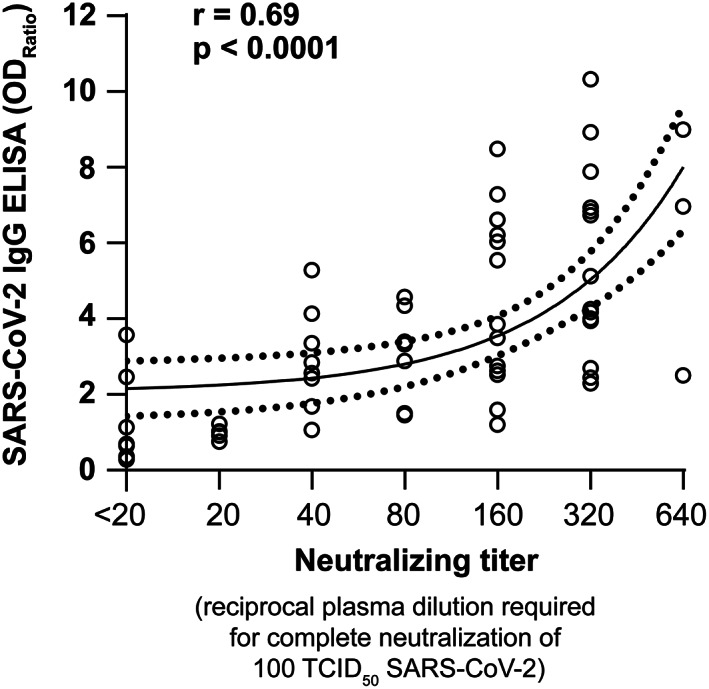
In the current study, we investigated the efficacy of convalescent plasma treatment in eight COVID-19 patients. All the patients were critically ill, and seven of them were SARS-CoV-2 RNA-positive when starting treatment. SARS-CoV-2-specific antibodies were determined by an enzyme-linked immunosorbent assay detecting immunoglobulin G (IgG) antibodies against the S1 protein (Euroimmun), and the neutralizing titers were determined with a cell-culture-based neutralization assay. Plasma treatment started between 4 and 23 days after the onset of symptoms. The patients were usually treated by three plasma units, each containing 200-280 ml, which was applied at day 1, 3, and 5.
Donor sera had on average lower IgG antibody ratios and neutralizing titers than the COVID-19 patients before the onset of treatment (median ratio of 5.8 and neutralizing titer of 1:320 vs. 7.5 and 1:640, respectively). Nevertheless, we observed an increase of antibody ratios in seven and of neutralizing titers in five patients after treatment; which did, however, not correlate with patient survival. Plasma treatment was effective in three patients, but five deceased despite treatment. Patients who deceased had a later treatment onset than survivors and finally died from multiple organ failure.
Our data indicate that the efficacy of convalescent plasma treatment of critically ill COVID-19 patients who already had developed strong antiviral immune responses and organ complications is limited.
感染严重急性呼吸综合征冠状病毒 2(SARS-CoV-2)可能有生命危险,目前尚无特效抗病毒药物。然而,初步研究表明,恢复期血浆治疗可能改善 2019 冠状病毒病(COVID-19)患者的临床结局。
在本研究中,我们调查了 8 例 COVID-19 患者接受恢复期血浆治疗的疗效。所有患者均为重症,开始治疗时 7 例 SARS-CoV-2 RNA 阳性。采用酶联免疫吸附试验(Euroimmun)检测针对 S1 蛋白的 IgG 抗体,检测 SARS-CoV-2 特异性抗体,并用细胞培养中和试验测定中和滴度。血浆治疗于症状出现后 4-23 天开始。患者通常接受 3 个血浆单位治疗,每个单位含 200-280ml,于第 1、3、5 天输注。
供体血清的 IgG 抗体比值和中和滴度平均低于治疗前 COVID-19 患者(中位数比值为 5.8 和中和滴度为 1:320,分别为 7.5 和 1:640)。然而,我们观察到 7 例患者的抗体比值增加,5 例患者的中和滴度增加;但这与患者的存活率无关。血浆治疗对 3 例患者有效,但 5 例患者尽管接受治疗仍死亡。死亡患者的治疗开始时间晚于存活患者,最终死于多器官衰竭。
我们的数据表明,对于已经产生强烈抗病毒免疫反应和器官并发症的重症 COVID-19 患者,恢复期血浆治疗的疗效有限。