Duke University School of Nursing, 307 Trent Drive, Durham, NC, 27710, USA.
Duke University Hospital, 2310 Erwin Road, Durham, NC, 27710, USA.
Implement Sci. 2021 Apr 26;16(1):45. doi: 10.1186/s13012-021-01112-4.
Central line-associated bloodstream infections (CLABSIs) result in approximately 28,000 deaths and approximately $2.3 billion in added costs to the U.S. healthcare system each year, and yet, many of these infections are preventable. At two large health systems in the southeast United States, CLABSIs continue to be an area of opportunity. Despite strong evidence for interventions to prevent CLABSI and reduce associated patient harm, such as use of chlorhexidine gluconate (CHG) bathing, the adoption of these interventions in practice is poor. The primary objective of this study was to assess the effect of a tailored, multifaceted implementation program on nursing staff's compliance with the CHG bathing process and electronic health record (EHR) documentation in critically ill patients. The secondary objectives were to examine the (1) moderating effect of unit characteristics and cultural context, (2) intervention effect on nursing staff's knowledge and perceptions of CHG bathing, and (3) intervention effect on CLABSI rates.
A stepped wedged cluster-randomized design was used with units clustered into 4 sequences; each sequence consecutively began the intervention over the course of 4 months. The Grol and Wensing Model of Implementation helped guide selection of the implementation strategies, which included educational outreach visits and audit and feedback. Compliance with the appropriate CHG bathing process and daily CHG bathing documentation were assessed. Outcomes were assessed 12 months after the intervention to assess for sustainability.
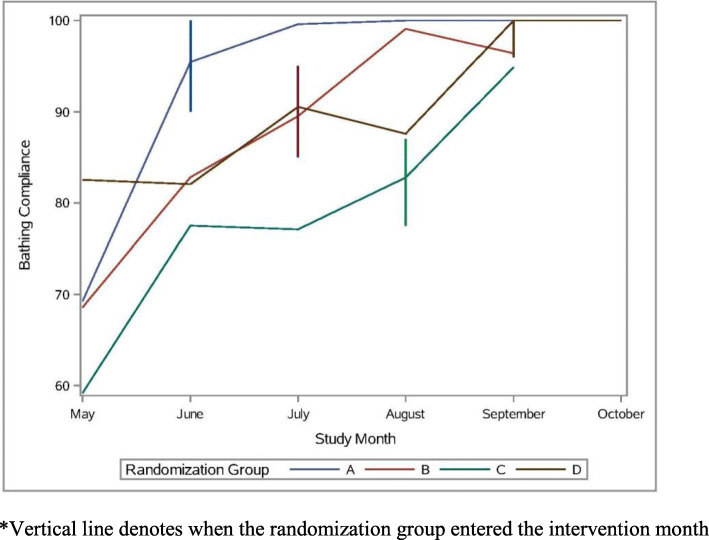
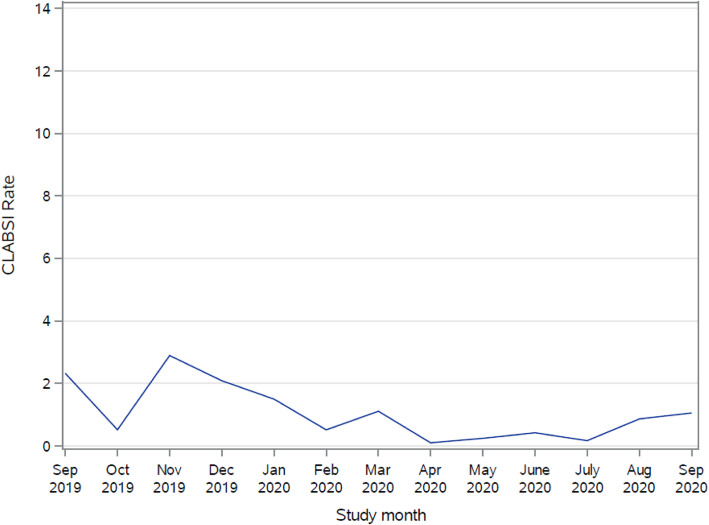
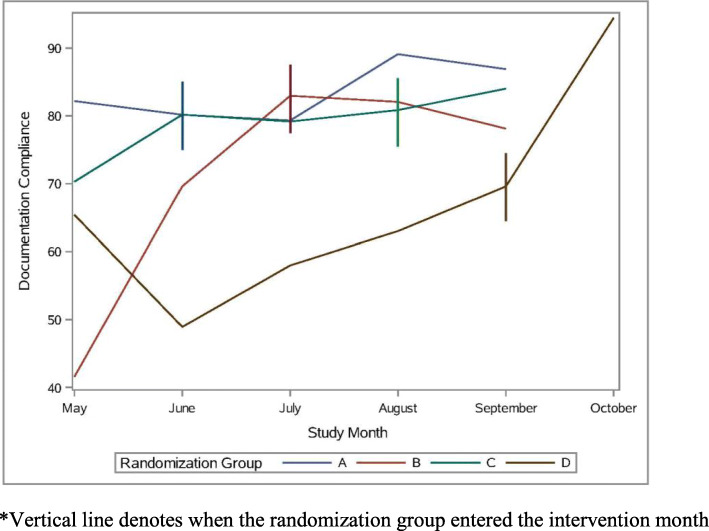
Among the 14 clinical units participating, 8 were in a university hospital setting and 6 were in community hospital settings. CHG bathing process compliance and nursing staff's knowledge and perceptions of CHG bathing significantly improved after the intervention (p = .009, p = .002, and p = .01, respectively). CHG bathing documentation compliance and CLABSI rates did not significantly improve; however, there was a clinically significant 27.4% decrease in CLABSI rates.
Using educational outreach visits and audit and feedback implementation strategies can improve adoption of evidence-based CHG bathing practices.
ClinicalTrials.gov, NCT03898115 , Registered 28 March 2019.
中心静脉相关血流感染(CLABSI)每年导致美国医疗系统约 2.8 万人死亡,增加约 23 亿美元成本,但这些感染大多是可以预防的。在美国东南部的两个大型医疗系统中,CLABSI 仍然是一个机会领域。尽管有强有力的证据表明干预措施可以预防 CLABSI 并减少相关的患者伤害,例如使用葡萄糖酸洗必泰(CHG)沐浴,但这些干预措施在实践中的采用情况很差。这项研究的主要目的是评估定制的、多方面的实施计划对护理人员在危重病患者中遵守 CHG 沐浴过程和电子健康记录(EHR)文档的影响。次要目标是检查:(1)单位特征和文化背景的调节作用;(2)干预措施对护理人员对 CHG 沐浴的知识和看法的影响;(3)干预措施对 CLABSI 发生率的影响。
采用阶梯式楔形集群随机设计,将单位分为 4 个序列进行聚类;每个序列连续 4 个月开始干预。实施的 Grol 和 Wensing 模型有助于指导实施策略的选择,包括教育外展访问和审核与反馈。评估了适当的 CHG 沐浴过程的依从性和每日 CHG 沐浴文档记录情况。在干预后 12 个月评估结果,以评估可持续性。
在参与的 14 个临床单位中,8 个在大学医院,6 个在社区医院。干预后,CHG 沐浴过程的依从性以及护理人员对 CHG 沐浴的知识和看法显著提高(p =.009,p =.002,p =.01)。CHG 沐浴文档记录的依从性和 CLABSI 发生率没有显著提高;但是,CLABSI 发生率下降了 27.4%,有临床意义。
使用教育外展访问和审核与反馈实施策略可以提高基于证据的 CHG 沐浴实践的采用率。
ClinicalTrials.gov,NCT03898115,2019 年 3 月 28 日注册。