Indian Council of Medical Research-Regional Medical Research Centre, Nalco Square, Bhubaneswar, Odisha751023, India.
Epidemiol Infect. 2021 Apr 27;149:e139. doi: 10.1017/S0950268821000972.
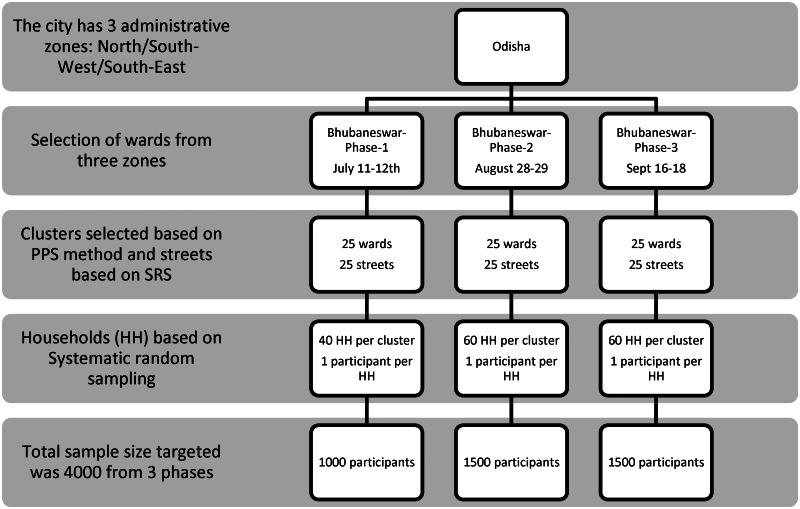
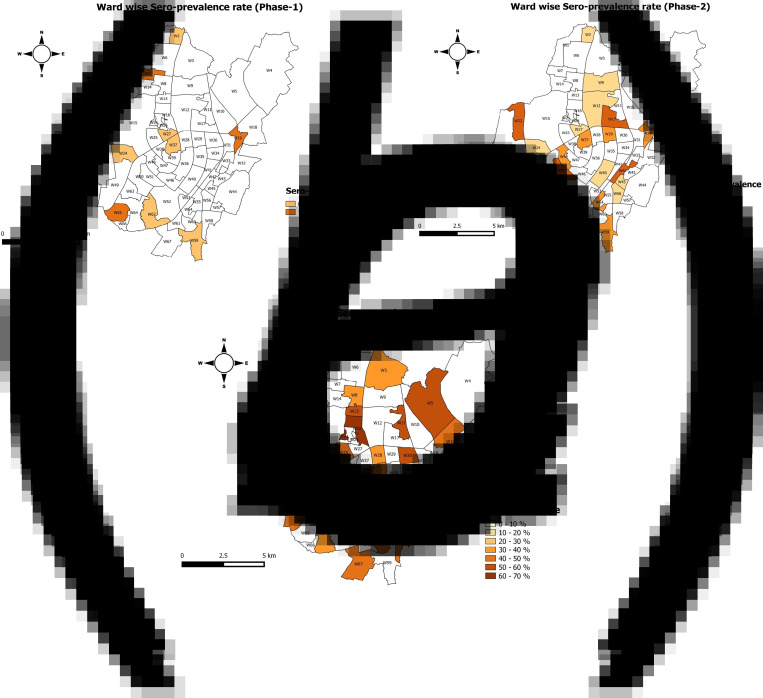
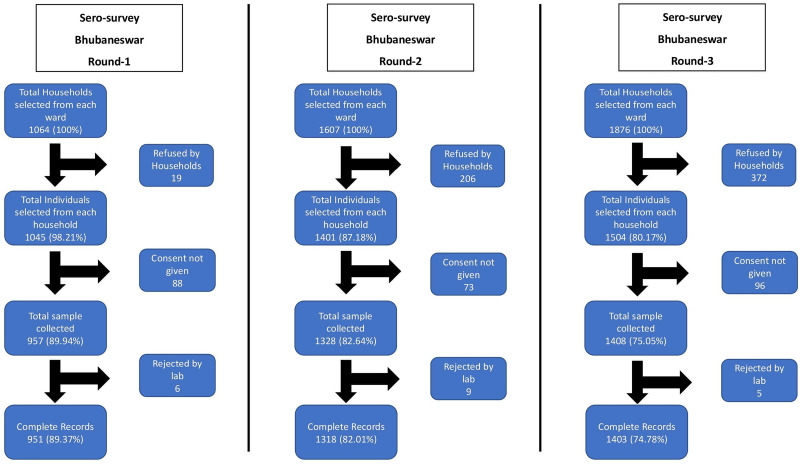
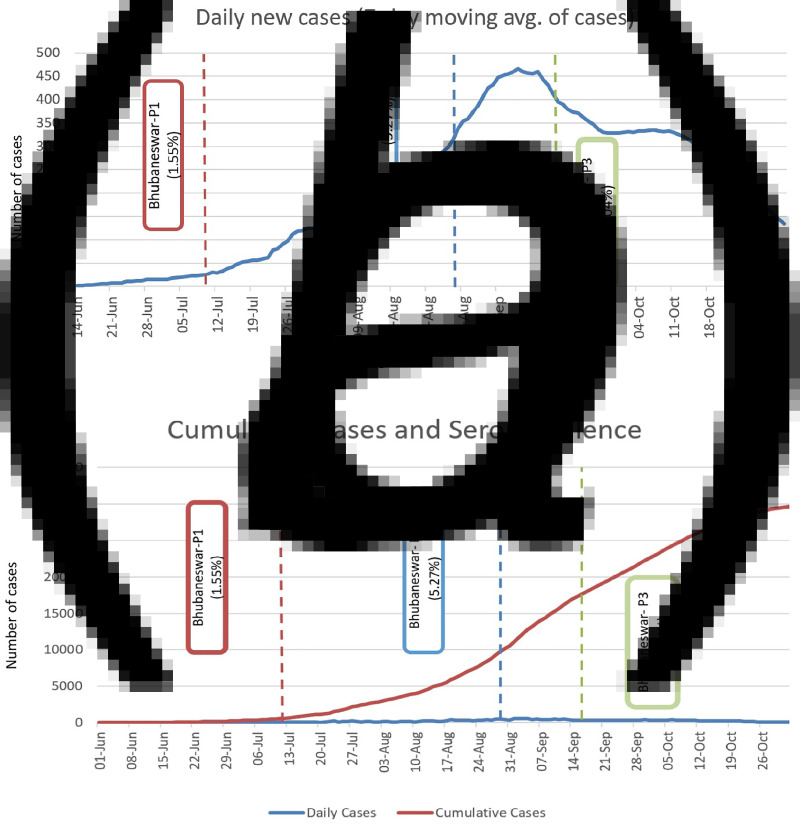
The study aims to estimate and compare the severe acute respiratory syndrome coronavirus 2 (SARS-CoV-2) seroprevalence, the fraction of asymptomatic or subclinical infections in the population, determine the demographic risk factors and analyse the antibody development at different time points among adults in Bhubaneswar city, India. This was a serial three-round cross-sectional, community-based study where participants were selected from the residents of Bhubaneswar city using multi-stage random sampling. Blood samples were collected during household visits along with demographic and clinical data from every participant. Total anti-SARS-CoV-2 antibody present in serum was assessed using the electro-chemiluminescence immunoassay platform. Temporal comparisons of the community seroprevalence were performed against the detected number of cumulative cases, active cases, recoveries and deaths. A total of 3693 participants were enrolled in this study with a cumulative non-response rate of 18.33% in all the three rounds. The gender-weighted seroprevalence for the city in the first round was 1.55% (95% confidence interval (CI) 0.84-2.58), second round was 5.27% (95% CI 4.13-6.59) and in the third round was 49.04% (95% CI 46.39-51.68). In the first round, the seroprevalence was found to be highest in the elderly population, whereas the seroprevalence for the second and third phases was highest in the age group of 30-39 years. Seroprevalence showed an increasing trend over the three time periods, with the highest seropositivity rates among individuals sampled between 16 and 18 September 2020. By the third round, 93.93% of those who had previously been tested positive by real-time reverse transcription polymerase chain reaction had seroconversion and 46.57% of those who had been tested negative also showed seroconversion. Infection to case ratio during first round was 27.05, for second round and third round it was 5.62 and 17.91, respectively.
本研究旨在评估和比较严重急性呼吸综合征冠状病毒 2(SARS-CoV-2)血清流行率、人群中无症状或亚临床感染的比例,确定人口统计学风险因素,并分析印度布巴内斯瓦尔市成年人在不同时间点的抗体发展情况。这是一项连续三轮的横断面、基于社区的研究,参与者是通过多阶段随机抽样从布巴内斯瓦尔市的居民中选择的。在家庭访问期间采集血样,并从每位参与者那里收集人口统计学和临床数据。使用电化学发光免疫分析平台评估血清中存在的总抗 SARS-CoV-2 抗体。针对累计病例数、活动病例数、康复数和死亡数,对社区血清流行率进行了时间比较。本研究共纳入 3693 名参与者,三轮累积无应答率为 18.33%。第一轮全市加权血清流行率为 1.55%(95%置信区间(CI)0.84-2.58),第二轮为 5.27%(95% CI 4.13-6.59),第三轮为 49.04%(95% CI 46.39-51.68)。在第一轮中,老年人群的血清流行率最高,而在第二和第三阶段,30-39 岁年龄组的血清流行率最高。血清流行率呈上升趋势,在 2020 年 9 月 16 日至 18 日之间采样的个体中,血清阳性率最高。到第三轮时,93.93%的实时逆转录聚合酶链反应检测呈阳性的个体出现血清转化,46.57%的检测呈阴性的个体也出现血清转化。第一轮的感染与病例比为 27.05,第二轮和第三轮分别为 5.62 和 17.91。