Organisation de Coordination pour la lutte Contre les Endémies en Afrique Centrale, Yaounde, Cameroon.
Vector-Borne Diseases Laboratory, Applied Biology and Ecology Research Unit, Department of Animal Biology, Faculty of Science, University of Dschang, Yaounde, Cameroon.
J Infect Dis. 2021 Apr 27;223(12 Suppl 2):S155-S170. doi: 10.1093/infdis/jiaa774.
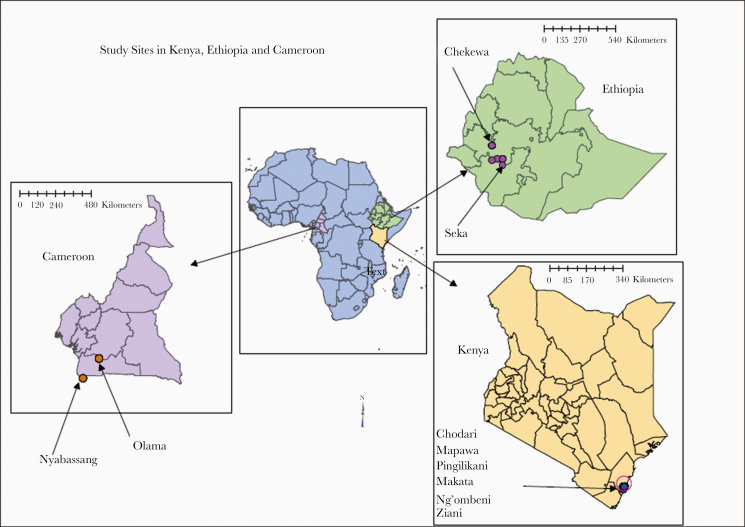
In order to improve our understanding of the fundamental limits of core interventions and guide efforts based on prioritization and identification of effective/novel interventions with great potentials to interrupt persistent malaria transmission in the context of high vector control coverage, the drivers of persistent disease transmission were investigated in three eco-epidemiological settings; forested areas in Cameroon, coastal area in Kenya and highland areas in Ethiopia.
Mosquitoes were sampled in three eco-epidemiological settings using different entomological sampling techniques and analysed for Plasmodium infection status and blood meal origin in blood-fed specimens. Human behavioural surveys were conducted to assess the knowledge and attitude of the population on malaria and preventive measures, their night activities, and sleeping pattern. The parasitological analysis was conducted to determine the prevalence of Plasmodium infection in the population using rapid diagnostic tests.
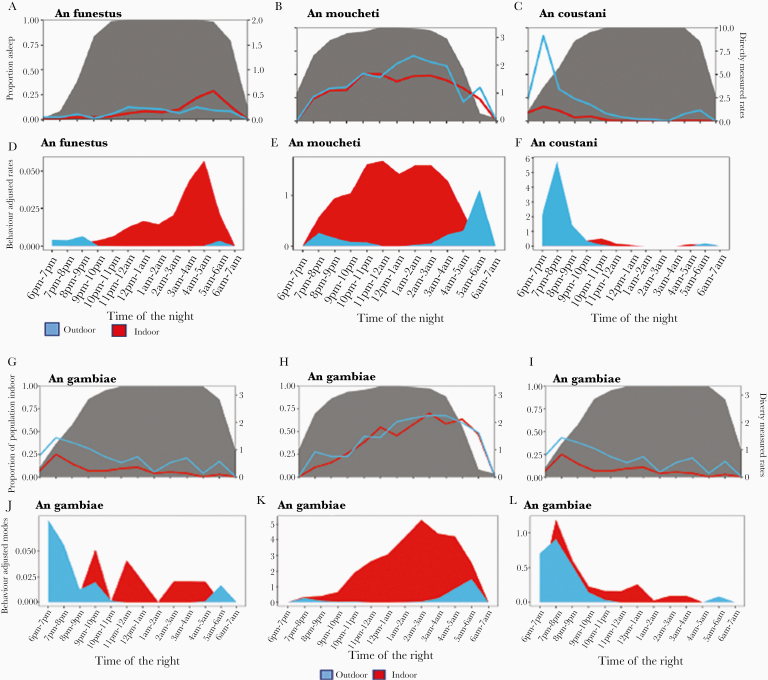
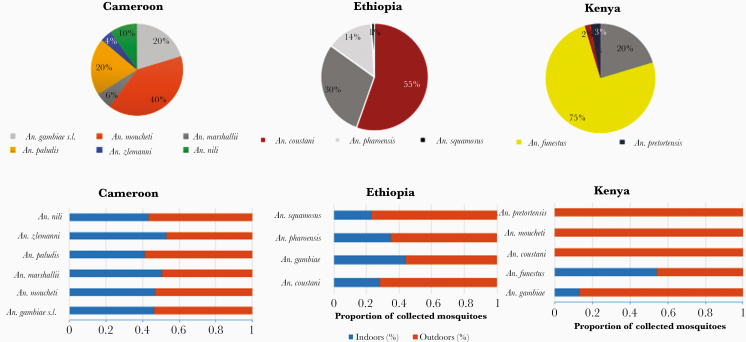
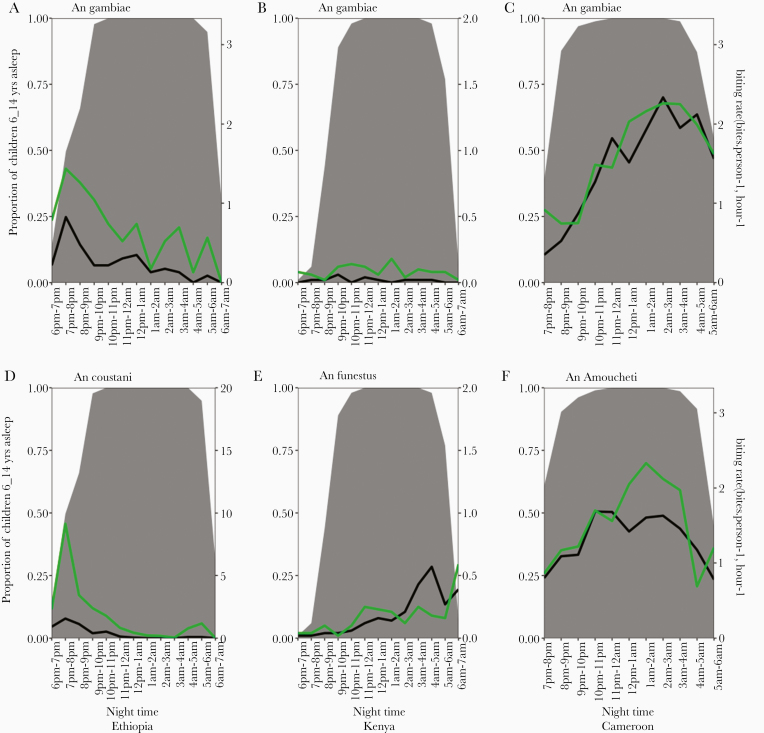
Despite the diversity in the mosquito fauna, their biting behaviour was found to be closely associated to human behaviour in the three settings. People in Kenya and Ethiopia were found to be more exposed to mosquito bites during the early hours of the evening (18-21h) while it was in the early morning (4-6 am) in Cameroon. Malaria transmission was high in Cameroon compared to Kenya and Ethiopia with over 50% of the infected bites recorded outdoors. The non-users of LLINs were 2.5 to 3 times more likely to be exposed to the risk of acquiring malaria compared to LLINs users. Malaria prevalence was high (42%) in Cameroon, and more than half of the households visited had at least one individual infected with Plasmodium parasites.
The study suggests high outdoor malaria transmission occurring in the three sites with however different determinants driving residual malaria transmission in these areas.
为了提高我们对核心干预措施基本限制的理解,并根据优先顺序和确定具有中断持久性疟疾传播潜力的有效/新型干预措施的能力来指导工作,在高媒介控制覆盖的背景下,在三个生态流行病学环境中调查了持久性疾病传播的驱动因素;喀麦隆的森林地区、肯尼亚的沿海地区和埃塞俄比亚的高地地区。
在三个生态流行病学环境中,使用不同的昆虫学采样技术对蚊子进行采样,并对吸血标本中的疟原虫感染状况和血液来源进行分析。开展了人类行为调查,以评估人群对疟疾和预防措施的知识和态度、他们的夜间活动和睡眠模式。寄生虫学分析用于使用快速诊断测试确定人群中疟原虫感染的患病率。
尽管蚊子种类繁多,但在这三个环境中,它们的叮咬行为与人类行为密切相关。肯尼亚和埃塞俄比亚的人在傍晚(18-21 点)的早些时候发现更容易被蚊子叮咬,而在喀麦隆则是清晨(4-6 点)。与肯尼亚和埃塞俄比亚相比,喀麦隆的疟疾传播率较高,记录到超过 50%的感染叮咬发生在户外。与使用长效驱虫蚊帐(LLINs)的人相比,不使用 LLINs 的人感染疟疾的风险高 2.5 至 3 倍。喀麦隆的疟疾患病率较高(42%),超过一半的家访家庭都有至少一个人感染疟原虫寄生虫。
该研究表明,三个地点都存在高户外疟疾传播,但这些地区的残留疟疾传播有不同的驱动因素。