Institut de Recherche pour le Développement, Portiragnes, France.
HydroSciences Montpellier, Institut de Recherche pour le Développement (IRD), CNRS , Université Montpellier, Montpellier, France.
J Infect Dis. 2021 Apr 27;223(12 Suppl 2):S61-S80. doi: 10.1093/infdis/jiab084.
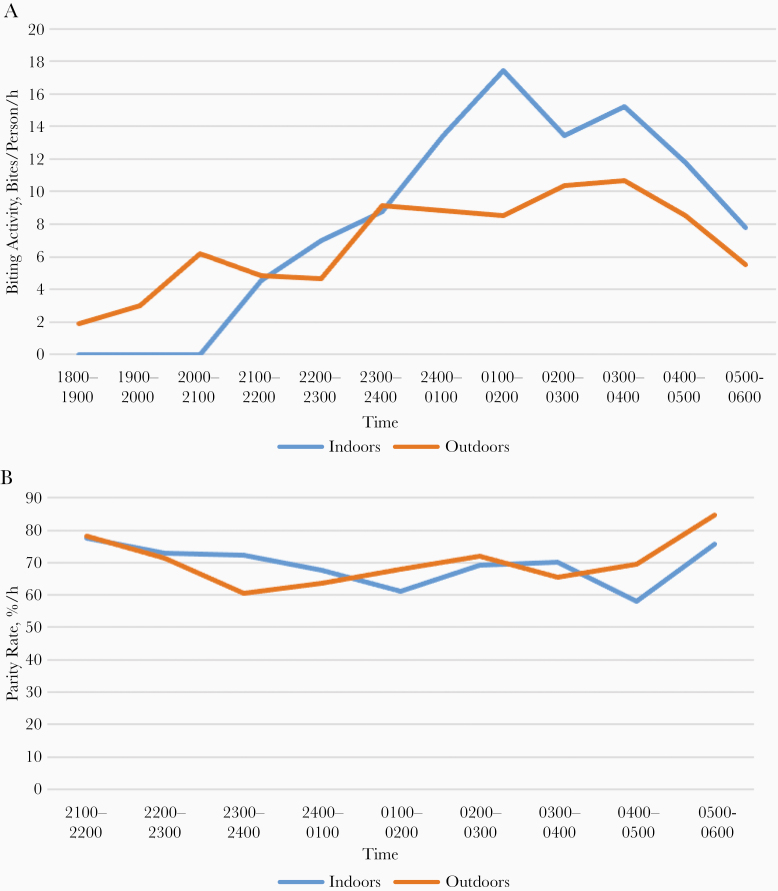
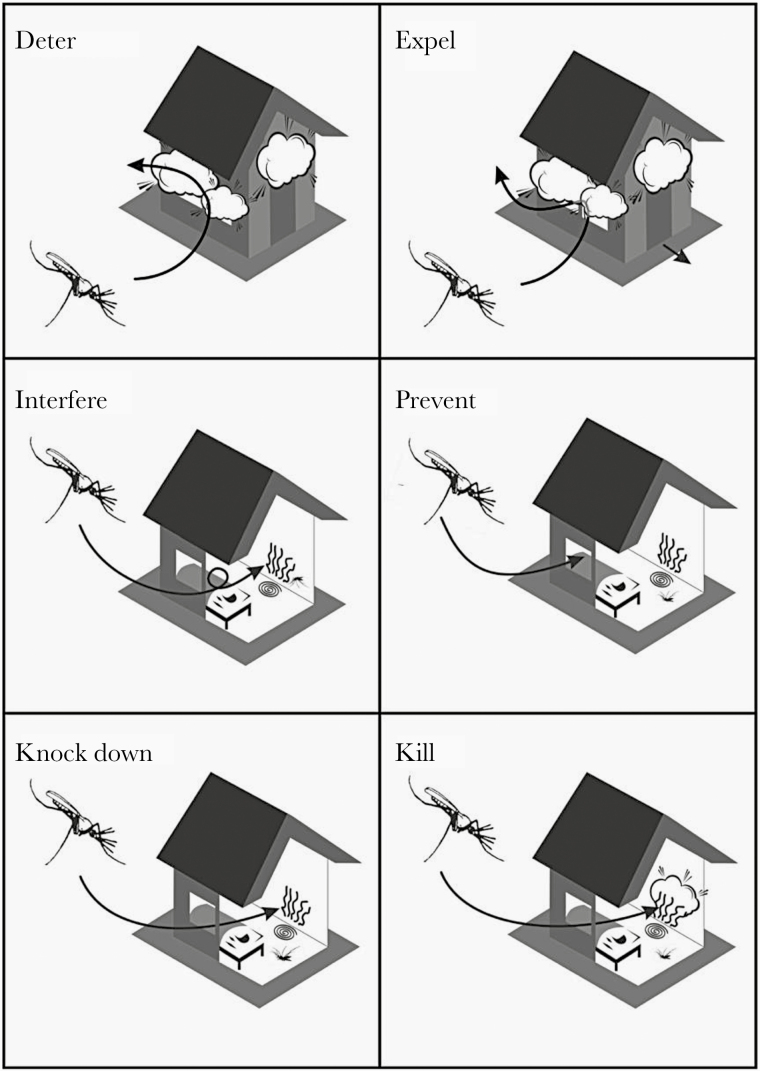
Residual malaria transmission is the actual maintained inoculation of Plasmodium, in spite of a well-designed and implemented vector control programs, and is of great concern for malaria elimination. Residual malaria transmission occurs under several possible circumstances, among which the presence of exophilic vector species, such as Anopheles dirus, or indoor- and outdoor-biting vectors, such as Anopheles nili, or specific behavior, such as feeding on humans indoors, then resting or leaving the house the same night (such as Anopheles moucheti) or also changes in behavior induced by insecticides applied inside houses, such as the well-known deterrent effect of permethrin-treated nets or the irritant effect of DDT. The use of insecticides may change the composition of local Anopheles populations, such as A. arabiensis taking up the place of A. gambiae in Senegal, A. aquasalis replacing A. darlingi in Guyana, or A. harrisoni superseding A. minimus in Vietnam. The change in behavior, such as biting activity earlier than usually reported-for example, Anopheles funestus after a large-scale distribution of long-lasting insecticidal nets-or insecticide resistance, in particular the current spread of pyrethroid resistance, could hamper the efficacy of classic pyrethroid-treated long-lasting insecticidal nets and maintained transmission. These issues must be well documented in every situation to elaborate, implement, monitor, and evaluate tailored vector control programs, keeping in mind that they must be conceived as integrated programs with several well and appropriately coordinated approaches, combining entomological but also parasitological, clinical, and social methods and analyses. A successful integrated vector control program must then be designed to reduce transmission and incidence rates of malaria morbidity and overall mortality.
残余疟疾传播是指尽管设计和实施了良好的病媒控制计划,但实际上仍存在疟原虫的持续接种,这是消除疟疾的一大关注点。残余疟疾传播可能发生在几种情况下,其中包括嗜人按蚊等外栖性媒介物种的存在,或室内外叮咬媒介,如奈氏按蚊,或特定行为,如在室内吸食人类血液,然后当晚休息或离开房屋(如穆氏按蚊),或室内杀虫剂应用引起的行为变化,如拟除虫菊酯处理蚊帐的明显驱避作用或滴滴涕的刺激性作用。杀虫剂的使用可能会改变当地按蚊种群的组成,例如在塞内加尔,阿拉伯按蚊取代冈比亚按蚊,在圭亚那,淡色库蚊取代致倦库蚊,或在越南,哈氏按蚊取代微小按蚊。行为的改变,例如比通常报告的更早的叮咬活动——例如,在大规模分发长效杀虫剂处理蚊帐后,致倦库蚊——或抗药性,特别是目前拟除虫菊酯抗药性的传播,可能会影响经典拟除虫菊酯处理长效杀虫剂处理蚊帐的效果和持续传播。在每种情况下,都必须详细记录这些问题,以详细说明、实施、监测和评估有针对性的病媒控制计划,同时要记住,这些计划必须被视为具有多种良好且适当协调的方法的综合计划,结合昆虫学但也包括寄生虫学、临床和社会方法和分析。然后,必须设计一个成功的综合病媒控制计划,以降低疟疾发病率和总死亡率的传播和发病率。