Department of Statistics, University of Oxford, Oxford, UK.
Center for Communicable Disease Dynamics, Department of Epidemiology, Harvard T.H. Chan School of Public Health, Boston, MA, USA.
Science. 2021 May 28;372(6545). doi: 10.1126/science.abg5298. Epub 2021 Apr 27.
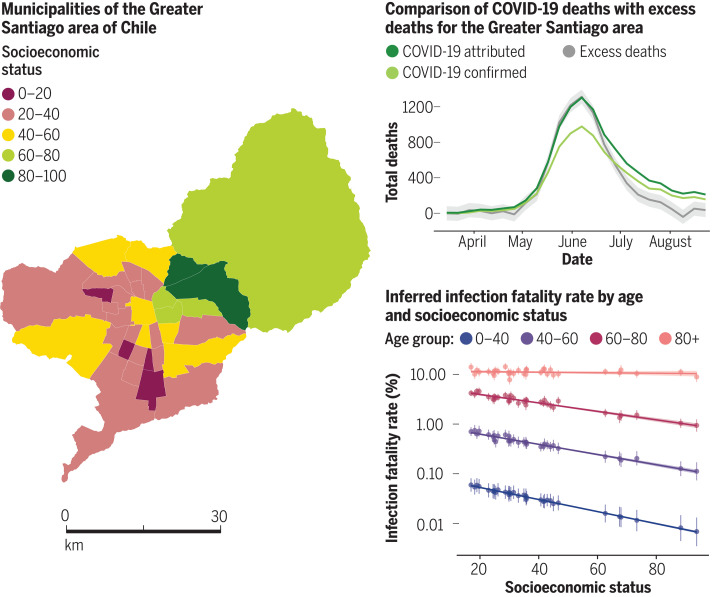
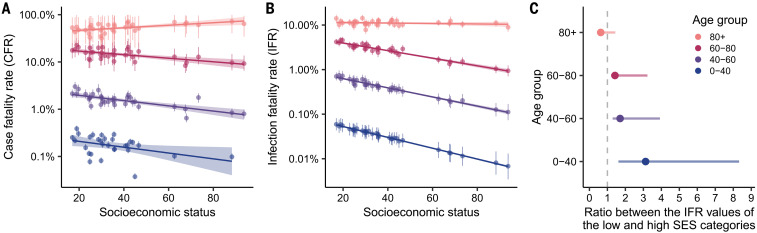
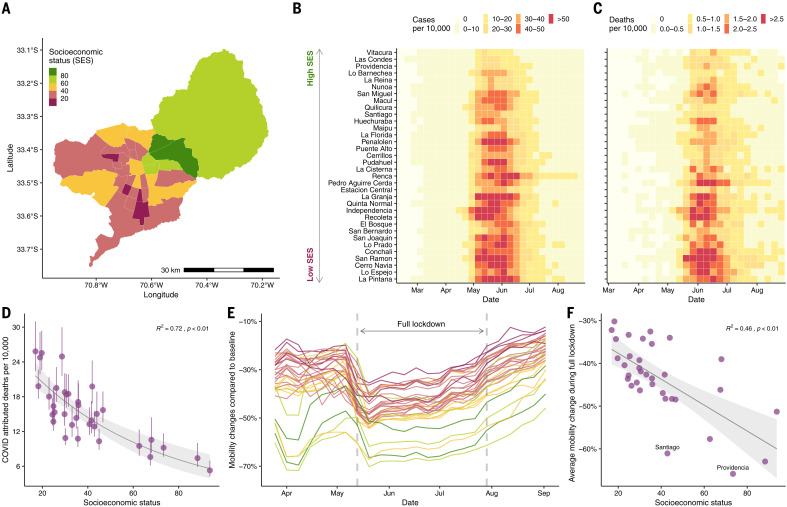
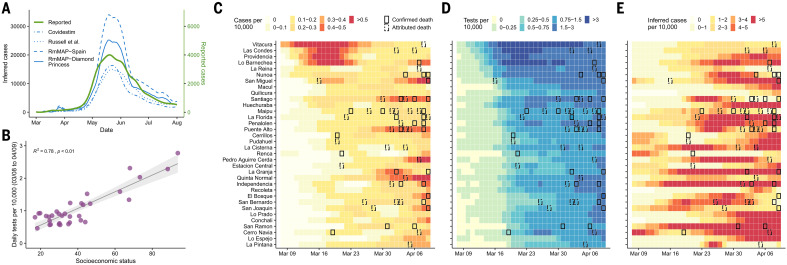
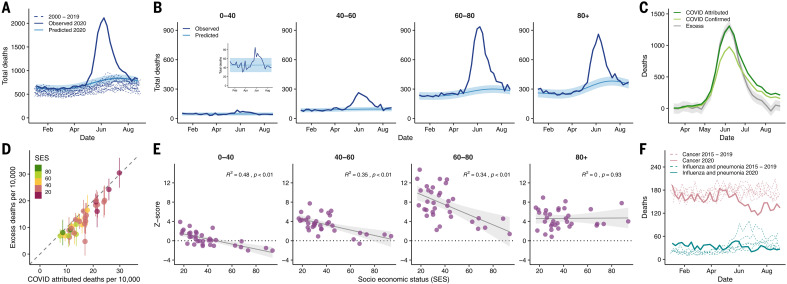
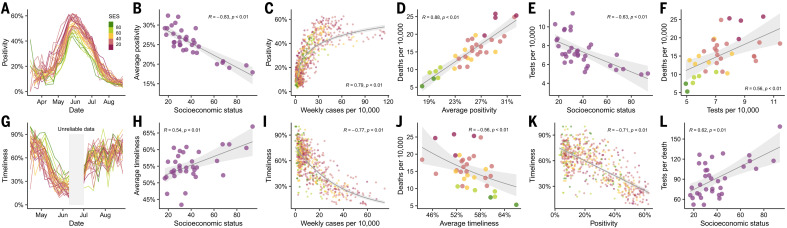
The COVID-19 pandemic has affected cities particularly hard. Here, we provide an in-depth characterization of disease incidence and mortality and their dependence on demographic and socioeconomic strata in Santiago, a highly segregated city and the capital of Chile. Our analyses show a strong association between socioeconomic status and both COVID-19 outcomes and public health capacity. People living in municipalities with low socioeconomic status did not reduce their mobility during lockdowns as much as those in more affluent municipalities. Testing volumes may have been insufficient early in the pandemic in those places, and both test positivity rates and testing delays were much higher. We find a strong association between socioeconomic status and mortality, measured by either COVID-19-attributed deaths or excess deaths. Finally, we show that infection fatality rates in young people are higher in low-income municipalities. Together, these results highlight the critical consequences of socioeconomic inequalities on health outcomes.
新冠疫情对城市的影响尤为严重。在这里,我们深入分析了智利首都圣地亚哥的疾病发病率和死亡率及其与人口统计学和社会经济阶层的关系。我们的分析表明,社会经济地位与 COVID-19 结果和公共卫生能力之间存在很强的关联。在封锁期间,居住在社会经济地位较低的城市的人并没有像那些在较富裕的城市的人那样减少他们的流动性。在疫情早期,这些地方的检测量可能不足,检测阳性率和检测延迟都高得多。我们发现社会经济地位与死亡率之间存在很强的关联,这可以通过 COVID-19 归因死亡或超额死亡来衡量。最后,我们发现年轻人的感染病死率在低收入城市更高。总之,这些结果突出了社会经济不平等对健康结果的重大影响。