Departamento de Fisiología, Facultad de Farmacia, Universidad de Sevilla. CL Profesor García González, Sevilla, Spain.
Epidemiología Clínica y Riesgo Cardiovascular, Instituto de Biomedicina de Sevilla (IBIS), Hospital Universitario Virgen del Rocío - Consejo Superior de Investigaciones Científicas - Universidad de Sevilla. Avda. Manuel Siurot s/n, Sevilla, Spain.
Mol Vis. 2021 Apr 2;27:161-178. eCollection 2021.
Increased reactive oxygen species (ROS) released by NADPH oxidase and inflammation are associated with arterial hypertension and eye diseases associated with high blood pressure, including glaucoma, retinopathies (e.g., age-related macular degeneration), and choroidopathies affecting ocular function; however, the mechanisms underlying these adverse outcomes remain undefined. The present study was designed to highlight the importance of oxidative stress in severe hypertension-related eye damage.
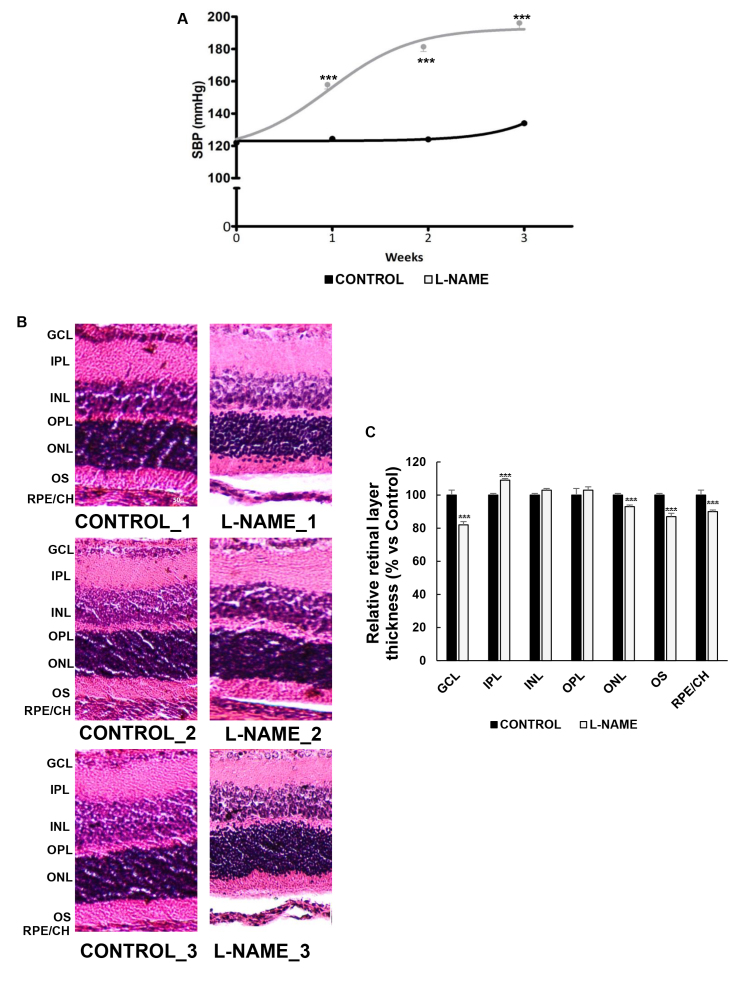
Male Wistar rats (n = 7, unless otherwise specified for specific experiments) were administered an oral dose of 30 mg of Nω-nitro-L-arginine methyl ester (L-NAME) per kilogram of bodyweight and day for 3 weeks; chronic administration with L-NAME is a validated experimental approach resulting in severe hypertension secondary to nitric oxide (NO) depletion and subsequent vasoconstriction in the systemic circulation. Upon treatment completion, histomorphometric studies, NADPH oxidase activity, and ROS production were measured in eyecup homogenates and paraffin-embedded sections from control and L-NAME-treated animals. In addition, immunohistofluorescence, western blotting, and real-time PCR (RT-qPCR) analyses were performed in the eye and the retina to evaluate the expression of i) NADPH oxidase main isoforms (NOX1, NOX2, and NOX4) and subunits (p22phox and p47phox); ii) glial fibrillary acidic protein (GFAP), as a marker of microglial activation in the retina; iii) antioxidant enzymes; and iv) endothelial constitutive (eNOS) and inflammation inducible (iNOS) nitric oxide synthase isoforms, and nitrotyrosine as a versatile biomarker of oxidative stress.
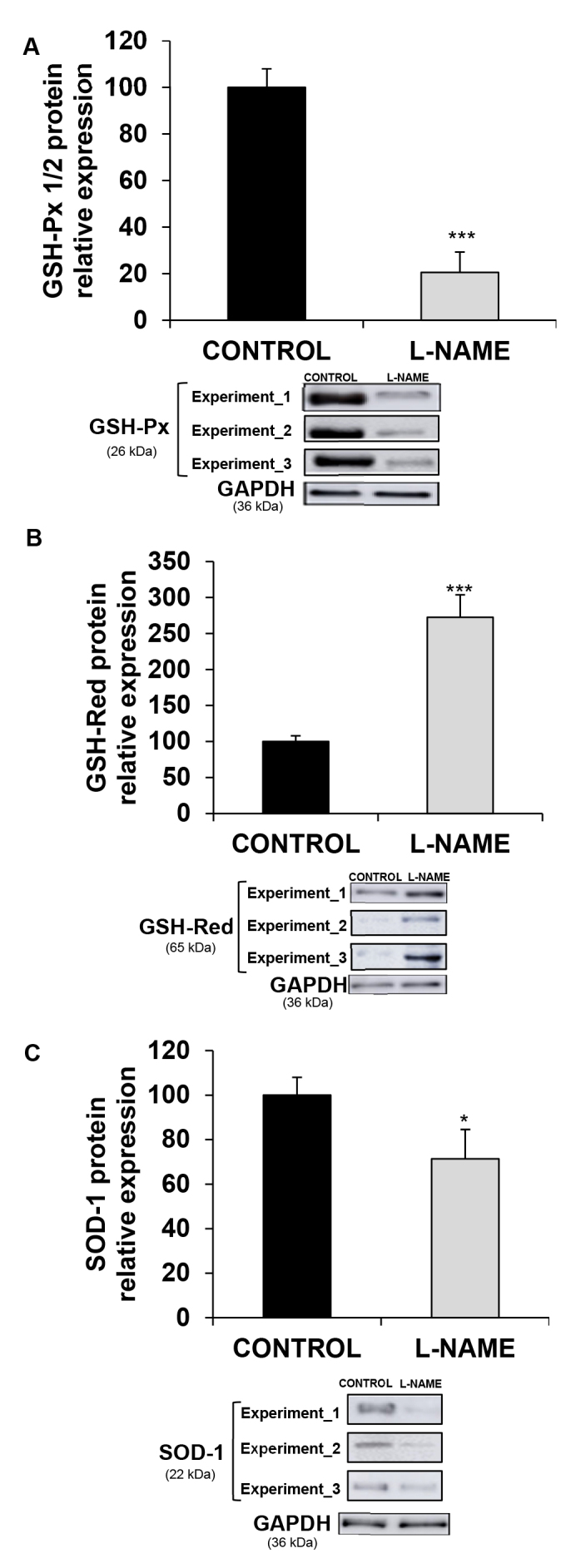
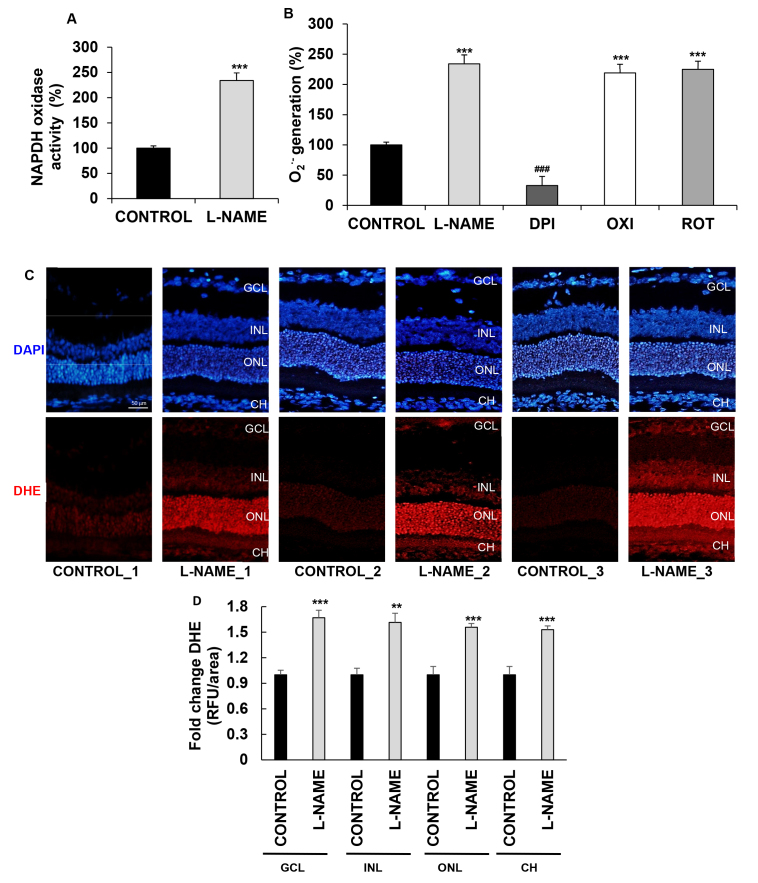
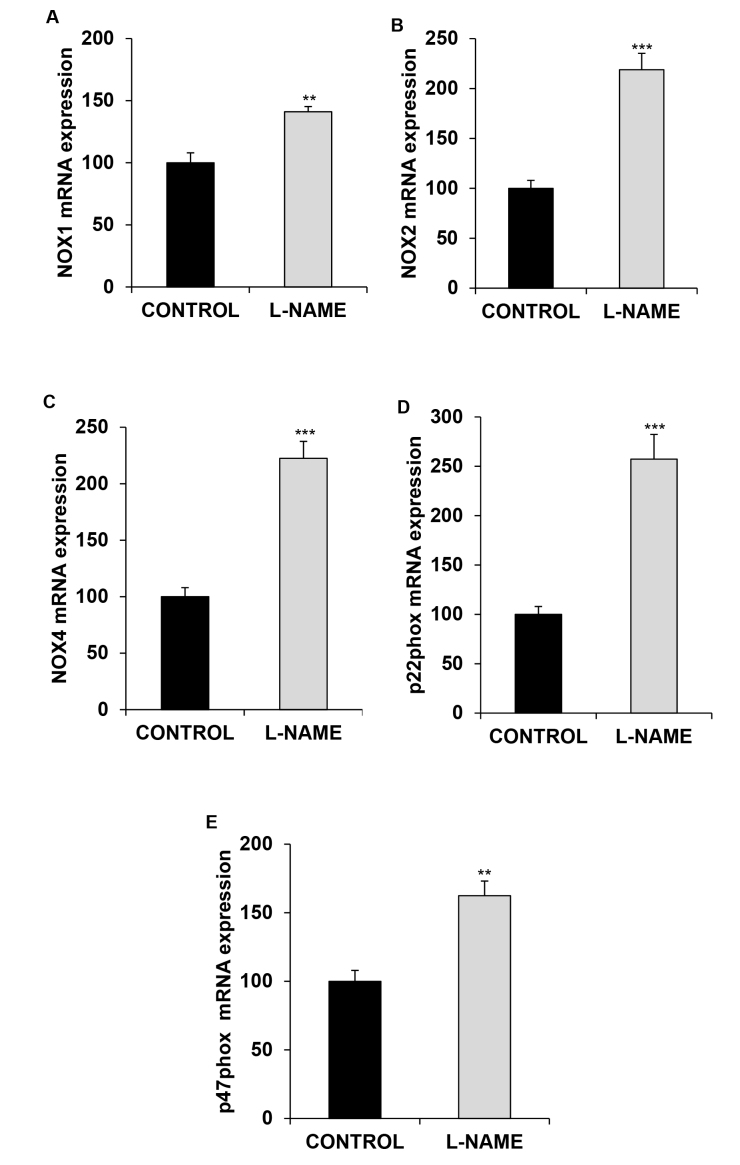
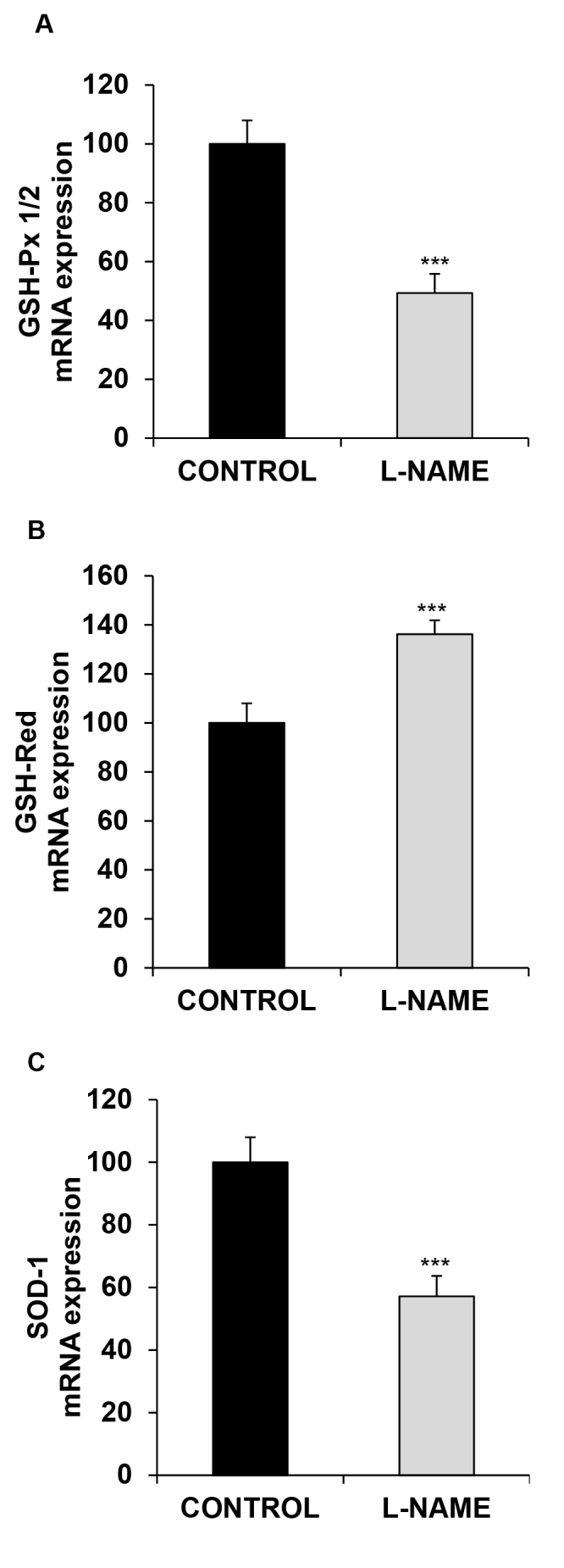
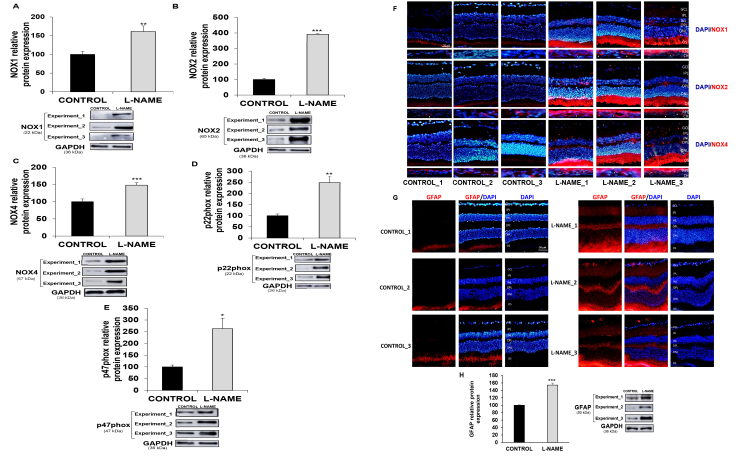
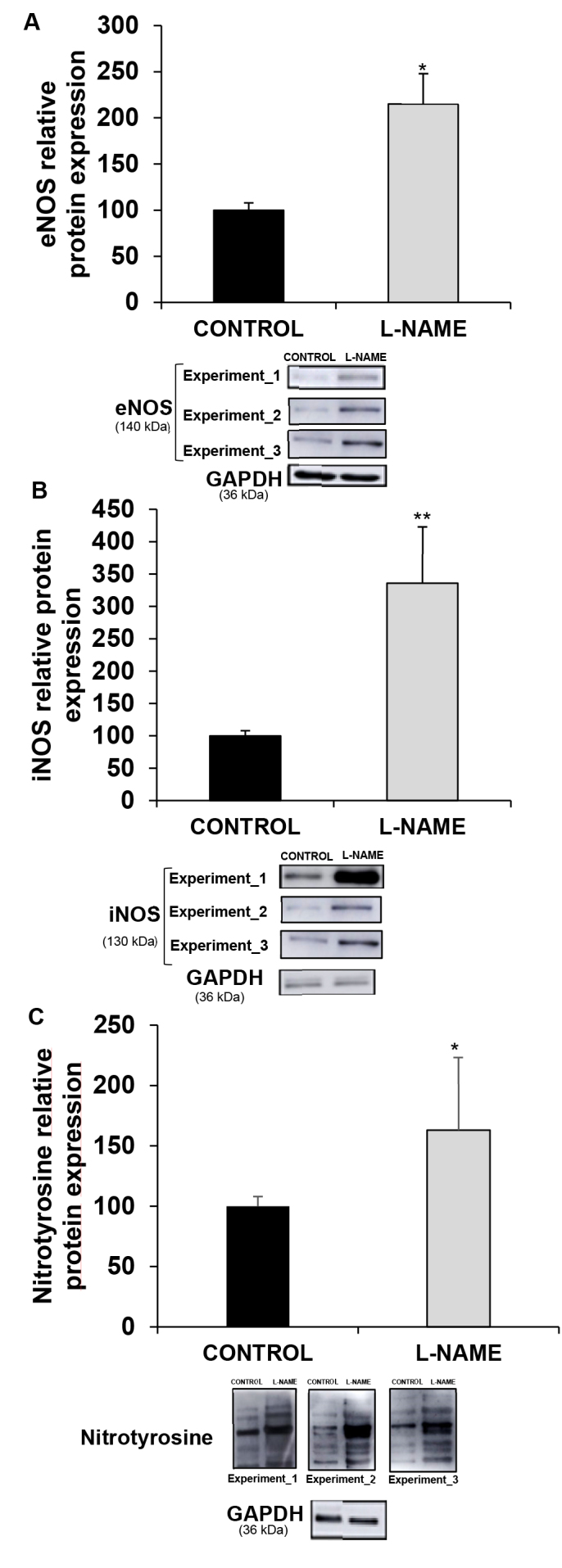
Increased activity of NADPH oxidase and superoxide anion production, accompanied by transcriptional upregulation of this enzyme isoforms, was found in the retina and choroid of the hypertensive rats in comparison with the untreated controls. Histomorphometric analyses revealed a significant reduction in the thickness of the ganglion cell layer and the outer retinal layers in the hypertensive animals, which also showed a positive strong signal of GFAP in the retinal outer segment and plexiform layers. In addition, L-NAME-treated animals presented with upregulation of nitric oxide synthase (including inducible and endothelial isoforms) and abnormally elevated nitrotyrosine levels. Experiments on protein and mRNA expression of antioxidant enzymes revealed depletion of superoxide dismutase and glutathione peroxidase in the eyes of the hypertensive animals; however, glutathione reductase was significantly higher than in the normotensive controls.
The present study demonstrated structural changes in the retinas of the L-NAME-treated hypertensive animals and strengthens the importance of NADPH oxidase as a major ROS-generating enzyme system in the oxidative and inflammatory processes surrounding hypertensive eye diseases. These observations might contribute to unveiling pathogenic mechanisms responsible for developing ocular disturbances in the context of severe hypertension.
NADPH 氧化酶释放的活性氧(ROS)和炎症与高血压以及与高血压相关的眼部疾病有关,包括青光眼、视网膜病变(如年龄相关性黄斑变性)和脉络膜病变影响眼部功能;然而,这些不良后果的机制仍未确定。本研究旨在强调氧化应激在严重高血压相关眼部损伤中的重要性。
雄性 Wistar 大鼠(除非另有说明特定实验,否则每组 n = 7)每天口服 30mgNω-硝基-L-精氨酸甲酯(L-NAME),持续 3 周;L-NAME 的慢性给药是一种经过验证的实验方法,可导致严重的高血压,继发于一氧化氮(NO)耗竭和全身循环中的随后血管收缩。治疗完成后,在对照组和 L-NAME 处理组的眼杯匀浆和石蜡包埋切片中测量 NADPH 氧化酶活性和 ROS 产生。此外,在眼睛和视网膜中进行免疫荧光、western blot 和实时 PCR(RT-qPCR)分析,以评估 i)NADPH 氧化酶主要同工型(NOX1、NOX2 和 NOX4)和亚基(p22phox 和 p47phox)的表达;ii)胶质纤维酸性蛋白(GFAP),作为视网膜中小胶质细胞激活的标志物;iii)抗氧化酶;iv)内皮组成型(eNOS)和炎症诱导型(iNOS)一氧化氮合酶同工型以及硝基酪氨酸作为氧化应激的多功能生物标志物的表达。
与未处理的对照组相比,高血压大鼠的视网膜和脉络膜中 NADPH 氧化酶活性增加和超氧阴离子产生增加,并且这种酶同工型的转录上调。形态计量学分析显示,高血压动物的神经节细胞层和外视网膜层的厚度显著减少,并且在外视网膜段和神经丛层中 GFAP 呈阳性强信号。此外,L-NAME 处理的动物中一氧化氮合酶(包括诱导型和内皮型同工型)上调,并且异常升高的硝基酪氨酸水平。关于抗氧化酶的蛋白质和 mRNA 表达实验表明,高血压动物眼睛中的超氧化物歧化酶和谷胱甘肽过氧化物酶耗竭;然而,谷胱甘肽还原酶明显高于正常血压对照组。
本研究证明了 L-NAME 处理的高血压动物视网膜的结构变化,并强调 NADPH 氧化酶作为产生活性氧的主要酶系统在高血压相关眼部疾病周围的氧化和炎症过程中的重要性。这些观察结果可能有助于揭示严重高血压情况下发生眼部障碍的致病机制。