Ramya B N, Shetty Shyleshwari M, Amaresh A M, Rakshitha R
Department of Computer Science and Engineering, GSSSIETW, Mysore, India.
Department of Computer Science and Engineering, VVIET, Mysore, India.
SN Comput Sci. 2021;2(3):227. doi: 10.1007/s42979-021-00625-5. Epub 2021 Apr 22.
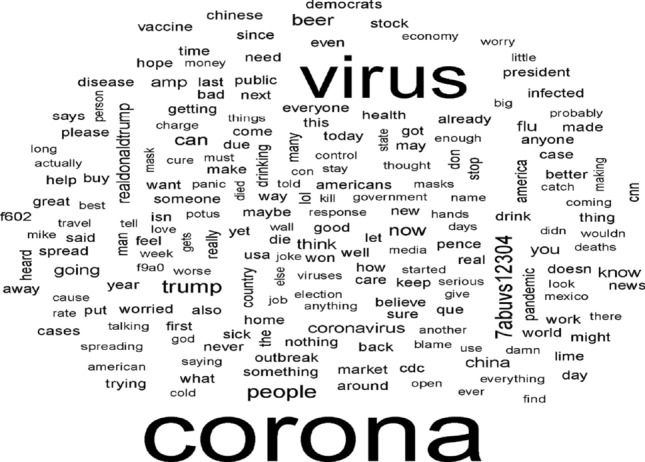
In present modern era, the outbreak of COVID-19 pandemic has created informational crisis. The public sentiments collected from different reflexions (hashtags, comments, tweets, posts of twitter) are measured accordingly, ensuring different policy decisions and messaging are incorporated. The implementation demonstrates intuition in to the advancement of fear sentiment eventually as COVID-19 approaches maximum levels in the world, by making use of detailed textual analysis with the help of required text data visualization. In addition, technical outline of machine learning stratification approaches are provided in the frame of text analytics, and comparing their efficiency in stratifying coronavirus tweets of different lengths. Using Naïve Bayes method, 91% accuracy is achieved for short tweets and using logistic regression classification method, 74% accuracy is achieved for short tweets.
在当今时代,新冠疫情的爆发引发了信息危机。相应地对从不同反映(标签、评论、推文、推特帖子)中收集到的公众情绪进行了衡量,确保纳入不同的政策决策和信息传递。随着新冠疫情在全球逼近最高水平,通过借助所需的文本数据可视化进行详细的文本分析,该实施最终展现出对恐惧情绪演变的洞察力。此外,在文本分析框架内提供了机器学习分层方法的技术概述,并比较了它们在对不同长度的冠状病毒推文进行分层时的效率。使用朴素贝叶斯方法,短推文的准确率达到91%;使用逻辑回归分类方法,短推文的准确率达到74%。