Department of Medical Physics, Catharina Hospital, Eindhoven, The Netherlands.
Department of Surgery, Catharina Hospital, Eindhoven, The Netherlands.
PLoS One. 2021 Apr 28;16(4):e0247903. doi: 10.1371/journal.pone.0247903. eCollection 2021.
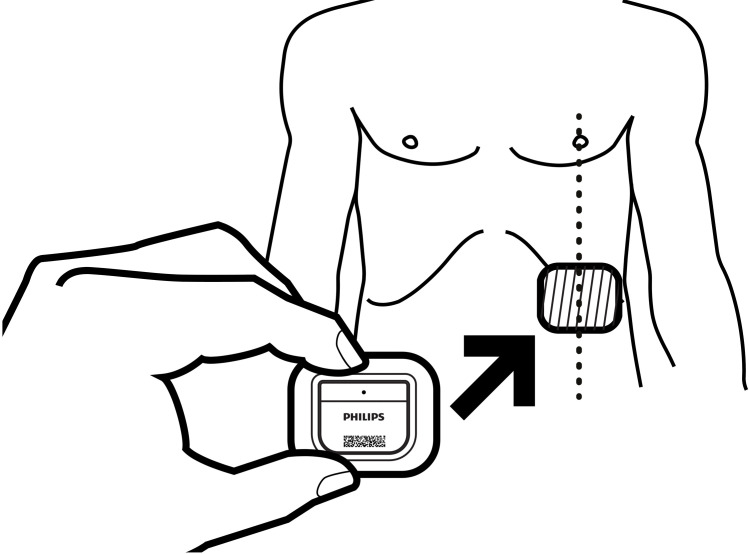
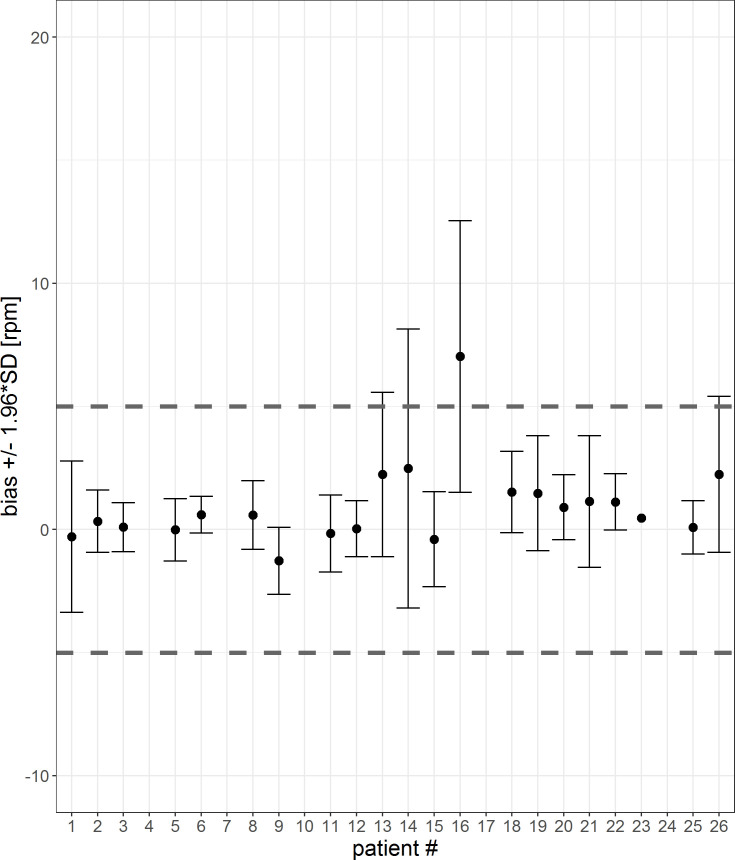
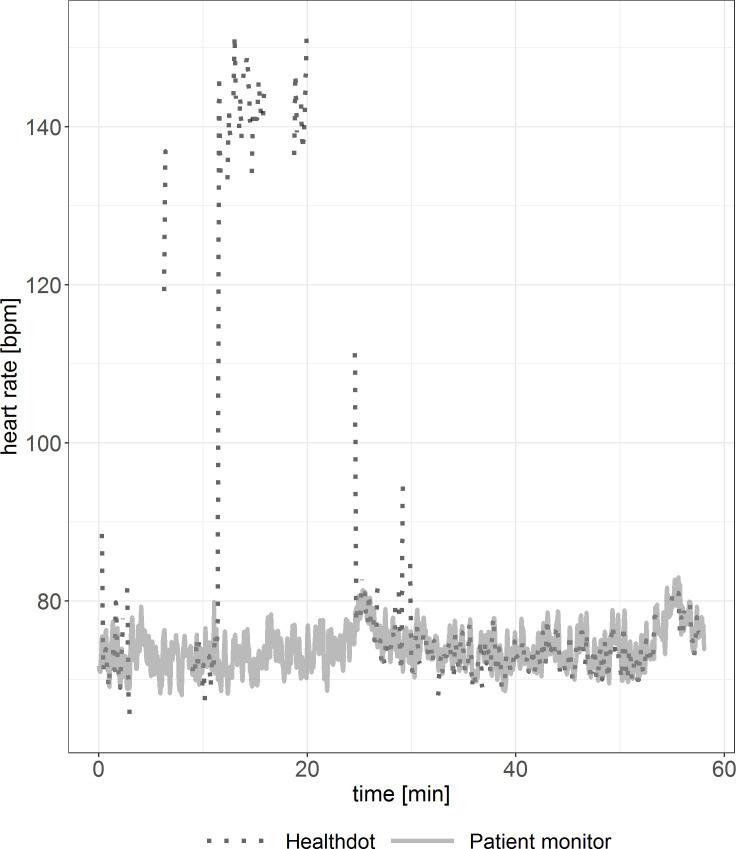
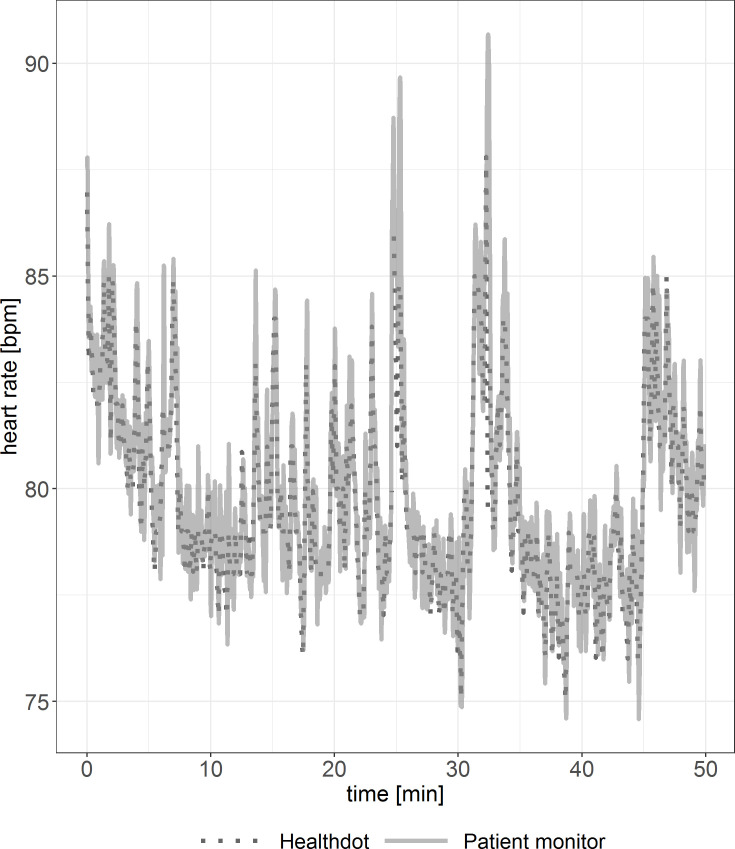
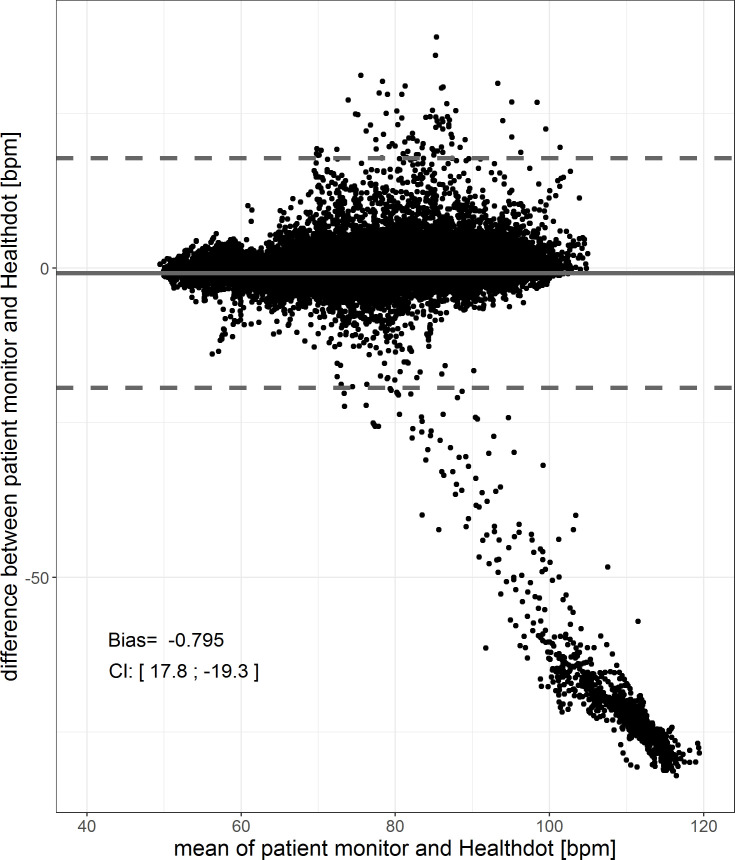
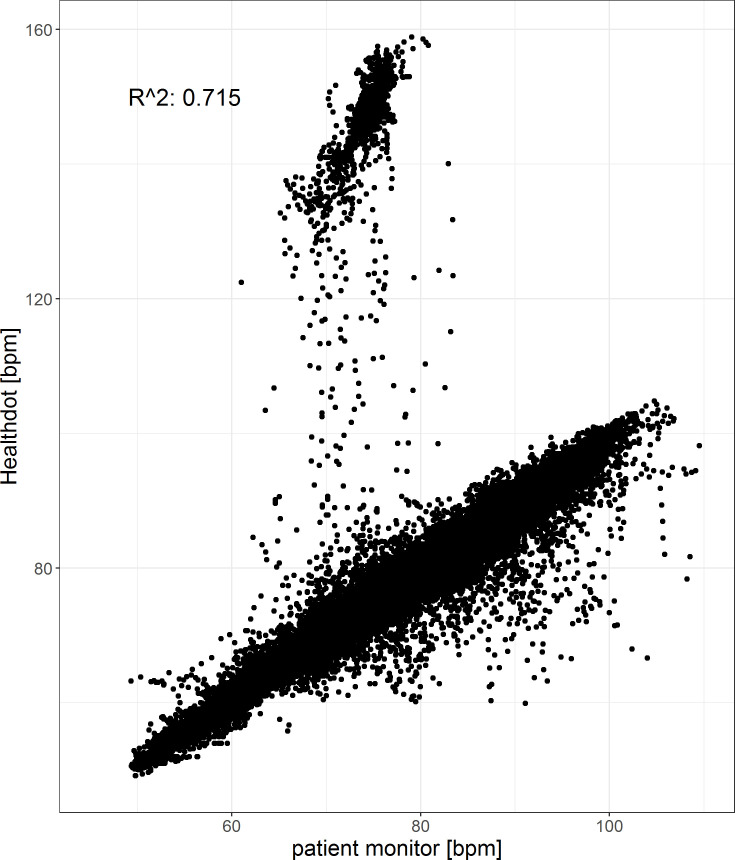
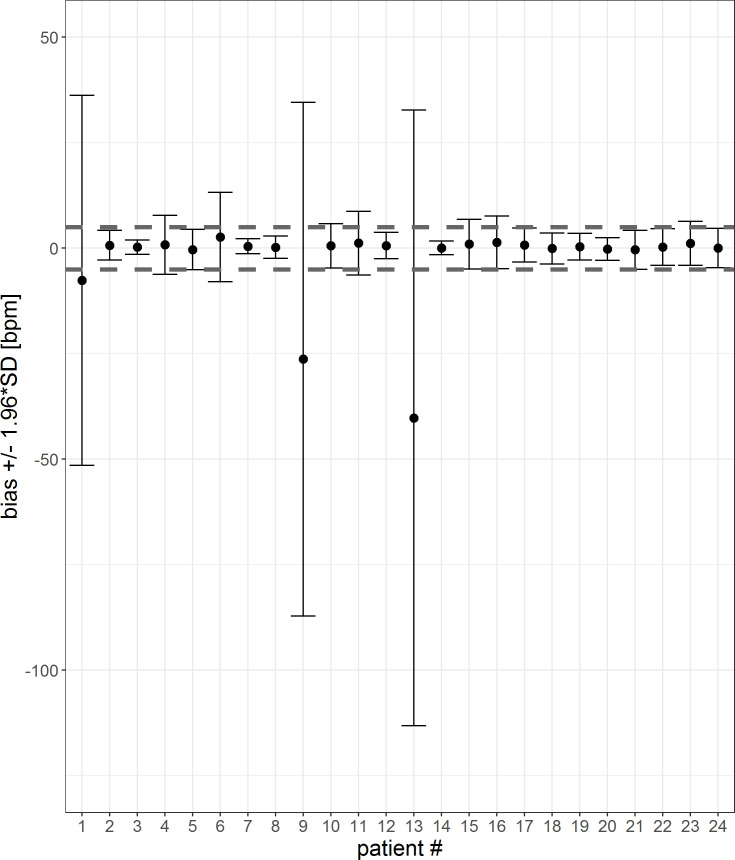
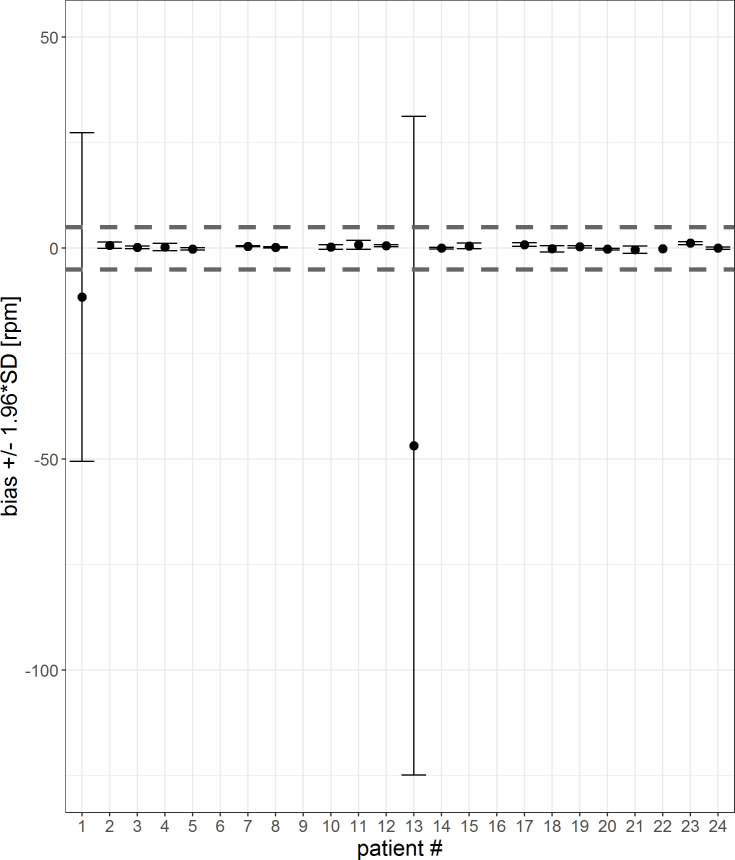
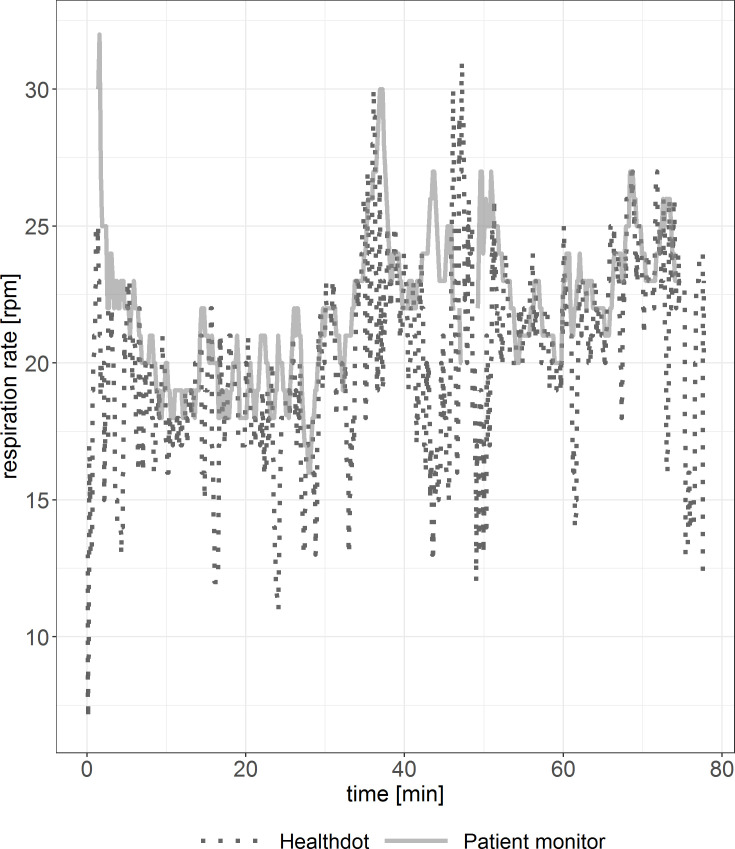
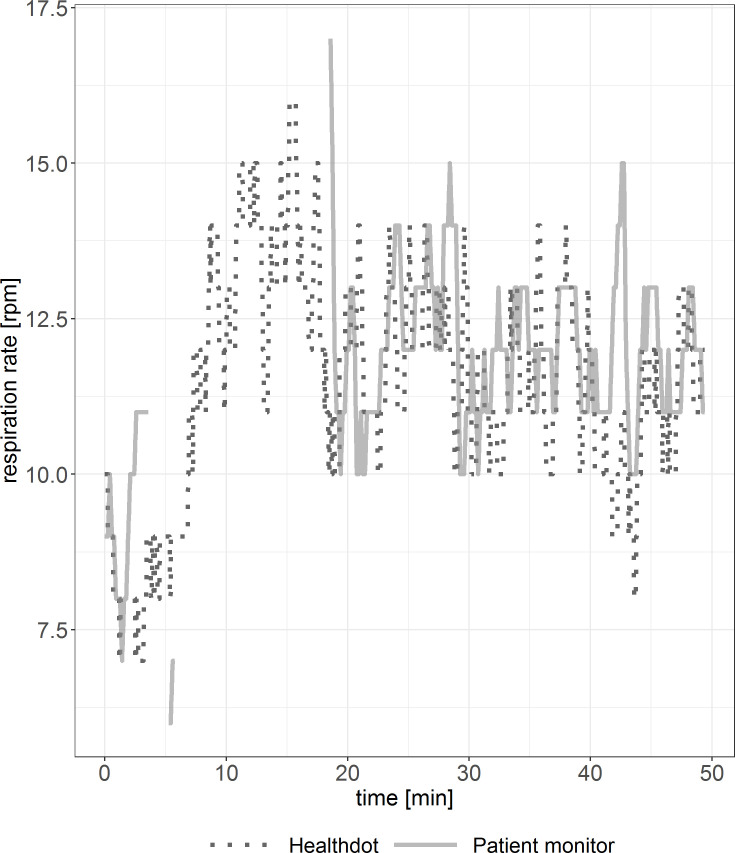
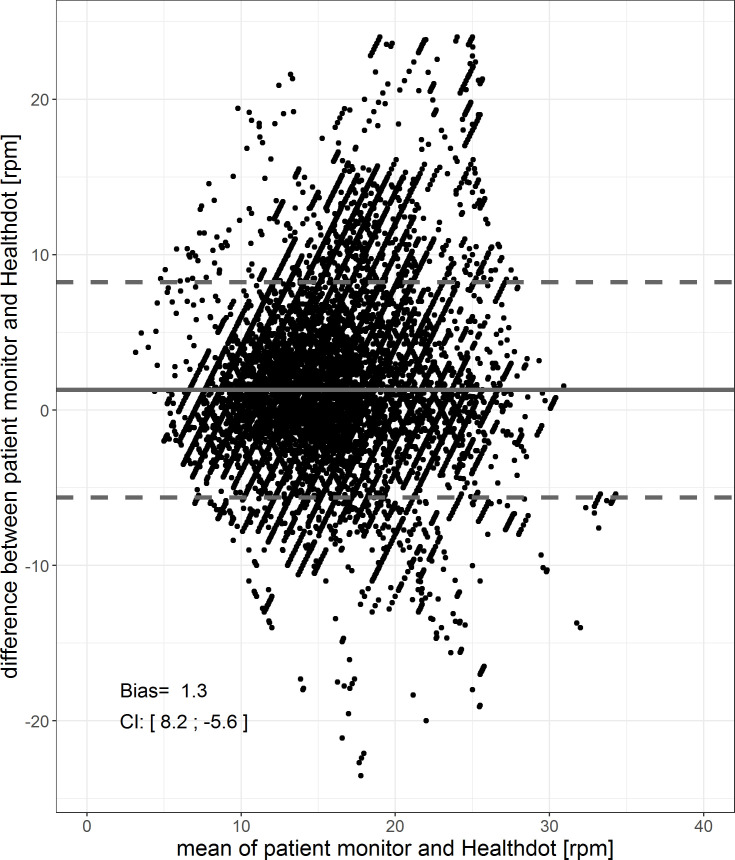
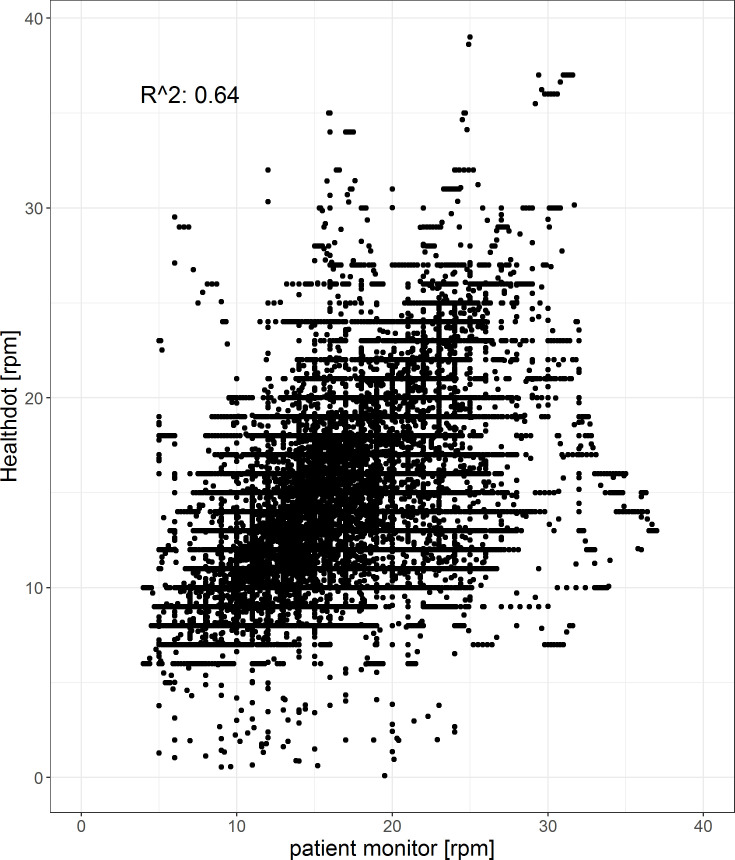
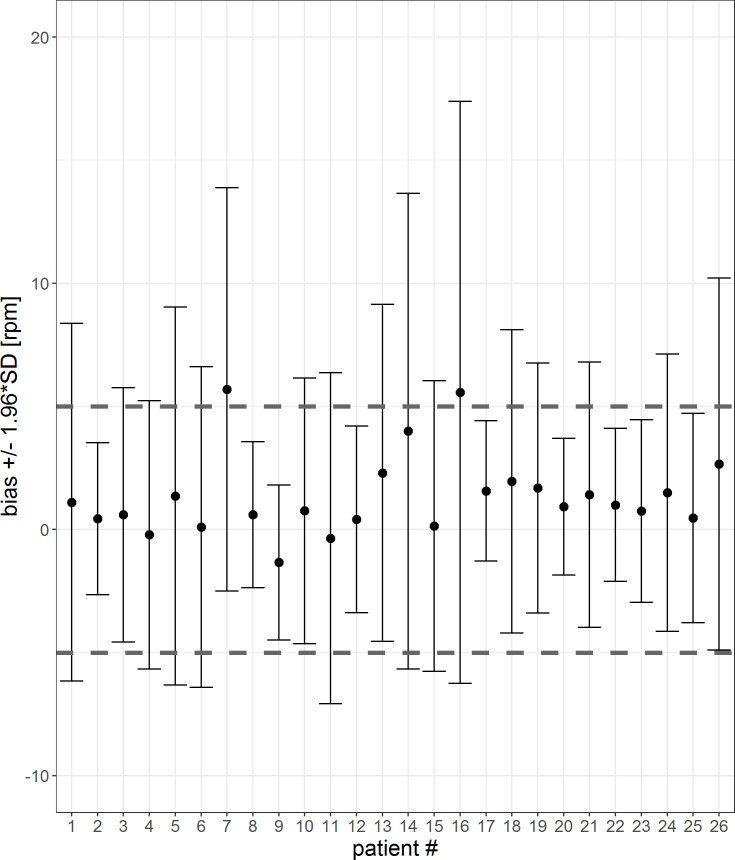
Recognition of early signs of deterioration in postoperative course could be improved by continuous monitoring of vital parameters. Wearable sensors could enable this by wireless transmission of vital signs. A novel accelerometer-based device, called Healthdot, has been designed to be worn on the skin to measure the two key vital parameters respiration rate (RespR) and heart rate (HeartR). The goal of this study is to assess the reliability of heart rate and respiration rate measured by the Healthdot in comparison to the gold standard, the bedside patient monitor, during the postoperative period in bariatric patients. Data were collected in a consecutive group of 30 patients who agreed to wear the device after their primary bariatric procedure. Directly after surgery, a Healthdot was attached on the patients' left lower rib. Vital signs measured by the accelerometer based Healthdot were compared to vital signs collected with the gold standard patient monitor for the period that the patient stayed at the post-anesthesia care unit. Over all patients, a total of 22 hours of vital signs obtained by the Healthdot were recorded simultaneously with the bedside patient monitor data. 87.5% of the data met the pre-defined bias of 5 beats per minute for HeartR and 92.3% of the data met the pre-defined bias of 5 respirations per minute for RespR. The Healthdot can be used to accurately derive heart rate and respiration rate in postbariatric patients. Wireless continuous monitoring of key vital signs has the potential to contribute to earlier recognition of complications in postoperative patients. Future studies should focus on the ability to detect patient deterioration in low-care environments and at home after discharge from the hospital.
通过连续监测生命参数,可以提高对术后病情恶化早期迹象的识别能力。可穿戴传感器可以通过生命参数的无线传输来实现这一点。一种名为 Healthdot 的新型基于加速度计的设备被设计为贴在皮肤上,以测量两个关键生命参数——呼吸频率(RespR)和心率(HeartR)。本研究的目的是评估 Healthdot 测量的心率和呼吸率与金标准(床边患者监护仪)在肥胖患者术后期间的可靠性。该研究连续纳入了 30 名患者,这些患者在接受主要减重手术后同意佩戴该设备。手术后,直接将 Healthdot 贴在患者的左肋下部。基于加速度计的 Healthdot 测量的生命体征与金标准患者监护仪收集的生命体征进行比较,比较时间段为患者在麻醉后恢复室的时间。在所有患者中,总共记录了 22 小时的生命体征,这些数据是通过 Healthdot 与床边患者监护仪同时获得的。HeartR 的数据中有 87.5%符合预先设定的 5 次/分钟的偏差,RespR 的数据中有 92.3%符合预先设定的 5 次/分钟的偏差。Healthdot 可用于准确地计算减重后患者的心率和呼吸率。对关键生命体征的无线连续监测有可能有助于更早地识别术后患者的并发症。未来的研究应侧重于在低护理环境中和患者出院后在家中检测患者恶化的能力。