Department of General Surgery, the First Affiliated Hospital of Nanjing Medical University, Nanjing, 210029, P.R. China.
The Affiliated Cancer Hospital of Nanjing Medical University, Nanjing, Jiangsu, 210009, P.R. China.
Cell Death Dis. 2021 Apr 28;12(5):420. doi: 10.1038/s41419-021-03680-1.
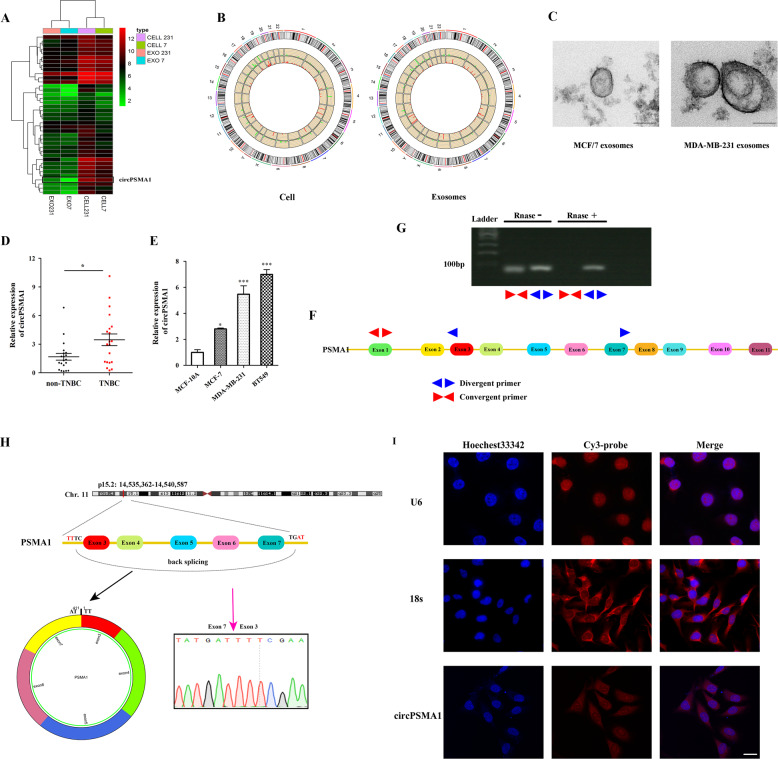
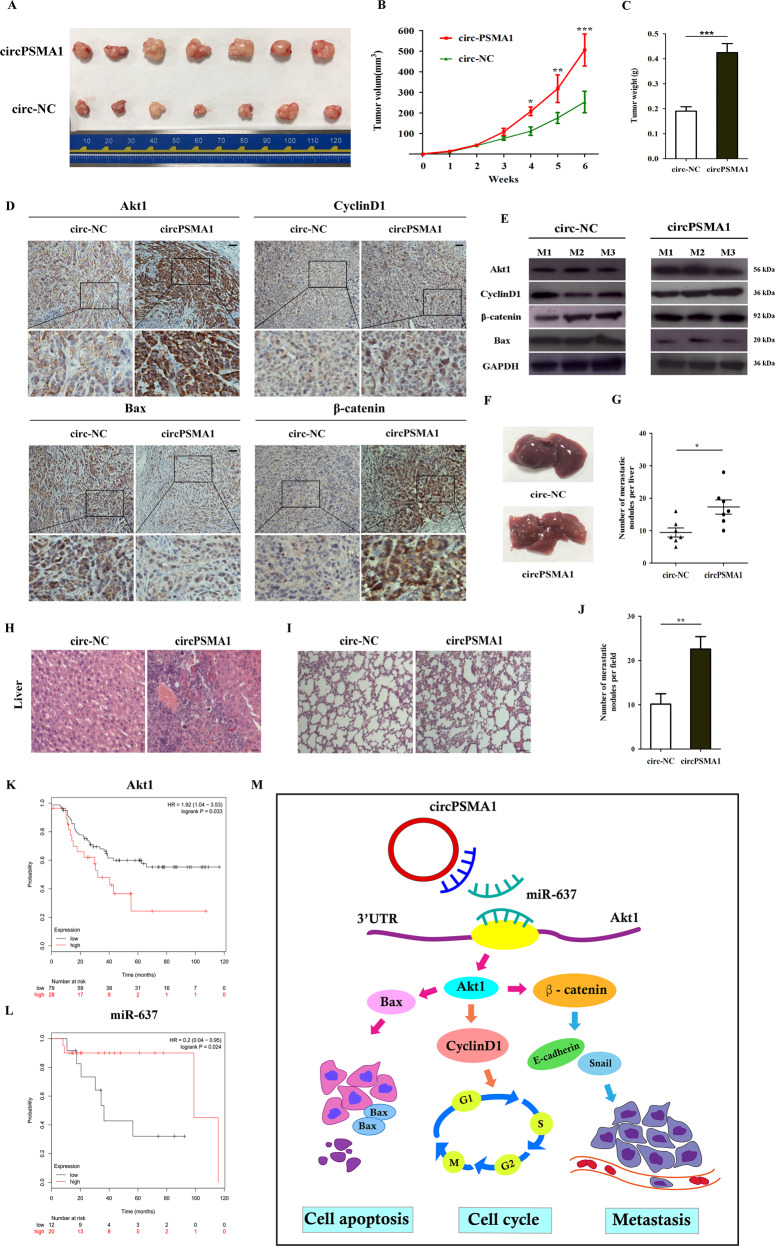
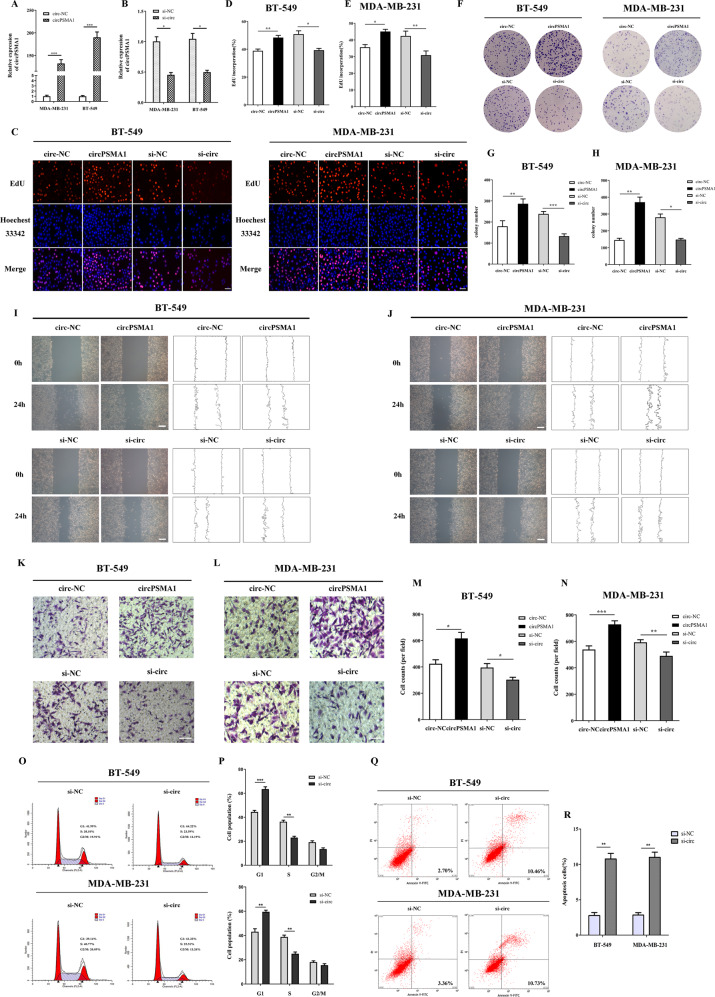
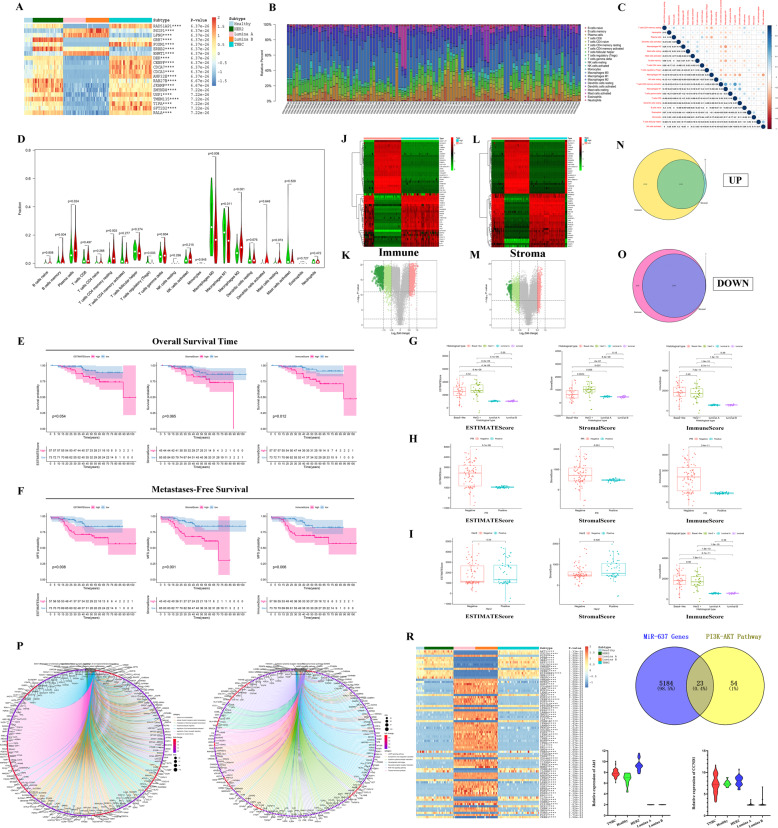
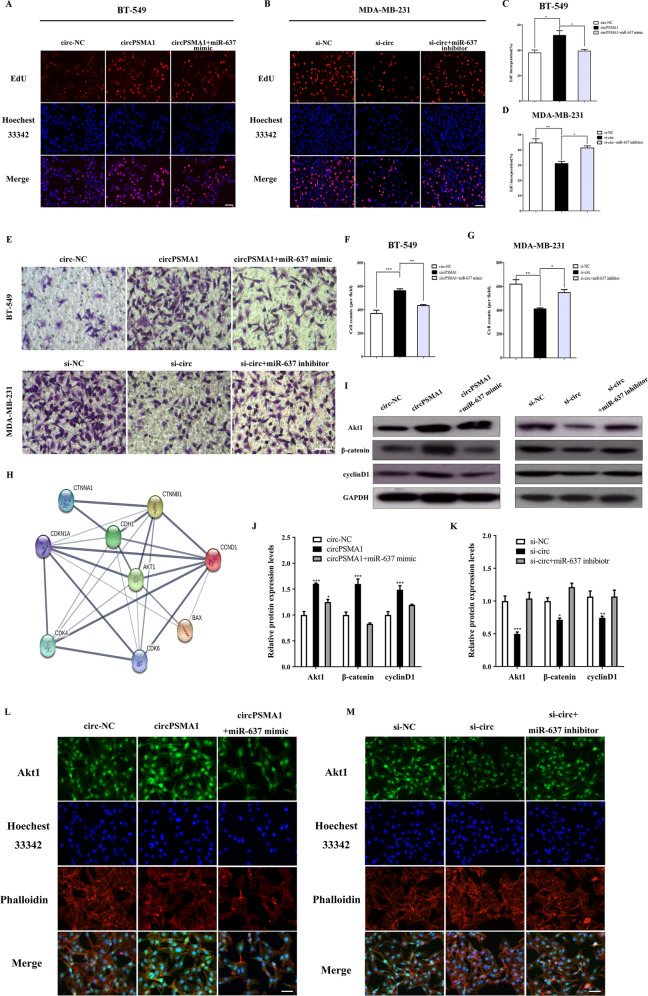
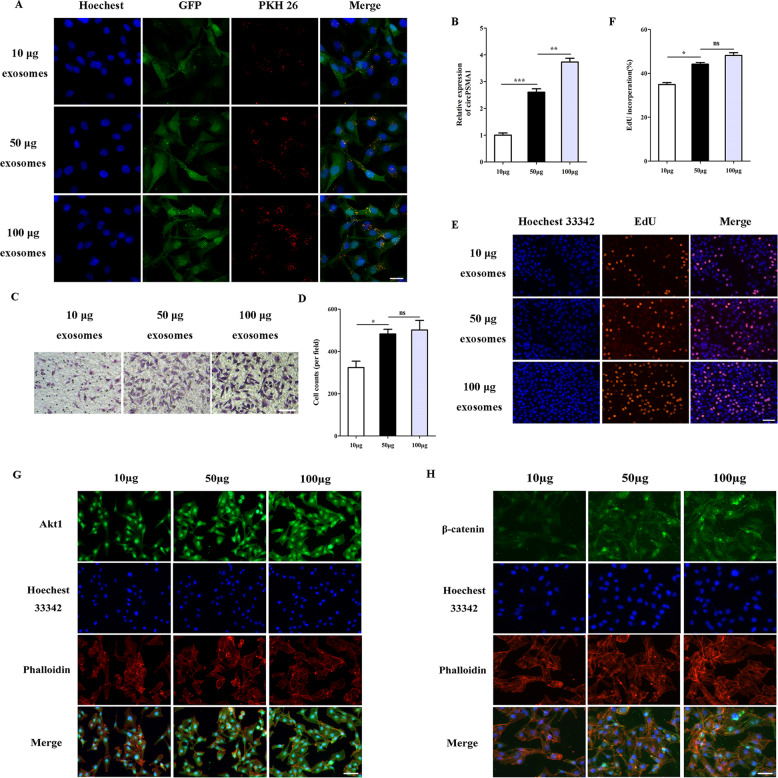
Circular RNAs (circRNAs) are increasingly gaining importance and attention due to their diverse potential functions and their value as diagnostic biomarkers (disease specific). This study aims to explore the novel mechanisms by which exosome-contained circRNAs promote tumor development and metastasis in TNBC. We identified increased circRNA circPSMA1 in TNBC cells, their exosomes, and serum exosomes samples from TNBC patients. The overexpression of circPSMA1 promoted TNBC cell proliferation, migration, and metastasis both in vitro and in vivo. Moreover, we investigated the tumor-infiltrating immune cells (TICs) or stromal components in immune microenvironment (IME), and identified the significant differences in the immune cells between TNBC and non-TNBC samples. Mechanistically, circPSMA1 acted as a "miRNAs sponge" to absorb miR-637; miR-637 inhibited TNBC cell migration and metastasis by directly targeted Akt1, which recognized as a key immune-related gene and affected downstream genes β-catenin and cyclin D1. Subsequent co-culture experiments also demonstrated that exosomes from TNBC carrying large amounts of circPSMA1 could transmit migration and proliferation capacity to recipient cells. Kaplan-Meier plots showed that high expression of Akt1 and low expression of mir-637 are highly correlated with poor prognosis in patients with lymph node metastasis of TNBC. Collectively, all these results reveal that circPSMA1 functions as a tumor promoter through the circPSMA1/miR-637/Akt1-β-catenin (cyclin D1) regulatory axis, which can facilitate the tumorigenesis, metastasis, and immunosuppression of TNBC. Our research proposes a fresh perspective on novel potential biomarkers and immune treatment strategies for TNBC.
环状 RNA(circRNAs)因其多样的潜在功能和作为诊断生物标志物(疾病特异性)的价值而受到越来越多的重视。本研究旨在探索外泌体所含 circRNAs 促进三阴性乳腺癌(TNBC)肿瘤发展和转移的新机制。我们在 TNBC 细胞、其外泌体和来自 TNBC 患者的血清外泌体样本中发现了circPSMA1 的表达增加。circPSMA1 的过表达促进了 TNBC 细胞在体外和体内的增殖、迁移和转移。此外,我们研究了免疫微环境(IME)中的肿瘤浸润免疫细胞(TICs)或基质成分,并确定了 TNBC 和非 TNBC 样本之间免疫细胞的显著差异。机制上,circPSMA1 作为“miRNAs 海绵”吸收 miR-637;miR-637 通过直接靶向 Akt1 抑制 TNBC 细胞迁移和转移,Akt1 被认为是一个关键的免疫相关基因,并影响下游基因β-catenin 和 cyclin D1。随后的共培养实验也表明,携带大量 circPSMA1 的 TNBC 外泌体可以将迁移和增殖能力传递给受体细胞。Kaplan-Meier 图显示,Akt1 的高表达和 miR-637 的低表达与 TNBC 淋巴结转移患者的预后不良高度相关。总之,这些结果表明,circPSMA1 通过 circPSMA1/miR-637/Akt1-β-catenin(cyclin D1)调控轴发挥肿瘤促进作用,从而促进 TNBC 的发生、转移和免疫抑制。我们的研究为 TNBC 的新型潜在生物标志物和免疫治疗策略提供了新的视角。