Choi Da-In, Park Jun-Hyeong, Choi Jee-Young, Piao MeiShan, Suh Min-Song, Lee Jee-Bum, Yun Sook-Jung, Lee Seung-Chul
Department of Dermatology, Chonnam National University Medical School, Gwangju, Korea.
Ann Dermatol. 2021 Feb;33(1):26-36. doi: 10.5021/ad.2021.33.1.26. Epub 2020 Dec 30.
Atopic dermatitis (AD) is characterized by chronic, relapsing skin inflammation (eczema) with itchy sensation. Keratinocytes, which are located at the outermost part of our body, are supposed to play important roles at the early phase of type 2 inflammation including AD pathogenesis.
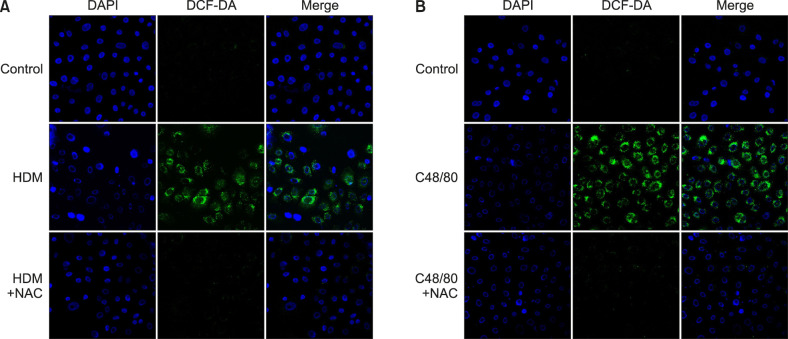
The purpose of this study was to evaluate whether keratinocytes-derived reactive oxygen species (ROS) could be produced by the allergens or non-allergens, and the keratinocytes-derived ROS could modulate a set of biomarkers for type 2 inflammation of the skin.
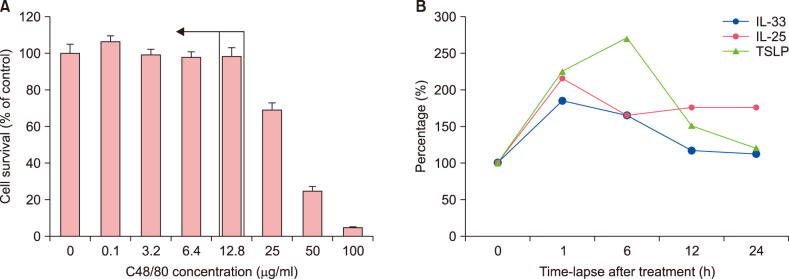
Normal human epidermal keratinocytes (NHEKs) were treated with an allergen of house dust mites (HDM) or a non-allergen of compound 48/80 (C48/80). Then, biomarkers for type 2 inflammation of the skin including those for neurogenic inflammation were checked by reverse transcriptase-polymerase chain reaction and western immunoblot experiments.
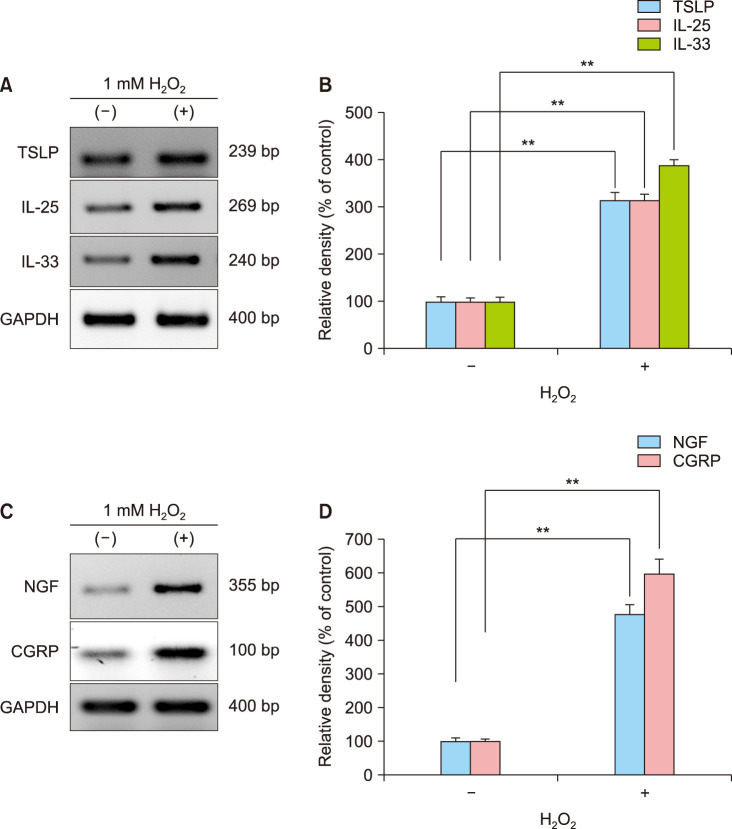
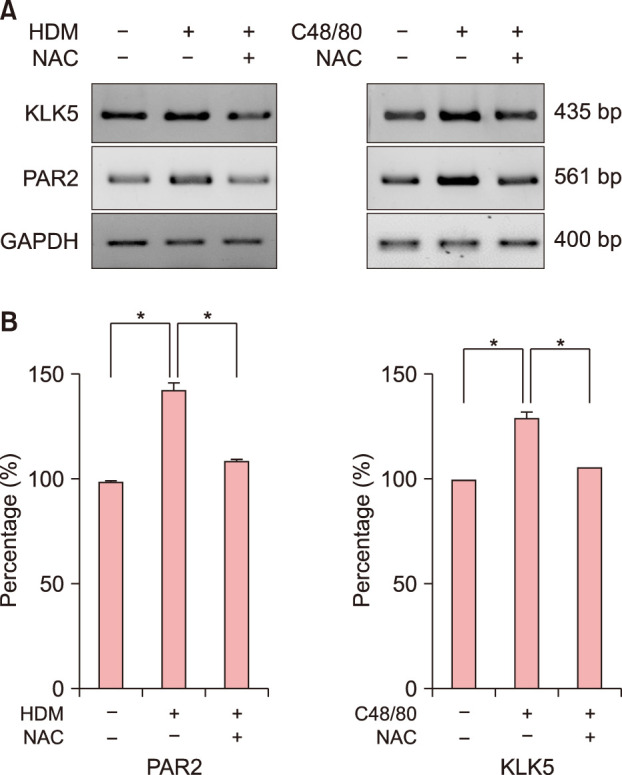
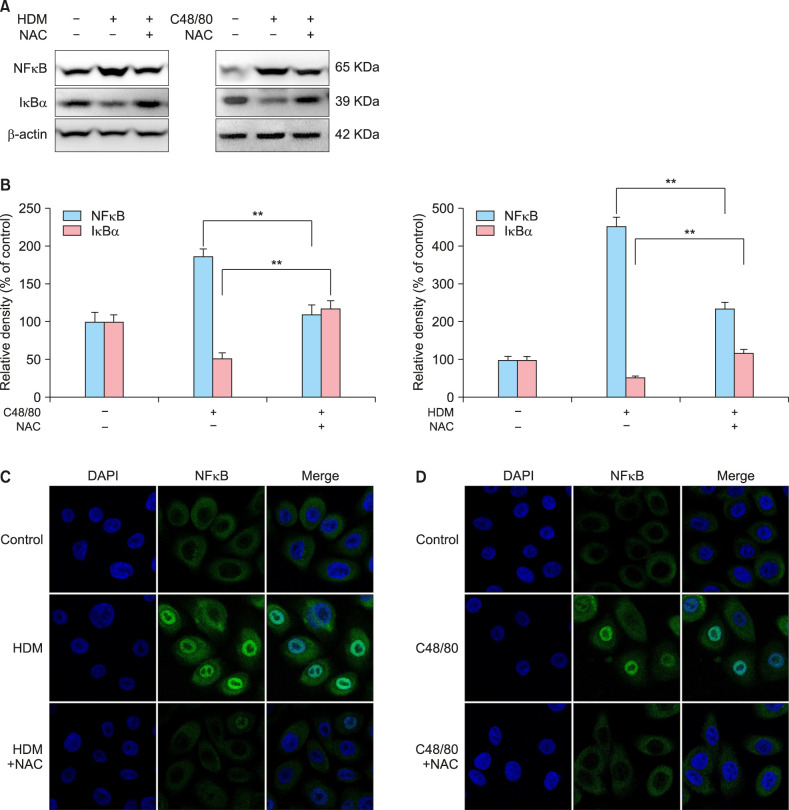
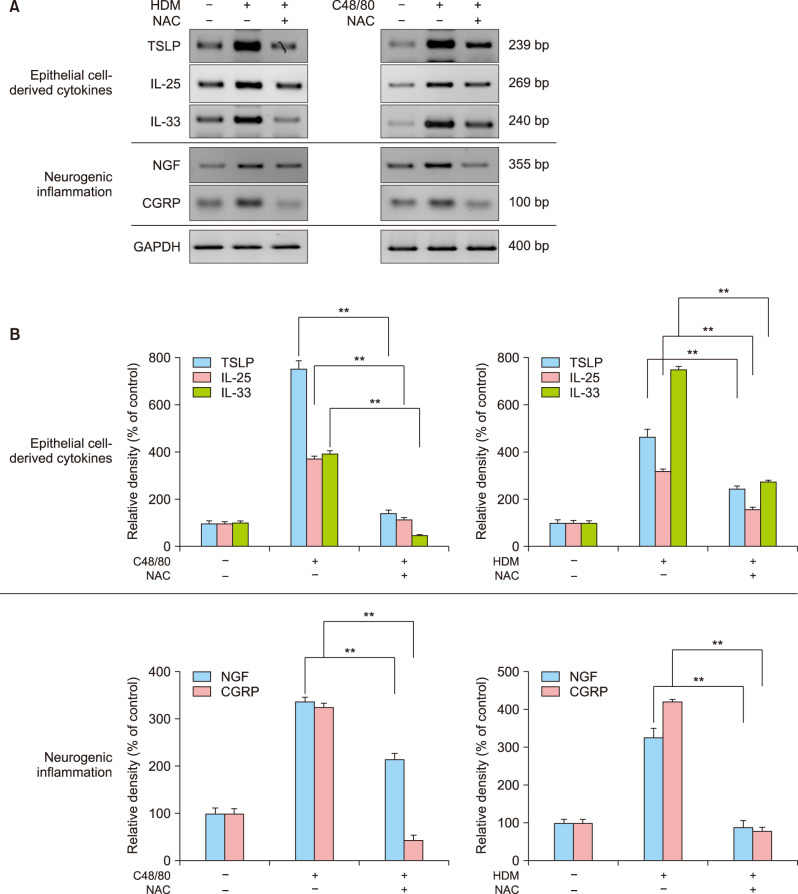
HDM or C48/80 was found to upregulate expression levels of our tested biomarkers, including type 2 T helper-driving pathway (KLK5, PAR2, and NFκB), epithelial-cell-derived cytokines (thymic stromal lymphopoietin, interleukin [IL]-25, IL-33), and neurogenic inflammation (NGF, CGRP). The HDM- or C-48/80-induced expression levels of the biomarkers could be blocked by an antioxidant treatment with 5 mM N-acetyl-cysteine. In contrast, pro-oxidant treatment with 1 mM HO could upregulate expression levels of the tested biomarkers in NHEKs.
Our results reveal that keratinocytes-derived ROS, irrespective to their origins from allergens or non-allergens, have a potential to induce type 2 inflammation of AD skin.
特应性皮炎(AD)的特征是慢性复发性皮肤炎症(湿疹)伴瘙痒感。角质形成细胞位于人体最外层,在包括AD发病机制在内的2型炎症早期应发挥重要作用。
本研究旨在评估变应原或非变应原是否能产生角质形成细胞衍生的活性氧(ROS),以及角质形成细胞衍生的ROS是否能调节一组皮肤2型炎症的生物标志物。
用人屋尘螨变应原(HDM)或化合物48/80非变应原(C48/80)处理正常人表皮角质形成细胞(NHEK)。然后,通过逆转录聚合酶链反应和western免疫印迹实验检测皮肤2型炎症的生物标志物,包括神经源性炎症的生物标志物。
发现HDM或C48/80可上调我们检测的生物标志物的表达水平,包括2型辅助性T细胞驱动途径(KLK5、PAR2和NFκB)、上皮细胞衍生的细胞因子(胸腺基质淋巴细胞生成素、白细胞介素[IL]-25、IL-33)和神经源性炎症(NGF、CGRP)。HDM或C-48/80诱导的生物标志物表达水平可被5 mM N-乙酰半胱氨酸的抗氧化处理所阻断。相反,用1 mM HO进行促氧化处理可上调NHEK中检测的生物标志物的表达水平。
我们的结果表明,无论角质形成细胞衍生的ROS来源于变应原还是非变应原,都有可能诱导AD皮肤的2型炎症。