Bashir Saqib, Bakhsh Gulshan Allah, Iqbal Javaid, Husain Arif, Alwahibi Mona S, Alkahtani Jawaher, Dwiningsih Yheni, Bakhsh Ali, Ahmed Niaz, Jamal Khan Muhammad, Ibrahim Muhammad, Diao Zeng-Hui
Department of Soil and Environmental Sciences, Ghazi University, Dera Ghazi Khan, Pakistan.
Deapartment of Botany, Ghazi University, Dera Ghazi Khan, Pakistan.
Saudi J Biol Sci. 2021 Apr;28(4):2534-2539. doi: 10.1016/j.sjbs.2021.01.057. Epub 2021 Feb 10.
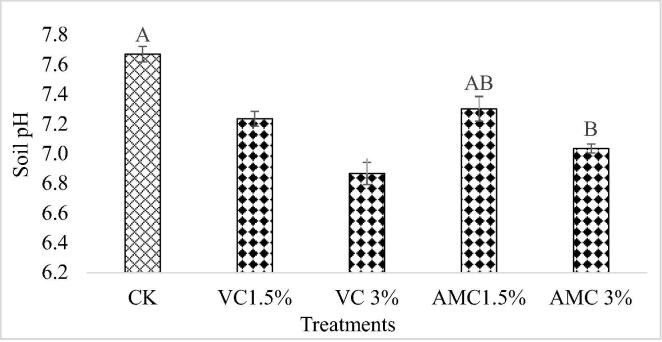
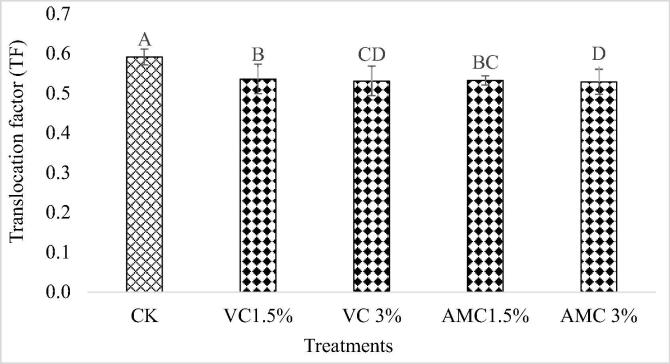
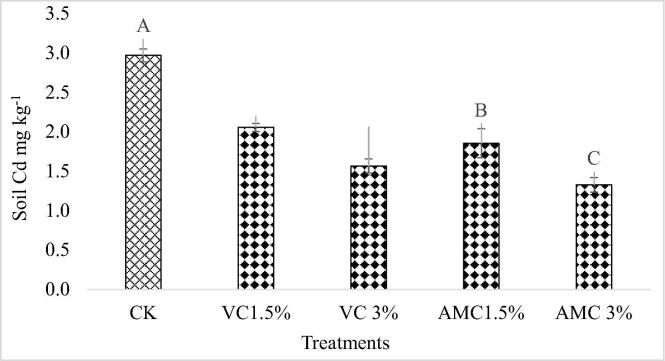
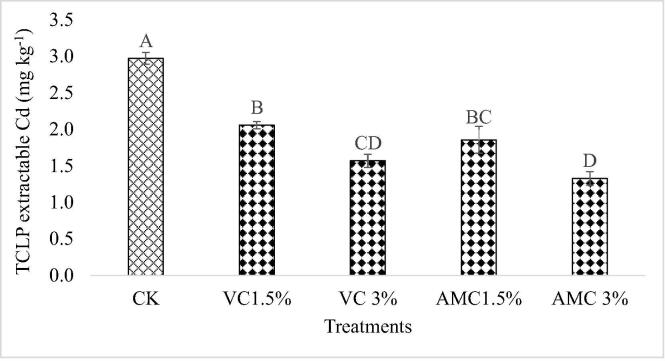
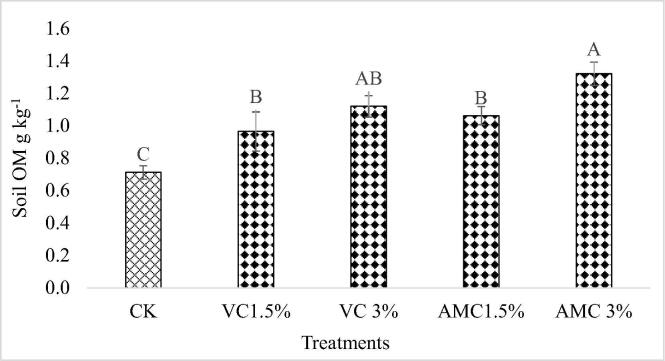
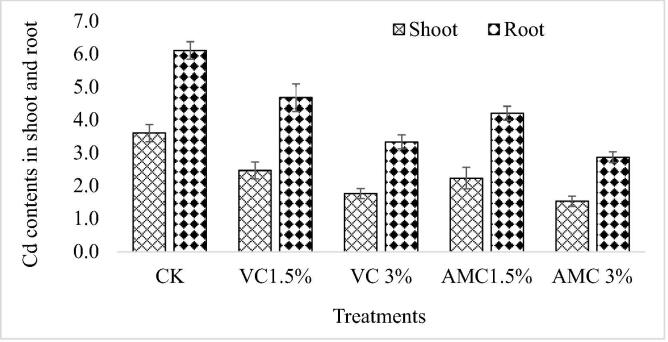
Soil amendment with two types of composts: animal manure (AC) and vegetable waste (VC) induced composts have potential to alleviate Cd toxicity to maize in contaminated soil. Therefore, Cd mobility in waste water irrigated soil can be addressed through eco-friendly and cost effective organic soil amendments AC and VC that eventually reduces its translocation from polluted soil to maize plant tissues. The comparative effectiveness of AC and VC at 3% rate were evaluated on Cd solubility, its accumulation in maize tissues, translocation from root to shoot, chlorophyll contents, plant biomass, yield and soil properties (pH, NPK, OM). Results revealed that the addition of organic soil amendments significantly minimized Cd mobility and leachability in soil by 58.6% and 47%, respectively in VC-amended soil over control. While, the reduction was observed by 61.7% and 57%, respectively when AC was added at 3% over control. Comparing the control soil, Cd uptake effectively reduced via plants shoots and roots by 50%, 46% respectively when VC was added in polluted soil. However, Cd uptake was decreased in maize shoot and roots by 58% and 52.4% in AC amended soil at 3% rate, respectively. Additionally, NPK contents were significantly improved in polluted soil as well as in plant tissues in both composts amended soil Comparative to control, the addition of composts significantly improved the maize dry biomass and chlorophyll contents at 3% rate. Thus, present study confirmed that the addition of animal manure derived compost (AC) at 3% rate performed well and might be consider the suitable approach relative to vegetable compost for maize growth in polluted soil.
动物粪便堆肥(AC)和蔬菜废弃物堆肥(VC)对受污染土壤中玉米的镉毒性具有缓解潜力。因此,通过环保且经济高效的有机土壤改良剂AC和VC可以解决废水灌溉土壤中镉的迁移问题,最终减少镉从污染土壤向玉米植株组织的转运。以3%的比例评估了AC和VC在镉溶解度、在玉米组织中的积累、从根到地上部的转运、叶绿素含量、植物生物量、产量以及土壤性质(pH值、氮磷钾、有机质)方面的比较效果。结果表明,添加有机土壤改良剂显著降低了土壤中镉的迁移性和淋溶性,在VC改良土壤中,相对于对照分别降低了58.6%和47%。而当添加3%的AC时,相对于对照分别降低了61.7%和57%。与对照土壤相比,在污染土壤中添加VC时,通过植物地上部和根部的镉吸收分别有效降低了50%和46%。然而,在添加3%的AC改良土壤中,玉米地上部和根部的镉吸收分别降低了58%和52.4%。此外,在两种堆肥改良的土壤中,污染土壤以及植物组织中的氮磷钾含量均显著提高。与对照相比,添加堆肥以3%的比例显著提高了玉米干生物量和叶绿素含量。因此,本研究证实,以3%的比例添加动物粪便堆肥(AC)效果良好,相对于蔬菜堆肥,可能是污染土壤中玉米生长的合适方法。