Han Zhenyuan, Yang Biao, Wang Yu, Zeng Xiuxia, Tian Zhen
Department of Oral Pathology, Shanghai Ninth People's Hospital, Shanghai Jiao Tong University School of Medicine, Shanghai, China.
National Clinical Research Center for Oral Diseases, Shanghai, China.
Front Oncol. 2021 Apr 12;11:592107. doi: 10.3389/fonc.2021.592107. eCollection 2021.
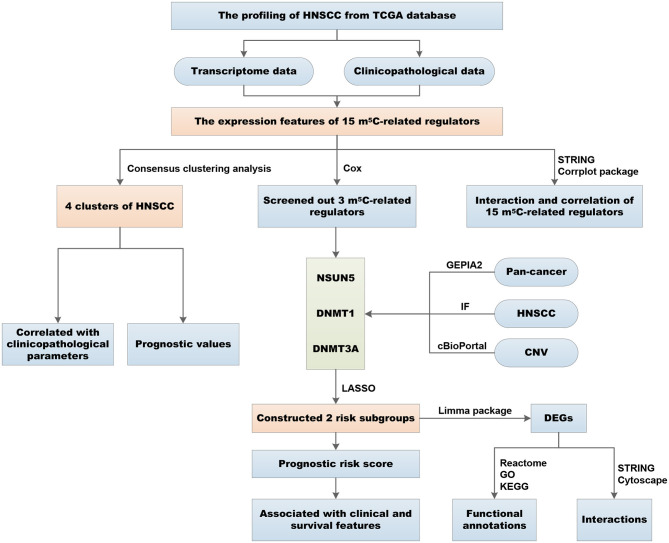
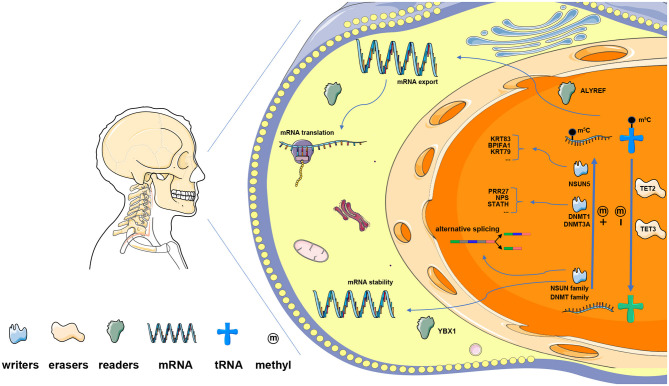
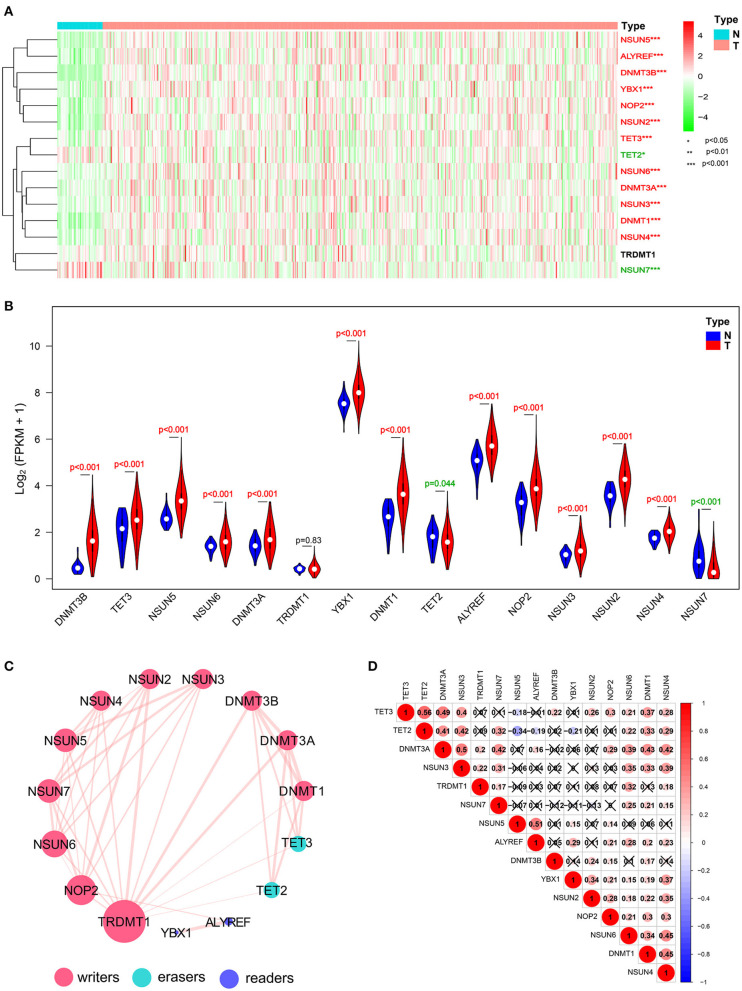
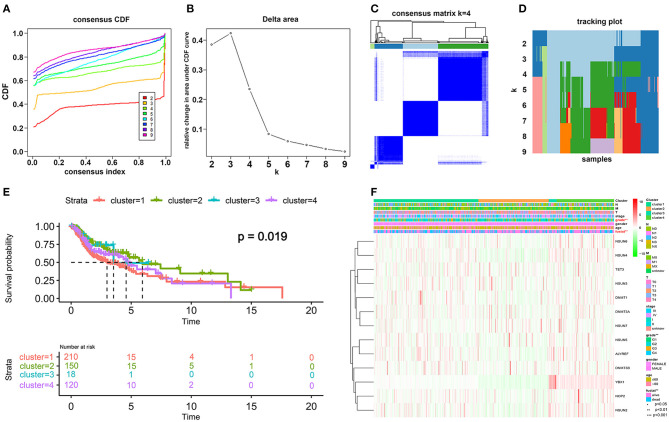
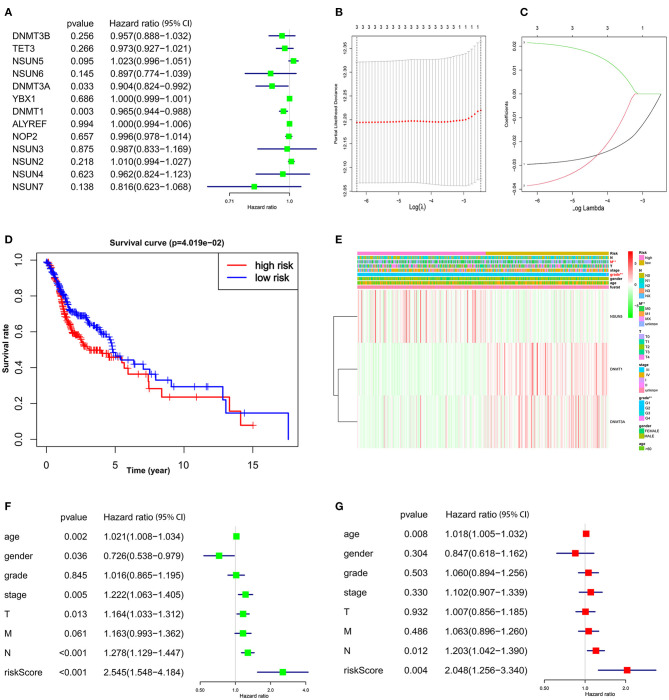
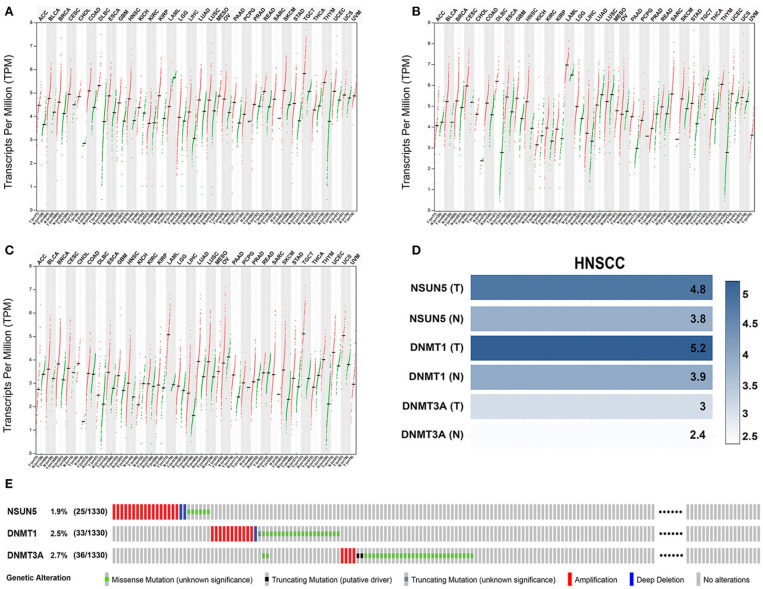
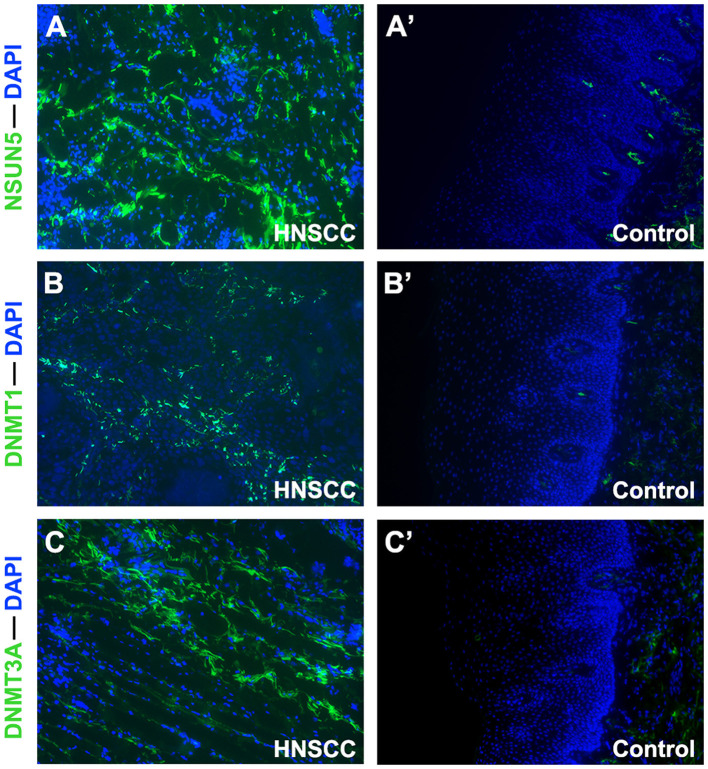
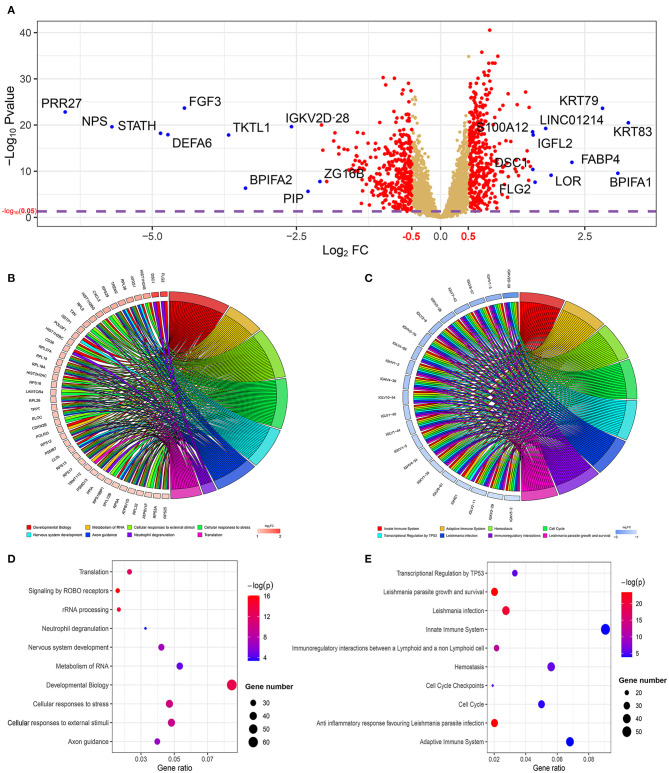
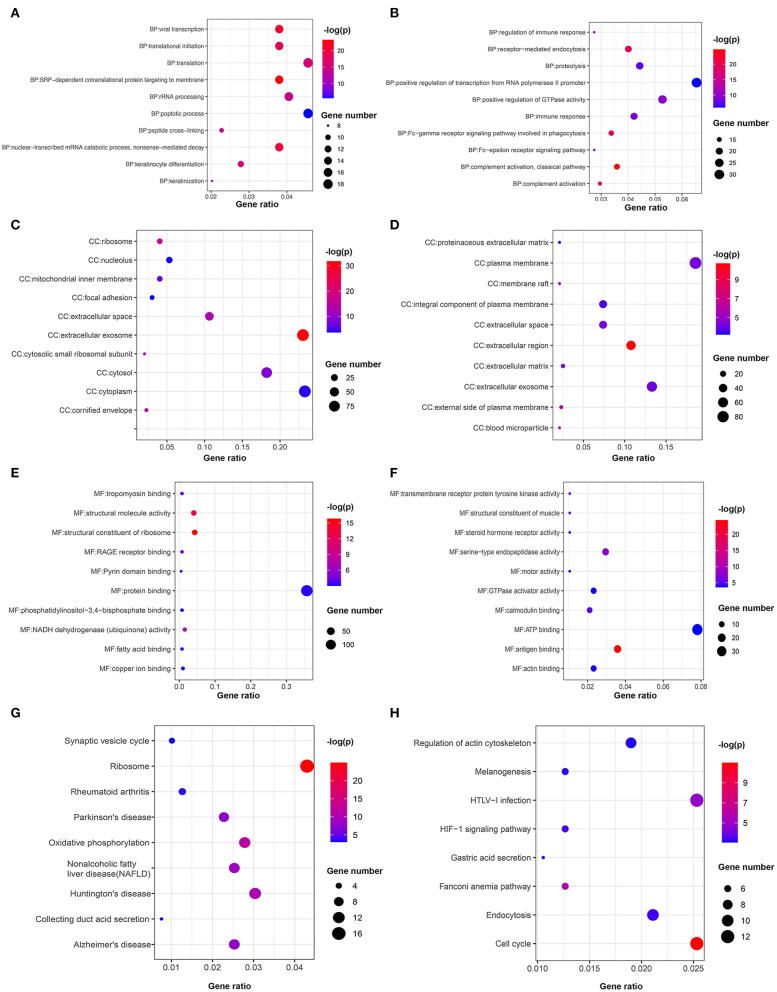
5-Methylcytosine (mC) methylation is a major epigenetic technique of RNA modification and is dynamically mediated by mC "writers," "erasers," and "readers." mC RNA modification and its regulators are implicated in the onset and development of many tumors, but their roles in head and neck squamous cell carcinoma (HNSCC) have not yet been completely elucidated. In this study, we examined expression patterns of core mC regulators in the publicly available HNSCC cohort bioinformatic methods. The differentially expressed mC regulators could divide the HNSCC cohort into four subgroups with distinct prognostic characteristics. Furthermore, a three-gene expression signature model, comprised of NSUN5, DNMT1, and DNMT3A, was established to identify individuals with a high or low risk of HNSCC. To explore the underlying mechanism in the prognosis of HNSCC, screening of differentially expressed genes, followed by the analysis of functional and pathway enrichment, from individuals with high- or low-risk HNSCC was performed. The results revealed a critical role for mC RNA modification in two aspects of HNSCC: (1) dynamic mC modification contributes to the regulation of HNSCC progression and (2) expression patterns of NSUN5, DNMT1, and DNMT3A help to predict the prognosis of HNSCC.
5-甲基胞嘧啶(mC)甲基化是RNA修饰的一种主要表观遗传技术,由mC“写入器”“擦除器”和“读取器”动态介导。mC RNA修饰及其调节因子与许多肿瘤的发生和发展有关,但其在头颈部鳞状细胞癌(HNSCC)中的作用尚未完全阐明。在本研究中,我们采用生物信息学方法,在公开可用的HNSCC队列中检测了核心mC调节因子的表达模式。差异表达的mC调节因子可将HNSCC队列分为具有不同预后特征的四个亚组。此外,建立了一个由NSUN5、DNMT1和DNMT3A组成的三基因表达特征模型,以识别HNSCC高风险或低风险个体。为了探究HNSCC预后的潜在机制,我们对高风险或低风险HNSCC个体进行了差异表达基因筛选,随后进行了功能和通路富集分析。结果揭示了mC RNA修饰在HNSCC两个方面的关键作用:(1)动态mC修饰有助于调节HNSCC进展;(2)NSUN5、DNMT1和DNMT3A的表达模式有助于预测HNSCC的预后。