Dourou Dimitra, Spyrelli Evgenia D, Doulgeraki Agapi I, Argyri Anthoula A, Grounta Athena, Nychas George-John E, Chorianopoulos Nikos G, Tassou Chrysoula C
Institute of Technology of Agricultural Products, Hellenic Agricultural Organization DIMITRA, Sofokli Venizelou 1, Lycovrissi, 14123 Athens, Greece.
Laboratory of Food Microbiology and Biotechnology, Department of Food Science and Human Nutrition, School of Food and Nutritional Sciences, Agricultural University of Athens, Iera Odos 75, 11855 Athens, Greece.
Foods. 2021 Apr 3;10(4):765. doi: 10.3390/foods10040765.
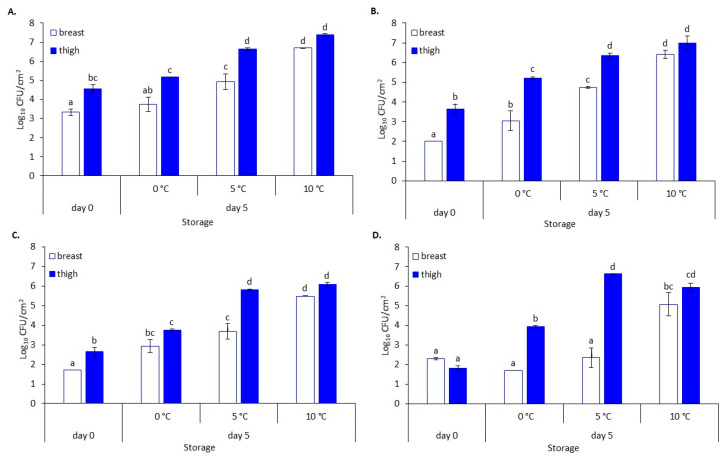
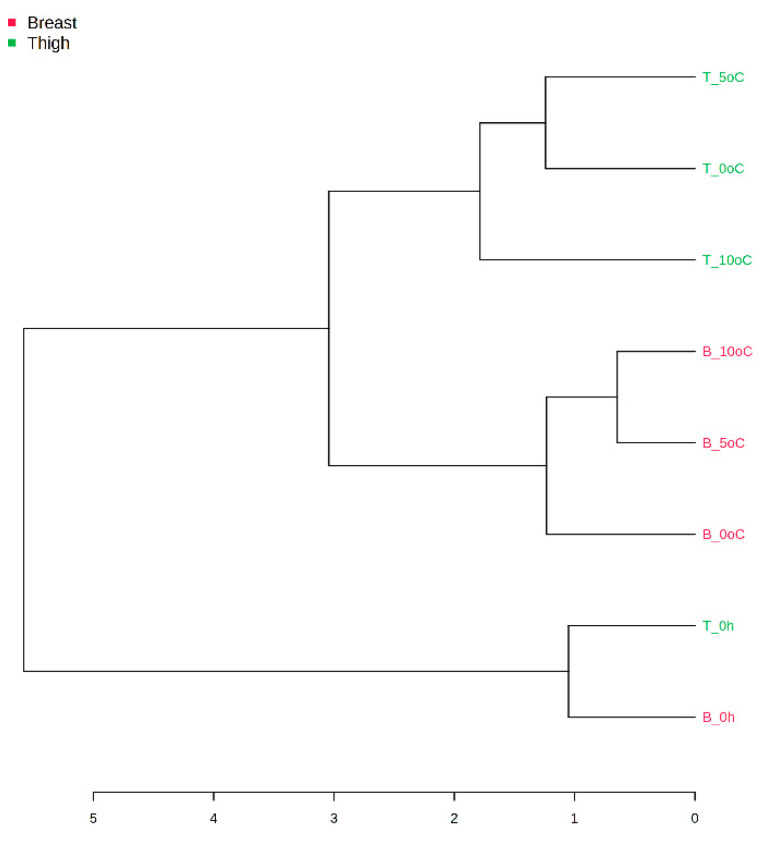
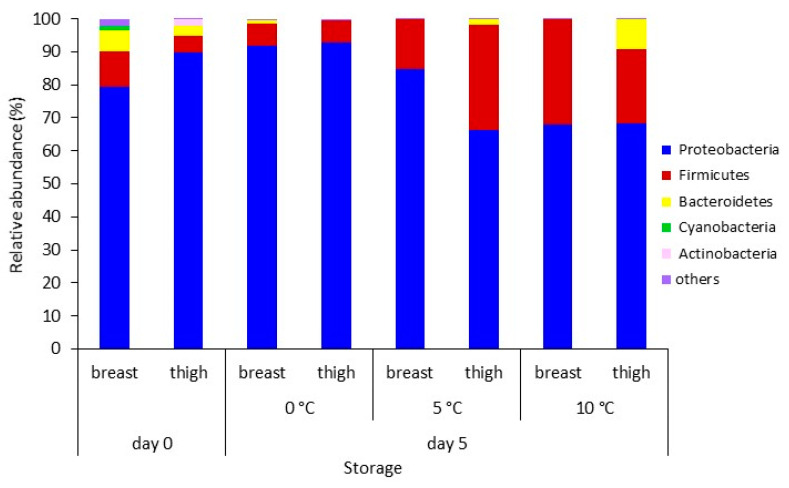
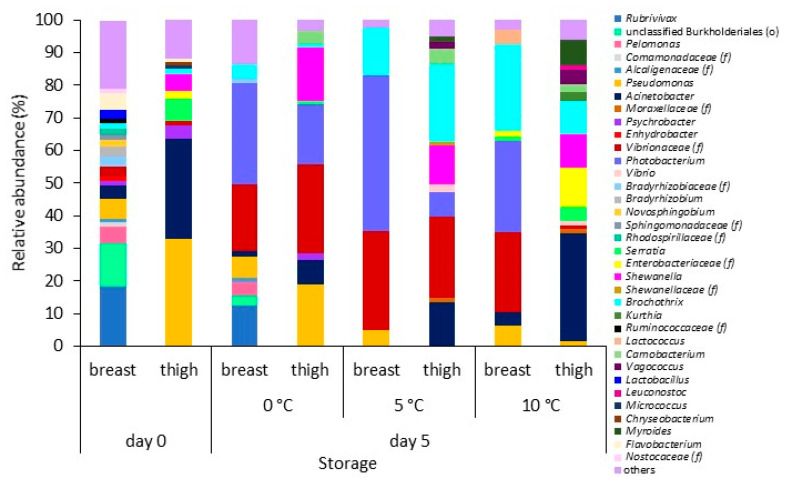
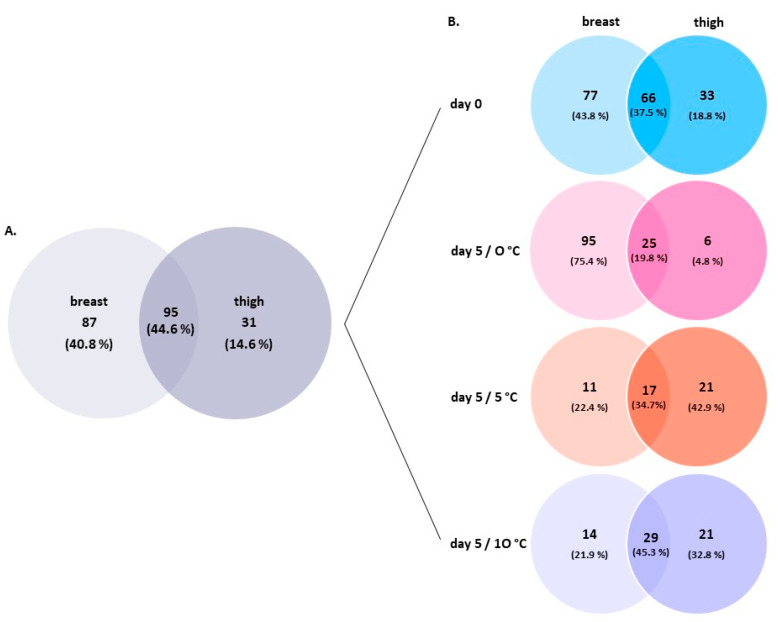
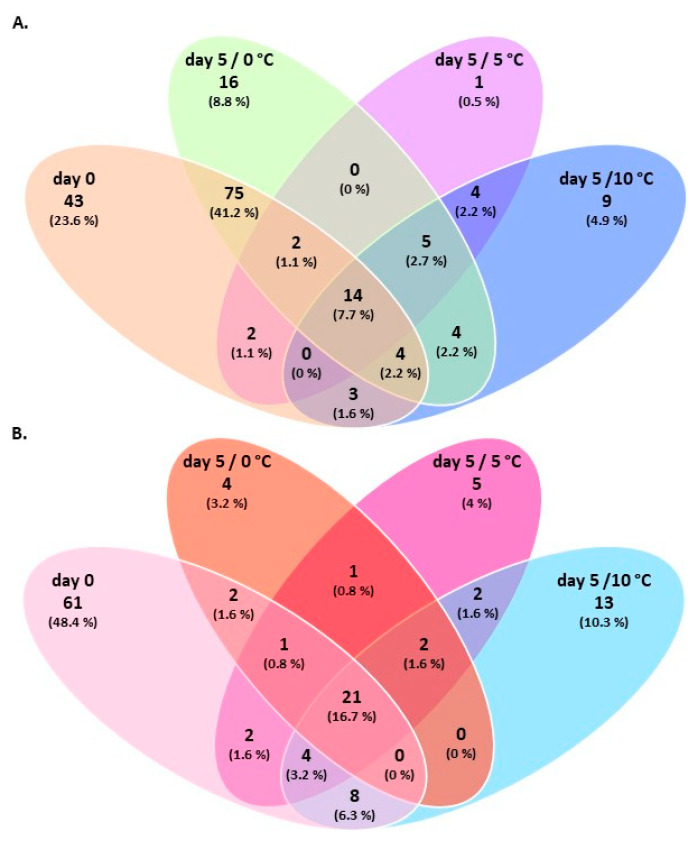
Chicken is one of the most widely consumed meats worldwide. The exploration of the bacterial diversity of chicken meat may provide new insights into the chicken-associated microbiome that will lead to moderation of food spoilage or safety. This study was undertaken to explore the bacterial communities of chicken breast and thigh fillets stored at refrigeration (0 °C and 5 °C) and slightly abuse (10 °C) temperatures for 5 days through conventional cultural methods along with next-generation sequencing (NGS) analysis. Total viable counts (TVC), , spp., and lactic acid bacteria (LAB) were enumerated, while the bacterial communities were mapped through 16S rRNA gene amplicon sequencing. Chicken breast and thigh fillets possessed a complex bacterial structure that incorporated a total of >200 Operational Taxonomic Units (OTUs) at the genus level. The core microbiota of fresh samples consisted of , , , , , and (family). These genera persisted until the end of storage in >80% of samples, except and , while was also identified. Hierarchical clustering showed a distinction of samples based on storage time and chicken part. Conventional plate counting with growth media commonly used in spoilage studies did not always correspond to the microbial community profiles derived from NGS analysis, especially in , , , and . Results of the present study highlight and , in general, as potent chicken meat spoilers and suggest the necessity to combine classical microbiological methods along with NGS technologies to characterize chicken meat spoilage microbiota.
鸡肉是全球消费最为广泛的肉类之一。对鸡肉细菌多样性的探索可能会为与鸡肉相关的微生物群提供新的见解,从而有助于控制食品变质或保障食品安全。本研究旨在通过传统培养方法以及新一代测序(NGS)分析,探究鸡胸肉和鸡腿肉在冷藏(0°C和5°C)以及轻度滥用温度(10°C)下储存5天的细菌群落。对总活菌数(TVC)、 、 菌属以及乳酸菌(LAB)进行了计数,同时通过16S rRNA基因扩增子测序绘制细菌群落图谱。鸡胸肉和鸡腿肉具有复杂的细菌结构,在属水平上总共包含超过200个可操作分类单元(OTU)。新鲜样品的核心微生物群由 、 、 、 、 和 (科)组成。这些菌属在超过80%的样品中一直持续到储存结束,除了 和 ,同时也鉴定出了 。层次聚类显示,样品根据储存时间和鸡肉部位存在差异。在变质研究中常用的生长培养基进行的传统平板计数并不总是与NGS分析得出的微生物群落概况一致,尤其是在 、 、 和 方面。本研究结果总体上突出了 和 作为鸡肉强力腐败菌的特点,并表明有必要将经典微生物学方法与NGS技术相结合,以表征鸡肉腐败微生物群。