Filyushin Mikhail A, Anisimova Olga K, Kochieva Elena Z, Shchennikova Anna V
Research Center of Biotechnology, Institute of Bioengineering, Russian Academy of Sciences, Leninsky Ave. 33, bld. 2, 119071 Moscow, Russia.
Plants (Basel). 2021 Apr 7;10(4):720. doi: 10.3390/plants10040720.
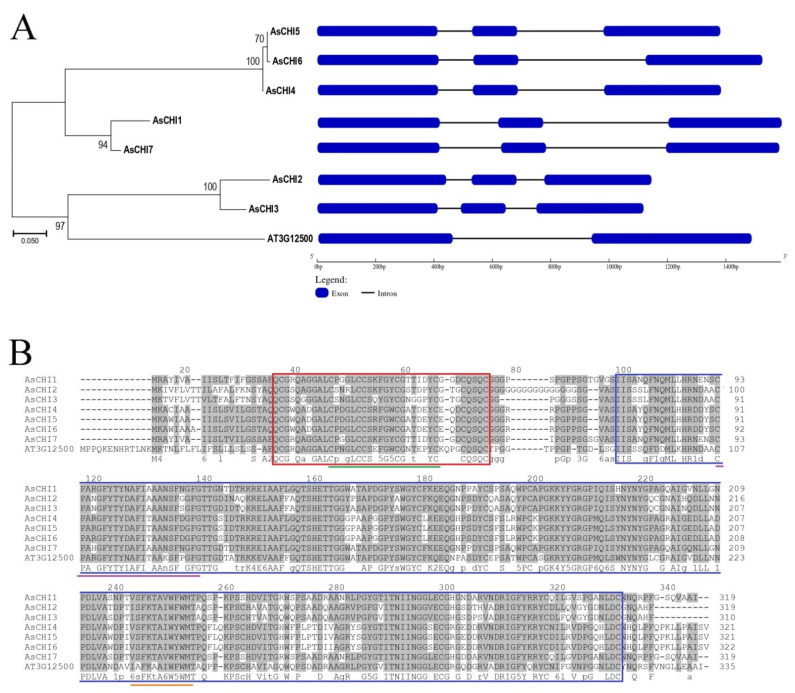
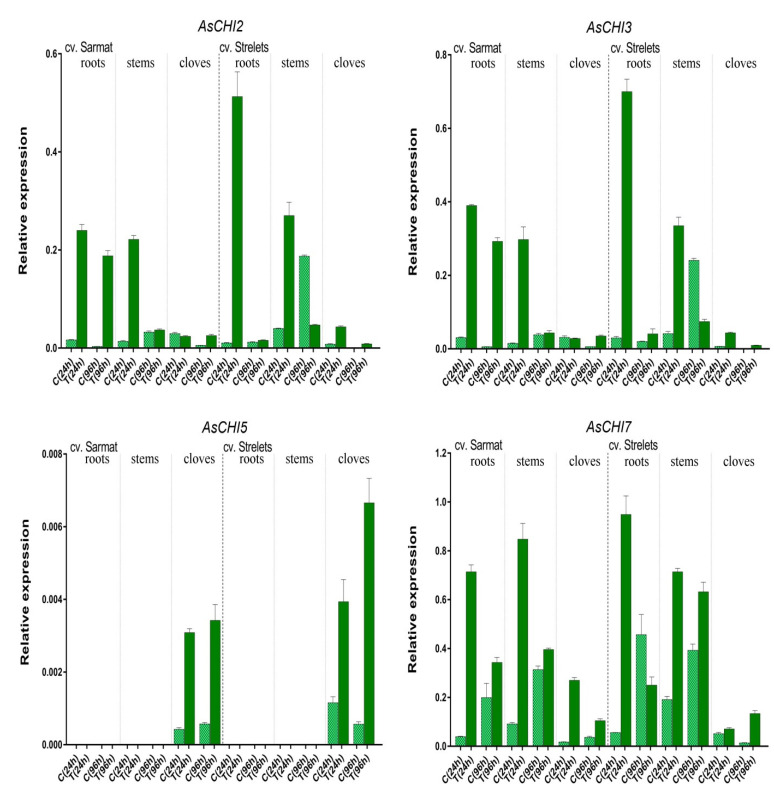
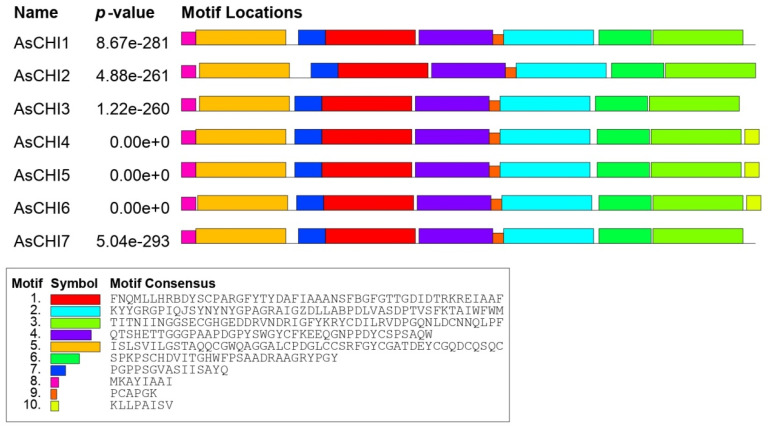
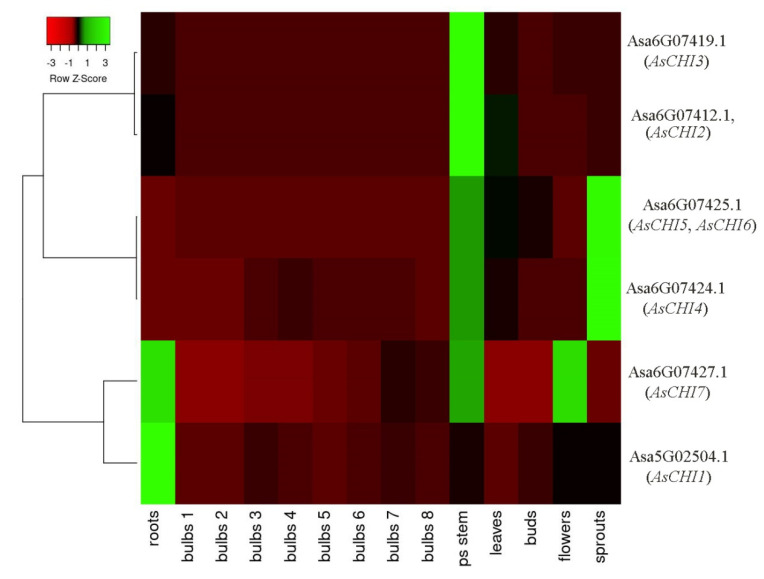
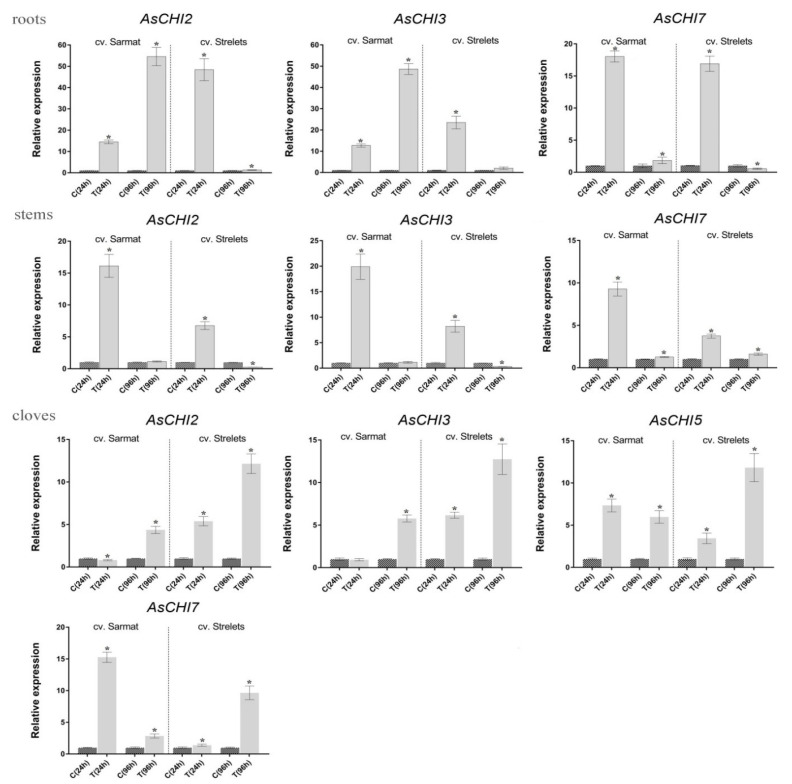
Vegetables of the genus are prone to infection by fungi. Chitinases of the GH19 family are pathogenesis-related proteins inhibiting fungal growth through the hydrolysis of cell wall chitin; however, the information on garlic ( L.) chitinases is limited. In the present study, we identified seven class I chitinase genes, , in the cv. Ershuizao genome, which may have a conserved function in the garlic defense against attack. The promoters contained jasmonic acid-, salicylic acid-, gibberellins-, abscisic acid-, auxin-, ethylene-, and stress-responsive elements associated with defense against pathogens. The expression of , , and genes was constitutive in -resistant and -susceptible garlic cultivars and was mostly induced at the early stage of infection. In roots, and mRNA levels were increased in the susceptible and decreased in the resistant cultivar, whereas in cloves, and expression was decreased in the susceptible but increased in the resistant plants, suggesting that these genes are involved in the garlic response to attack. Our results provide insights into the role of chitinases in garlic and may be useful for breeding programs to increase the resistance of crops to infections.
该属蔬菜易于受到真菌的感染。GH19家族的几丁质酶是病程相关蛋白,通过水解细胞壁几丁质来抑制真菌生长;然而,关于大蒜(L.)几丁质酶的信息有限。在本研究中,我们在二水早基因组中鉴定出7个I类几丁质酶基因,它们可能在大蒜抵御攻击中具有保守功能。这些基因的启动子包含与抵御病原体相关的茉莉酸、水杨酸、赤霉素、脱落酸、生长素、乙烯和胁迫响应元件。在抗和感品种中,基因、和的表达是组成型的,并且在感染早期大多被诱导。在根部,感病品种中基因和的mRNA水平升高,抗病品种中则降低,而在蒜瓣中,感病植株中基因和的表达降低,抗病植株中则升高,这表明这些基因参与了大蒜对攻击的响应。我们的结果为几丁质酶在大蒜中的作用提供了见解,可能有助于育种计划提高作物对感染的抗性。