Faculty of Health Sciences, University of Alicante, 03690 Alicante, Spain.
Nursing Department, Faculty of Health Sciences, University of Alicante, 03690 Alicante, Spain.
Molecules. 2021 Apr 6;26(7):2095. doi: 10.3390/molecules26072095.
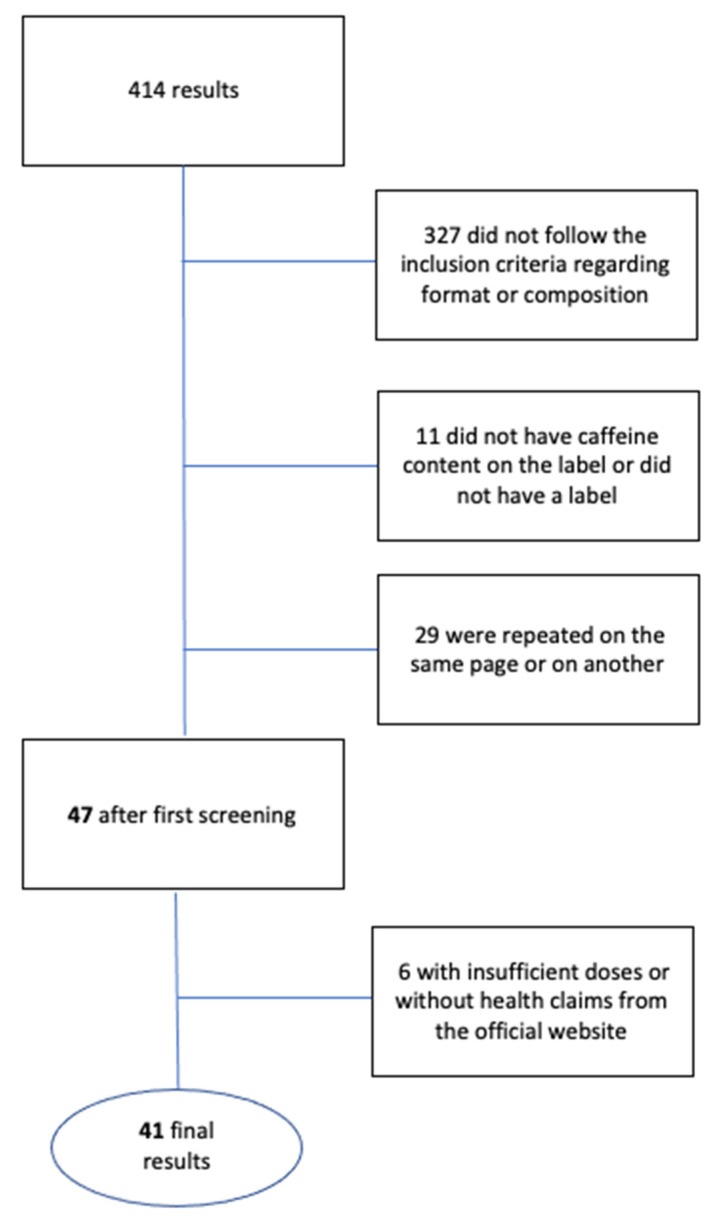
Caffeine is a food supplement widely consumed by athletes, but it has not been established. So far, the veracity of their labeling in terms of the dosage and cause/effect relationship aimed at the consumer. The aim is to analyze the health claims and the dosage presented on the labeling of caffeine supplements and to evaluate if they follow the European Food Safety Authority (EFSA) and international criteria. A descriptive cross-sectional study of a sample of caffeine supplements was carried out. The search was done through the Amazon and Google Shopping web portals. In order to assess the adequacy of the health claims, the guidelines of reference established by European Food Safety Authority were compared to the Academy of Nutrition and Dietetics, International Olympic Committee, and Australian Institute of Sport guidelines; in addition, recent systematic reviews were addressed. A review of labels of 42 caffeine supplements showed that, in less than 3% of the products were the health claims supported by the recommendations and by the labeled quantity of caffeine. The claims that fully complied the recommendations were, "improves or increases endurance performance", "improves strength performance", or "improves short-term performance". In most cases, the recommended dosage was 200 mg/day for these products, which is the minimum for the caffeine effects to be declared. The rest of the health claims were not adequate or need to be modified. Most of the health claims identified indicated an unproven cause and effect, which constitutes consumer fraud, and so must be modified or eliminated.
咖啡因是一种被运动员广泛食用的食品补充剂,但尚未确定其在剂量和因果关系方面针对消费者的标签的真实性。目的是分析咖啡因补充剂标签上的健康声明和剂量,并评估它们是否符合欧洲食品安全局 (EFSA) 和国际标准。对咖啡因补充剂样本进行了描述性的横断面研究。通过亚马逊和谷歌购物门户网站进行了搜索。为了评估健康声明的充分性,将欧洲食品安全局制定的参考指南与营养与饮食学会、国际奥委会和澳大利亚体育学院的指南进行了比较;此外,还解决了最近的系统评价。对 42 种咖啡因补充剂标签的审查表明,不到 3%的产品的健康声明得到了推荐和标签上咖啡因含量的支持。完全符合建议的声明是,“提高或增加耐力表现”、“提高力量表现”或“提高短期表现”。在大多数情况下,这些产品的推荐剂量为 200 毫克/天,这是声明咖啡因效果的最低剂量。其余的健康声明不充分或需要修改。确定的大多数健康声明表明存在未经证实的因果关系,这构成了消费者欺诈,因此必须进行修改或删除。