Faculty of CECAPE, Medicine College Estácio of Juazeiro do Norte, Juazeiro do Norte, CE 63040-360, Brazil.
Study Group on Health Management and Evaluation at IMIP/Pernambuco, Institute of Integral Medicine Fernando Figueira-IMIP, Recife, PE 50070-550, Brazil.
Int J Environ Res Public Health. 2021 Apr 8;18(8):3895. doi: 10.3390/ijerph18083895.
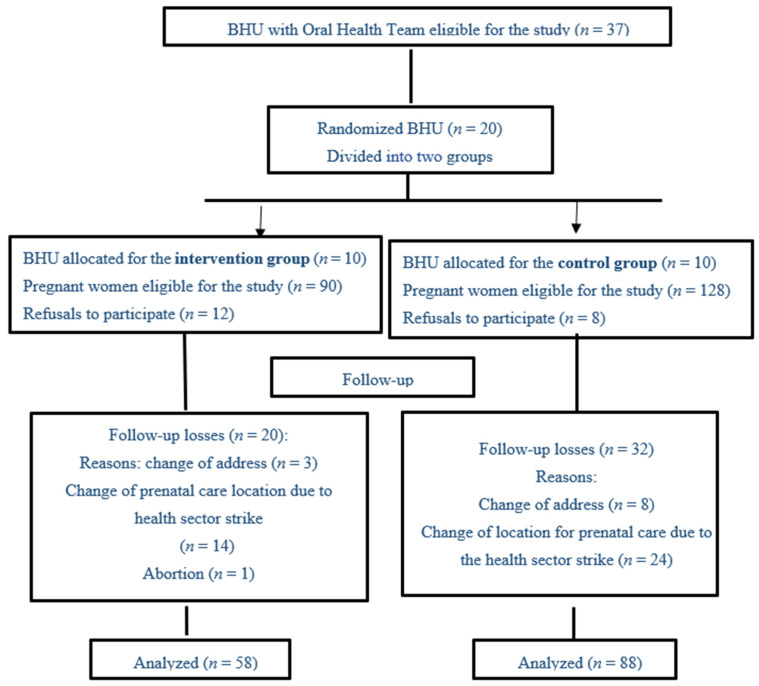
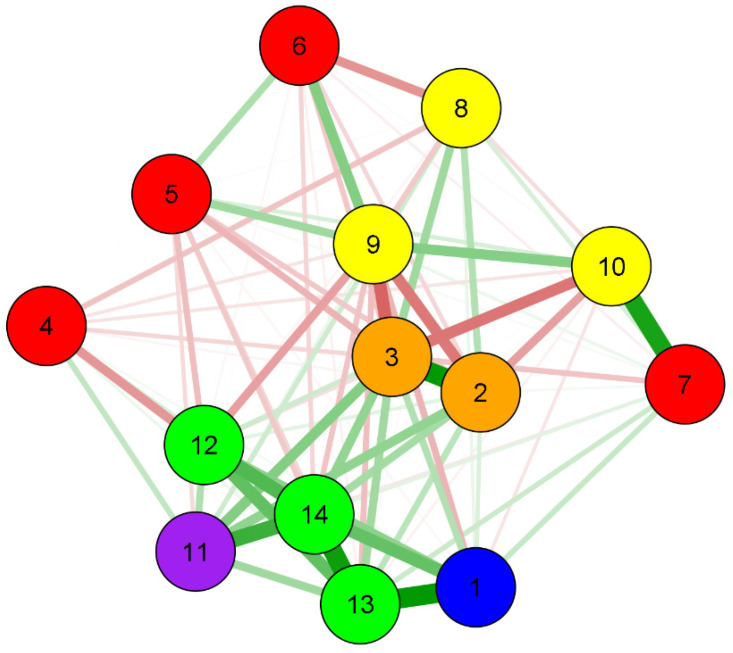
Oral healthcare during pregnancy needs to be part of the assistance routine given to pregnant women by health professionals as a way to encourage self-care and strengthen the general health of the mother and the baby. The aim of this study was to evaluate the effectiveness of an integrated oral healthcare intervention for pregnant women and to analyze the association of sociodemographic, behavioral, oral health and general maternal and child health factors in prenatal care at usual risk in primary care in a city in the northeast of Brazil, in 2018-2019. A controlled, randomized, single-blinded community trial was conducted. The intervention group (IG) received dental assistance and collective health education actions in conversation circles, while the control group (CG) received the usual assistance. All pregnant women (146 in total, 58 from IG and 88 from CG) that took part in the trial answered a questionnaire and underwent a dental examination at the beginning of prenatal care and at the puerperal visit. To assess the effect of the intervention, a network analysis was used. The results have shown that being in the control group was associated with neonatal complications (0.89) and prematurity (0.54); the use of tobacco and alcohol are associated with high risk in initial and final oral health; lower educational level of the pregnant women implicates high risk for initial oral health (-0.19), final oral health (-0.26), pregnancy complications (-0.13), low birth weight (-0.23), prematurity (-0.19) and complications in the newborn (-0.14). Having a low family income (≤261.36 USD) has shown a high risk for initial oral health (-0.14), final oral health (-0.20) and prematurity (-0.15). The intervention based on integrated oral healthcare for pregnant women indicated that socioeconomic and behavioral factors must be considered as determinants for the quality of women and children's health and that multi-professional performance during prenatal care contributes to the positive outcomes of pregnancy.
孕期口腔保健需要成为卫生专业人员为孕妇提供的常规服务的一部分,以鼓励自我保健并增强母婴的整体健康。本研究旨在评估针对孕妇的综合口腔保健干预措施的有效性,并分析在巴西东北部一个城市的初级保健中,一般风险的产前护理中,社会人口学、行为、口腔健康和一般母婴健康因素与该干预措施的相关性,研究于 2018-2019 年进行。这是一项对照、随机、单盲的社区试验。干预组(IG)接受牙科护理和集体健康教育行动的对话圈,而对照组(CG)接受常规护理。所有参与试验的孕妇(共 146 人,IG 组 58 人,CG 组 88 人)在产前护理开始时和产褥期接受问卷调查和口腔检查。为了评估干预效果,采用网络分析。结果表明,处于对照组与新生儿并发症(0.89)和早产(0.54)相关;使用烟草和酒精与初始和最终口腔健康的高风险相关;孕妇的教育水平较低与初始口腔健康(-0.19)、最终口腔健康(-0.26)、妊娠并发症(-0.13)、低出生体重(-0.23)、早产(-0.19)和新生儿并发症(-0.14)相关。家庭收入低(≤261.36 美元)与初始口腔健康(-0.14)、最终口腔健康(-0.20)和早产(-0.15)的高风险相关。针对孕妇的综合口腔保健干预表明,社会经济和行为因素必须被视为妇女和儿童健康质量的决定因素,并且产前护理期间多专业人员的表现有助于妊娠的积极结果。