Siakeng Ramengmawii, Jawaid Mohammad, Asim Mohammad, Siengchin Suchart
Department of Mechanical and Process Engineering, The Sirindhorn International Thai-German, Graduate School of Engineering (TGGS), King Mongkut's University of Technology North Bangkok, Bangkok 10800, Thailand.
Institute of Tropical Forestry and Forest Products (INTROP), Universiti Putra Malaysia, Seri Kembangan 43400, Malaysia.
Polymers (Basel). 2020 Feb 16;12(2):458. doi: 10.3390/polym12020458.
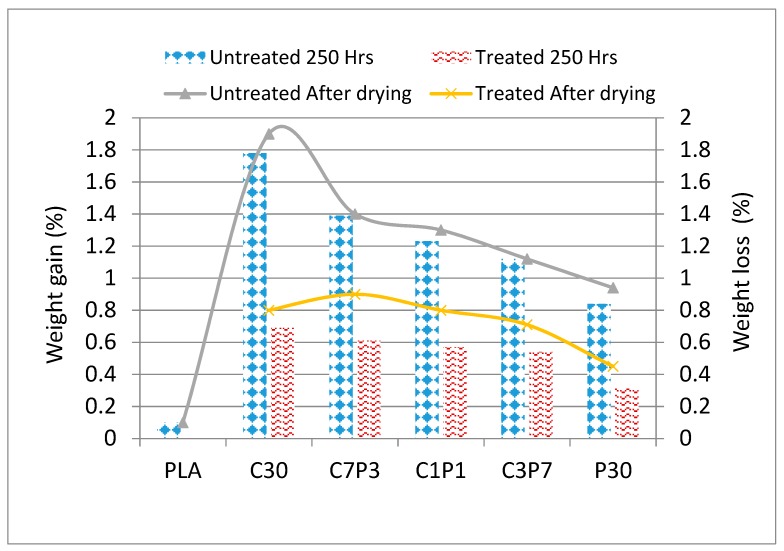
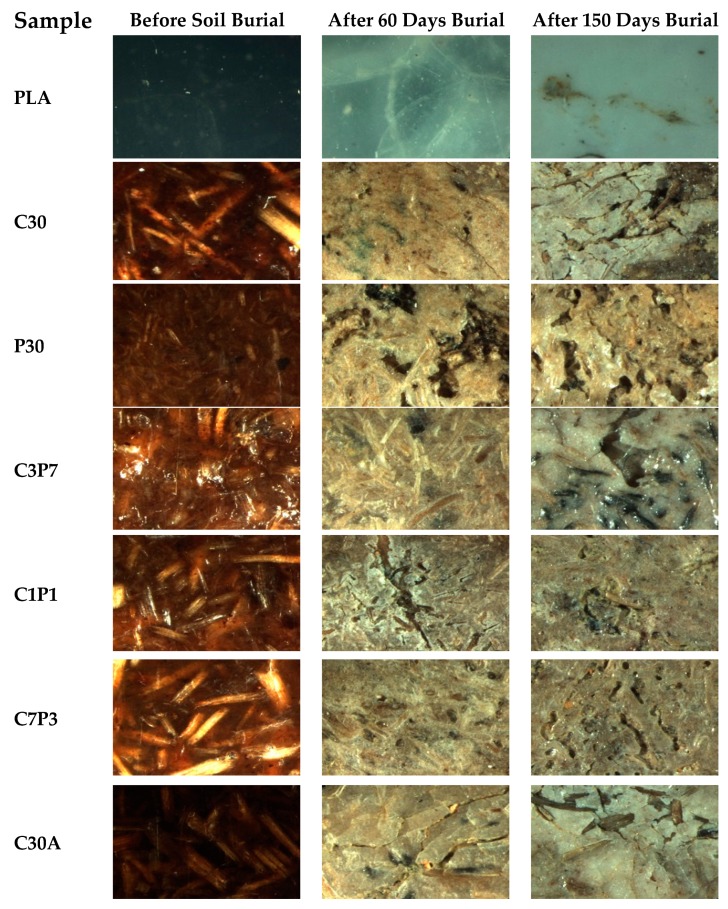
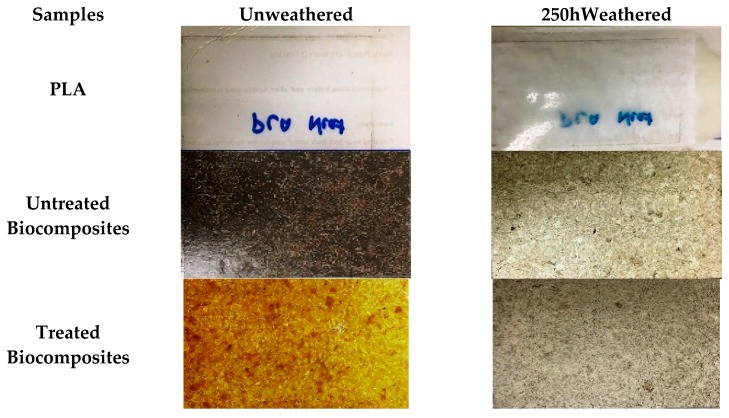
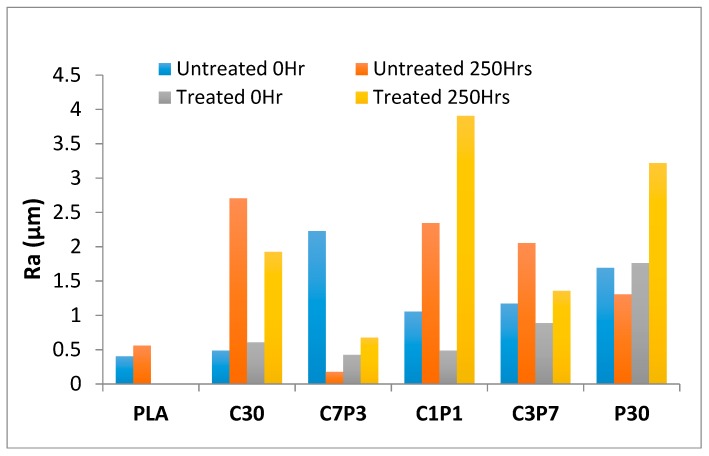
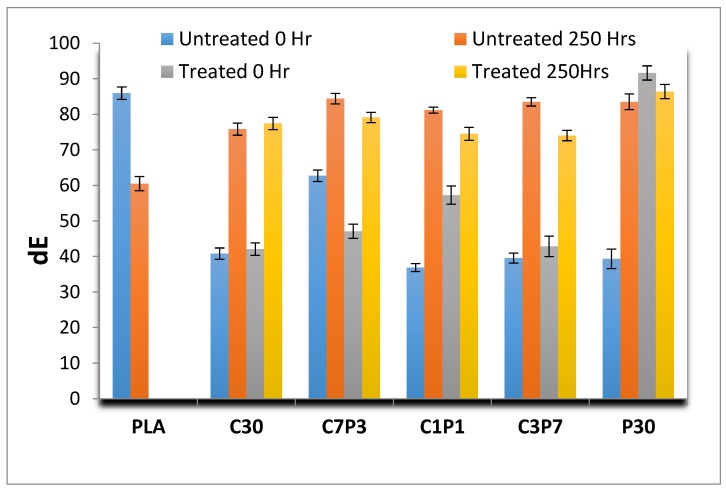
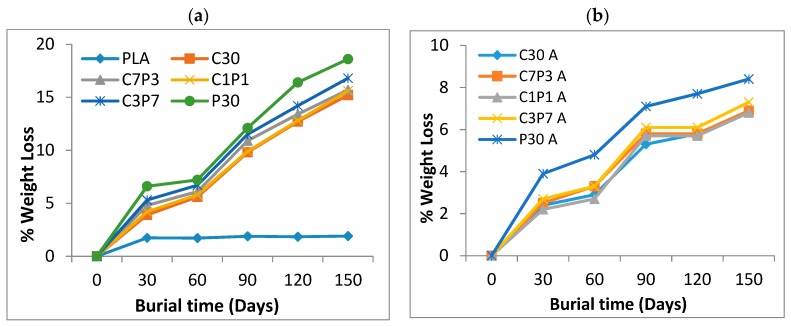
Accelerated weathering and soil burial tests on biocomposites of various ratios of coir (CF)/pineapple leaf fibres (PALF) with polylactic acid (PLA) were conducted to study the biodegradability, colour, and texture properties as compared with PLA.The biodegradability of a lignocellulosic composite largely depends on its polymer matrix, and the rate of biodegradation depends on many environmental factors such as moisture, light(radiation), temperature and microbes. Biodegradation was evaluated by soil burial and accelerated weathering tests. Changes in physical and morphological properties were observed in the biocomposites after weathering. These results allowed us to conclude that untreated CF/PALF/PLA biocomposites would be a more favourable choice owing to their better biodegradability and are suitable for the suggested biodegradable food packaging applications.
对不同比例椰壳纤维(CF)/菠萝叶纤维(PALF)与聚乳酸(PLA)的生物复合材料进行了加速老化和土壤掩埋试验,以研究其与PLA相比的生物降解性、颜色和质地特性。木质纤维素复合材料的生物降解性很大程度上取决于其聚合物基体,生物降解速率取决于许多环境因素,如湿度、光(辐射)、温度和微生物。通过土壤掩埋和加速老化试验评估生物降解性。风化后观察到生物复合材料的物理和形态特性发生了变化。这些结果使我们得出结论,未经处理的CF/PALF/PLA生物复合材料因其更好的生物降解性将是更有利的选择,适用于建议的可生物降解食品包装应用。