Zhu Ying, Ferri-Borgogno Sammy, Sheng Jianting, Yeung Tsz-Lun, Burks Jared K, Cappello Paola, Jazaeri Amir A, Kim Jae-Hoon, Han Gwan Hee, Birrer Michael J, Mok Samuel C, Wong Stephen T C
Center for Modeling Cancer Development, Houston Methodist Cancer Center, Houston Methodist Hospital, Houston, TX 77030, USA.
Departments of Pathology and Laboratory Medicine and Radiology, Houston Methodist Hospital, Weill Cornell Medicine, Houston, TX 77030, USA.
Cancers (Basel). 2021 Apr 8;13(8):1777. doi: 10.3390/cancers13081777.
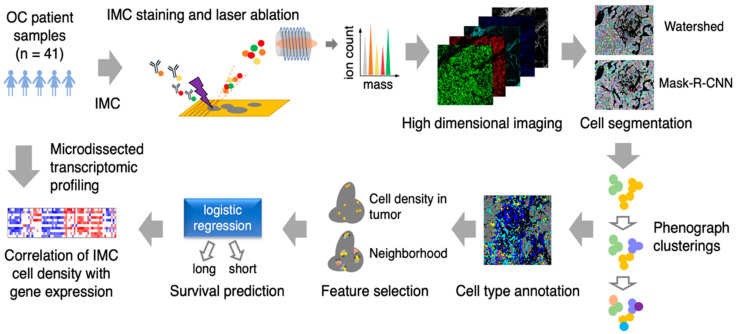
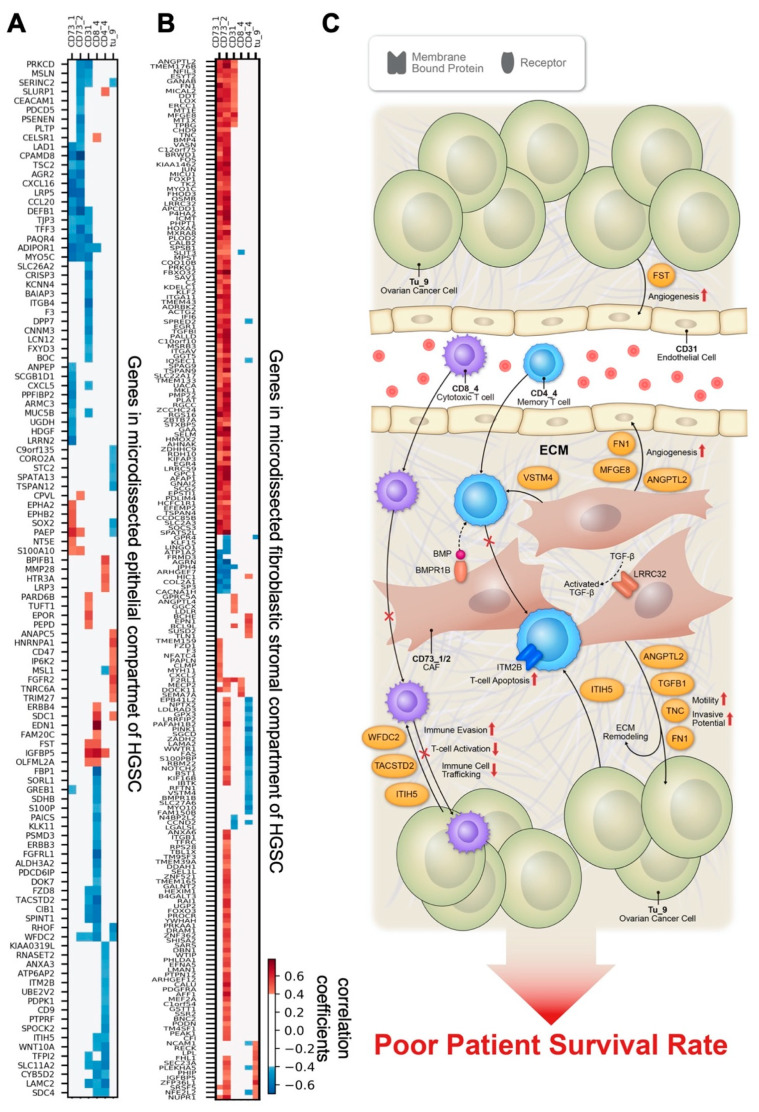
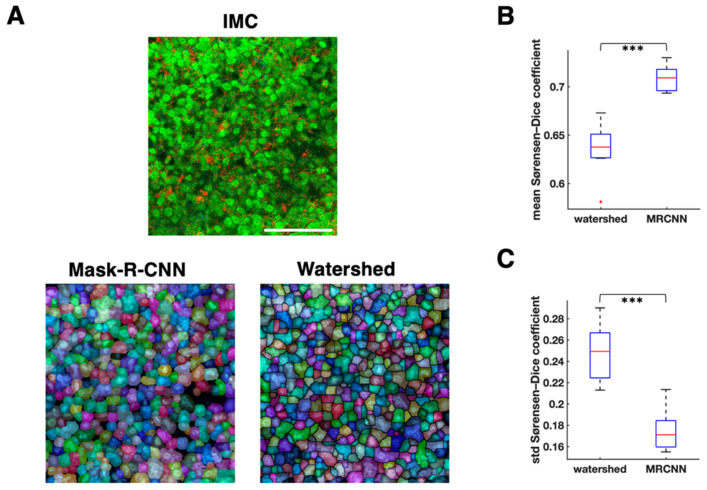
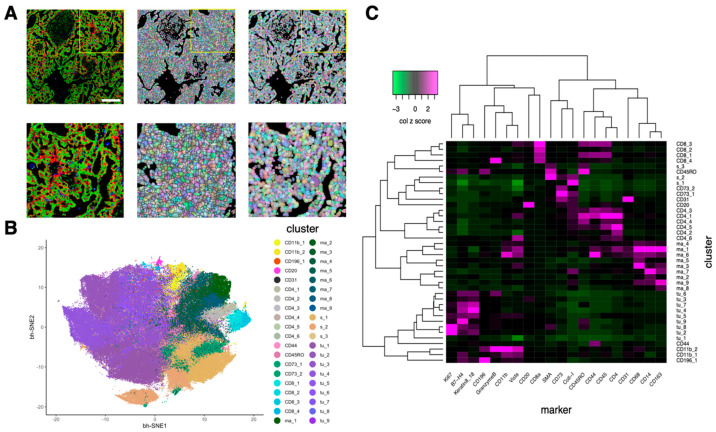
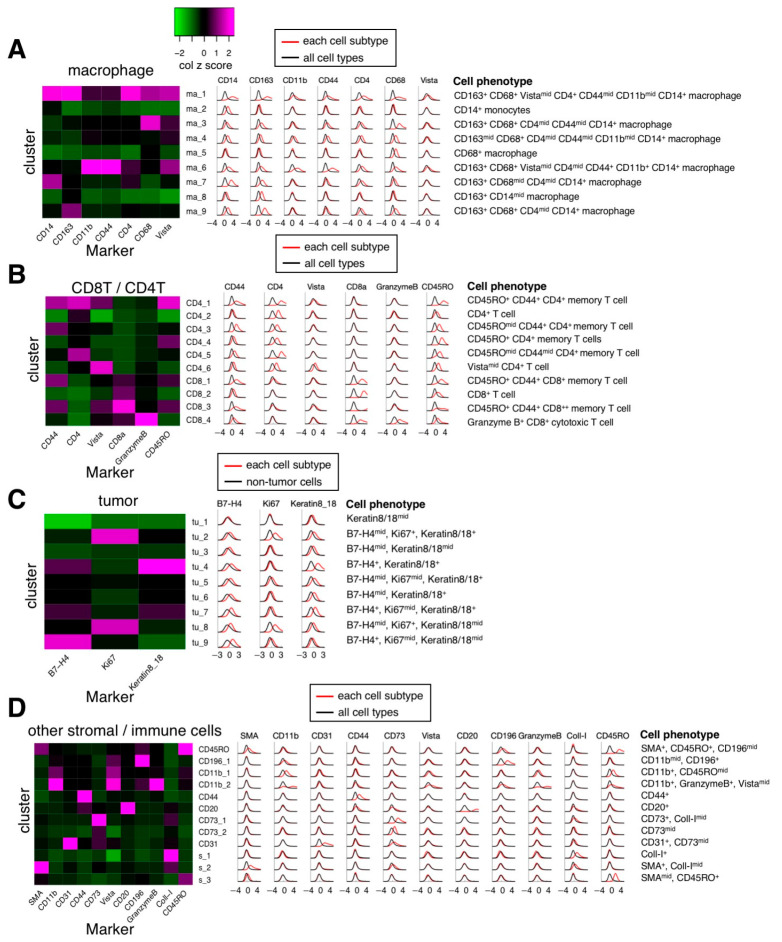
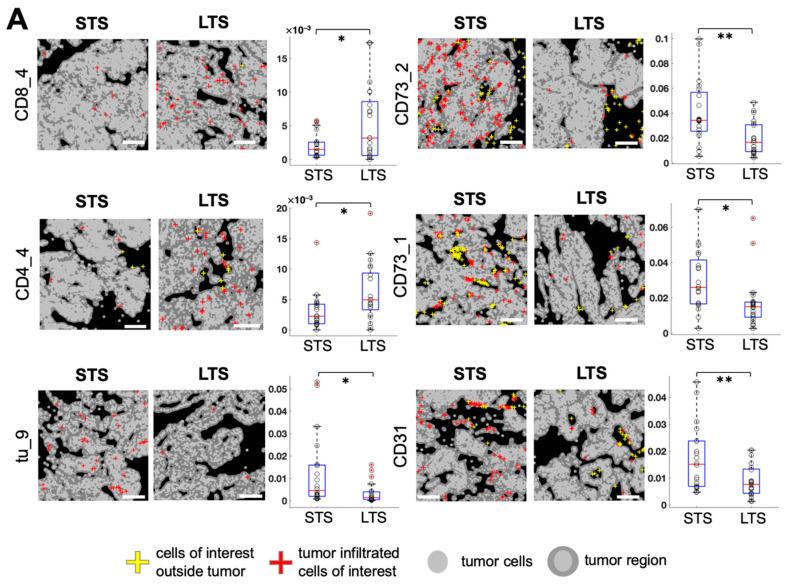
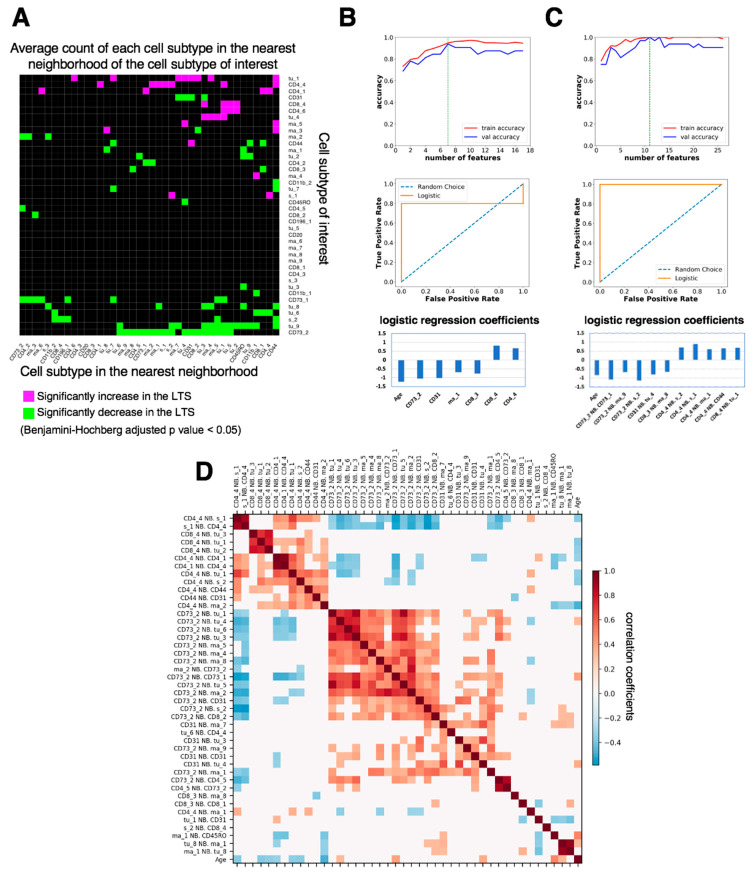
Stromal and immune cells in the tumor microenvironment (TME) have been shown to directly affect high-grade serous ovarian cancer (HGSC) malignant phenotypes, however, how these cells interact to influence HGSC patients' survival remains largely unknown. To investigate the cell-cell communication in such a complex TME, we developed a SpatioImageOmics (SIO) pipeline that combines imaging mass cytometry (IMC), location-specific transcriptomics, and deep learning to identify the distribution of various stromal, tumor and immune cells as well as their spatial relationship in TME. The SIO pipeline automatically and accurately segments cells and extracts salient cellular features to identify biomarkers, and multiple nearest-neighbor interactions among tumor, immune, and stromal cells that coordinate to influence overall survival rates in HGSC patients. In addition, SIO integrates IMC data with microdissected tumor and stromal transcriptomes from the same patients to identify novel signaling networks, which would lead to the discovery of novel survival rate-modulating mechanisms in HGSC patients.
肿瘤微环境(TME)中的基质细胞和免疫细胞已被证明可直接影响高级别浆液性卵巢癌(HGSC)的恶性表型,然而,这些细胞如何相互作用以影响HGSC患者的生存情况在很大程度上仍不清楚。为了研究如此复杂的TME中的细胞间通讯,我们开发了一种空间图像组学(SIO)流程,该流程结合了成像质谱流式细胞术(IMC)、定位特异性转录组学和深度学习,以识别各种基质细胞、肿瘤细胞和免疫细胞在TME中的分布及其空间关系。SIO流程可自动且准确地分割细胞并提取显著的细胞特征以识别生物标志物,以及肿瘤细胞、免疫细胞和基质细胞之间的多个最近邻相互作用,这些相互作用共同影响HGSC患者的总体生存率。此外,SIO将IMC数据与来自同一患者的显微切割肿瘤和基质转录组整合,以识别新的信号网络,这将有助于发现HGSC患者新的生存率调节机制。