Sánchez-Infantes David, Nus Meritxell, Navas-Madroñal Miquel, Fité Joan, Pérez Belén, Barros-Membrilla Antonio J, Soto Begoña, Martínez-González José, Camacho Mercedes, Rodriguez Cristina, Mallat Ziad, Galán María
Department of Basic Sciences of Health, Area of Biochemistry and Molecular Biology, University Rey Juan Carlos, 28922 Alcorcón, Spain.
Centro de Investigación Biomédica en Red-Fisiopatología de la Obesidad y Nutrición (CIBEROBN), ISCIII, 28029 Madrid, Spain.
Antioxidants (Basel). 2021 Apr 14;10(4):602. doi: 10.3390/antiox10040602.
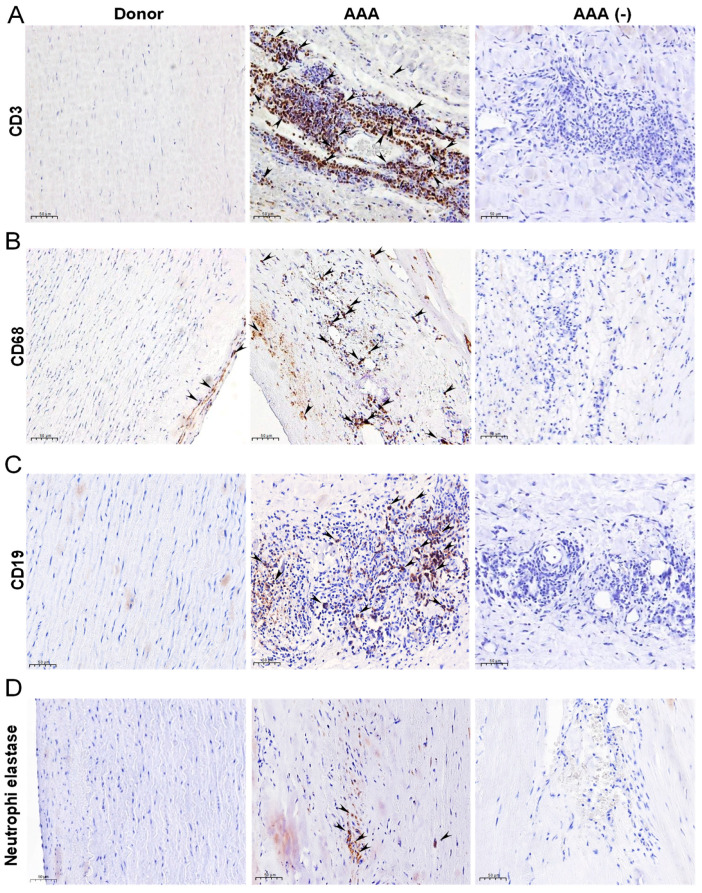
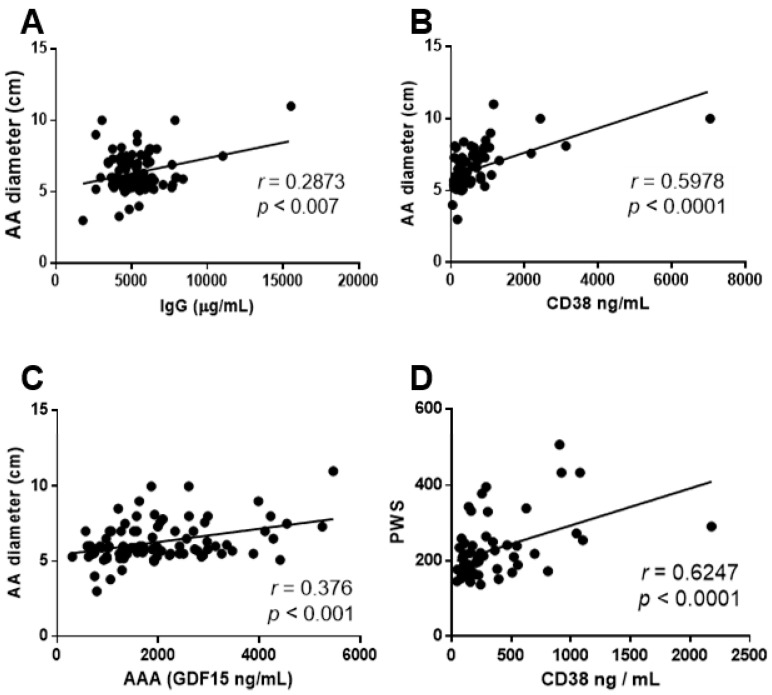
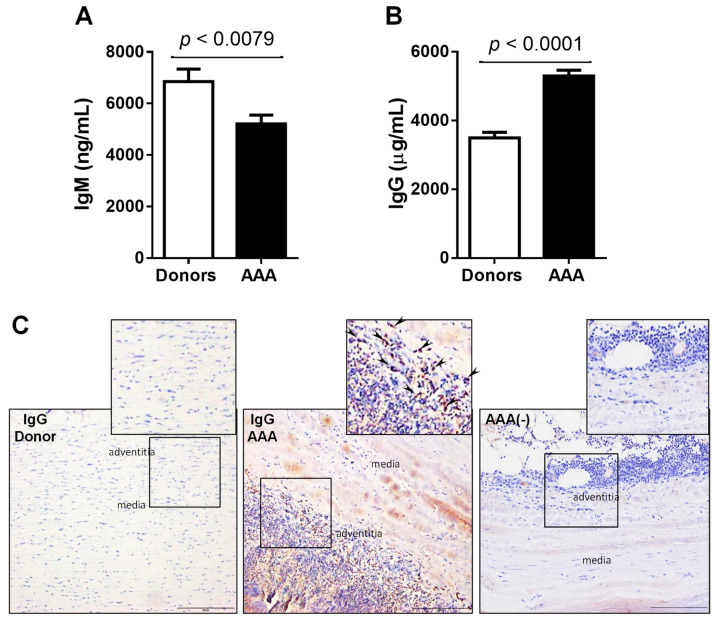
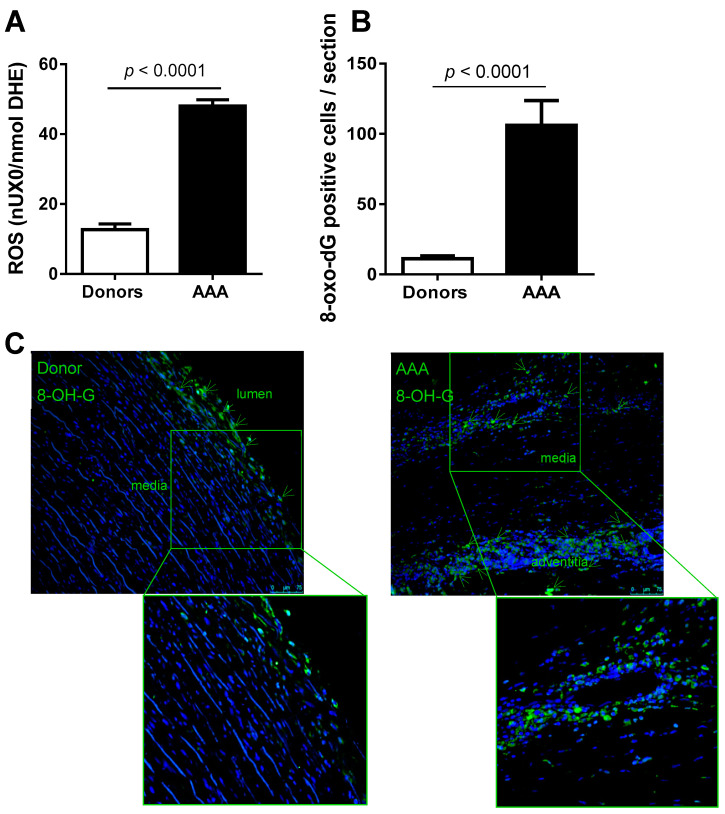
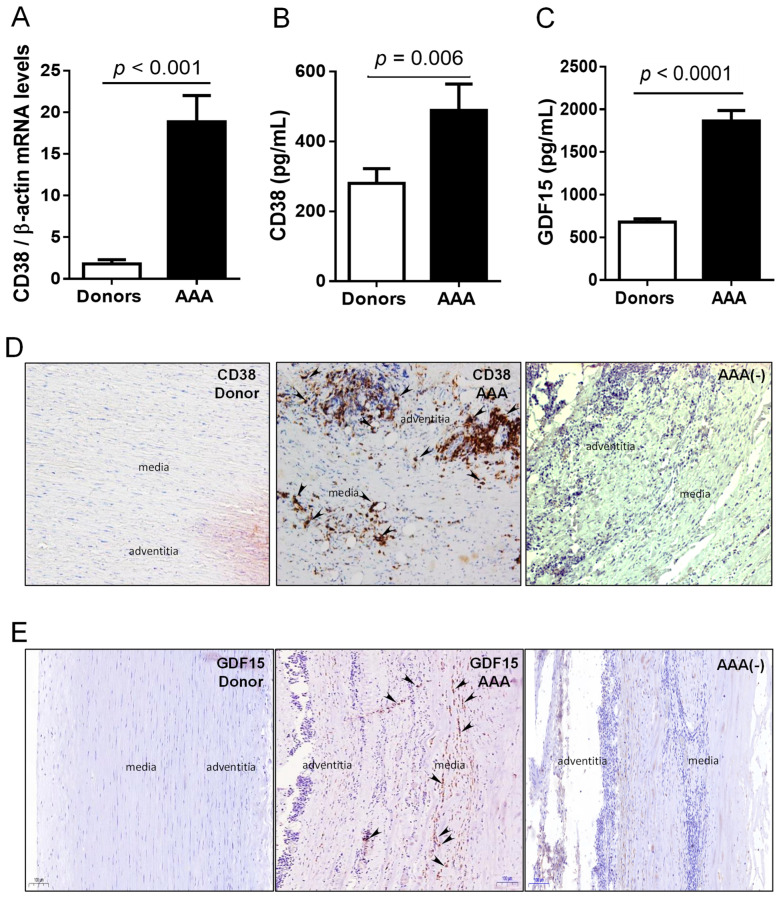
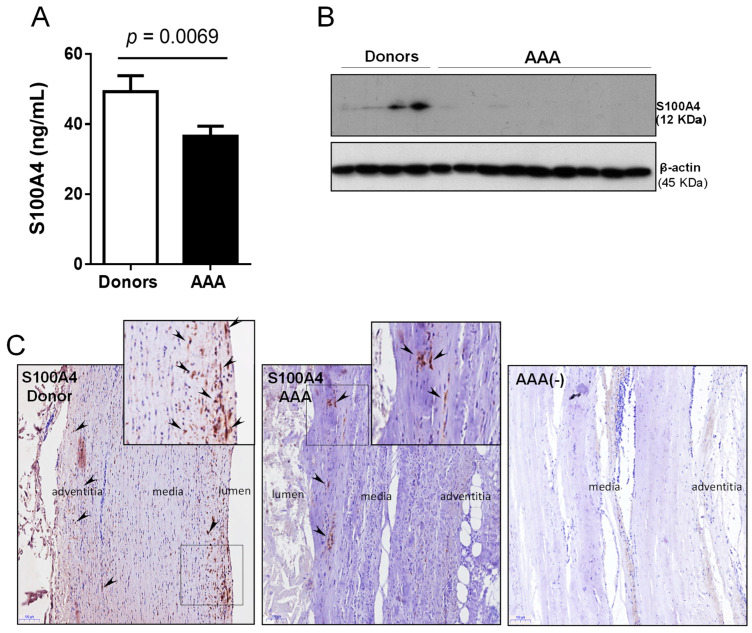
Abdominal aortic aneurysm (AAA) is increasing due to aging of the population and is a major cause of death among the elderly. Ultrasound screening programs are useful in early diagnosis, but aneurysm size is not always a good predictor of rupture. Our aim was to analyze the value of circulating molecules related to oxidative stress and inflammation as new biomarkers to assist the management of AAA. The markers were quantified by ELISA, and their expression in the aneurysmal wall was studied by real-time PCR and by immunostaining. Correlation analysis of the studied markers with aneurysm diameter and peak wall stress (PWS), obtained by finite element analysis, and multivariate regression analysis to assess potential confounding factors were performed. Our study shows an extensive inflammatory infiltration in the aneurysmal wall, mainly composed by T-cells, macrophages and B-cells and altered levels of reactive oxygen species (ROS), IgM, IgG, CD38, GDF15, S100A4 and CD36 in plasma and in the aneurysmal tissue of AAA patients compared with controls. Circulating levels of IgG, CD38 and GDF15 positively correlated with abdominal aortic diameter, and CD38 was correlated with PWS. Our data show that altered levels of IgG, CD38 and GDF15 have potential diagnostic value in the assessment of AAA.
腹主动脉瘤(AAA)因人口老龄化而日益增多,是老年人死亡的主要原因。超声筛查项目有助于早期诊断,但动脉瘤大小并不总是破裂的良好预测指标。我们的目的是分析与氧化应激和炎症相关的循环分子作为辅助腹主动脉瘤管理的新生物标志物的价值。通过酶联免疫吸附测定(ELISA)对这些标志物进行定量,并通过实时聚合酶链反应(PCR)和免疫染色研究它们在动脉瘤壁中的表达。对所研究的标志物与通过有限元分析获得的动脉瘤直径和峰值壁应力(PWS)进行相关性分析,并进行多变量回归分析以评估潜在的混杂因素。我们的研究表明,与对照组相比,AAA患者的动脉瘤壁存在广泛的炎症浸润,主要由T细胞、巨噬细胞和B细胞组成,血浆和动脉瘤组织中的活性氧(ROS)、IgM、IgG、CD38、生长分化因子15(GDF15)、S100A4和CD36水平发生改变。IgG、CD38和GDF15的循环水平与腹主动脉直径呈正相关,且CD38与PWS相关。我们的数据表明,IgG、CD38和GDF15水平的改变在腹主动脉瘤评估中具有潜在的诊断价值。