Department of Dermatology, Kitasato University School of Medicine, Minami Ward, Sagamihara 252-0374, Japan.
AntiCancer, Inc., 7917 Ostrow Street, San Diego, CA 92111, USA.
Cells. 2021 Apr 10;10(4):864. doi: 10.3390/cells10040864.
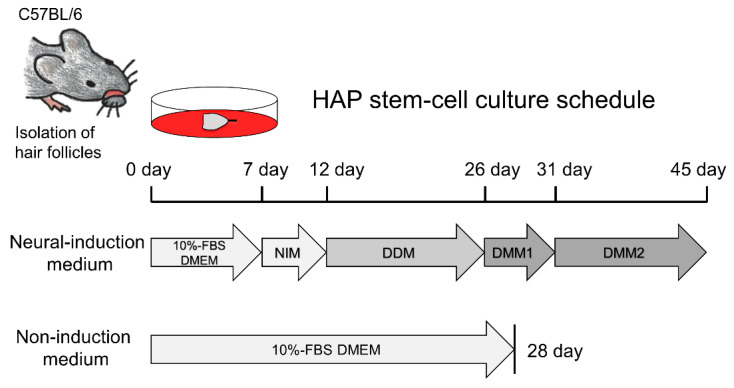
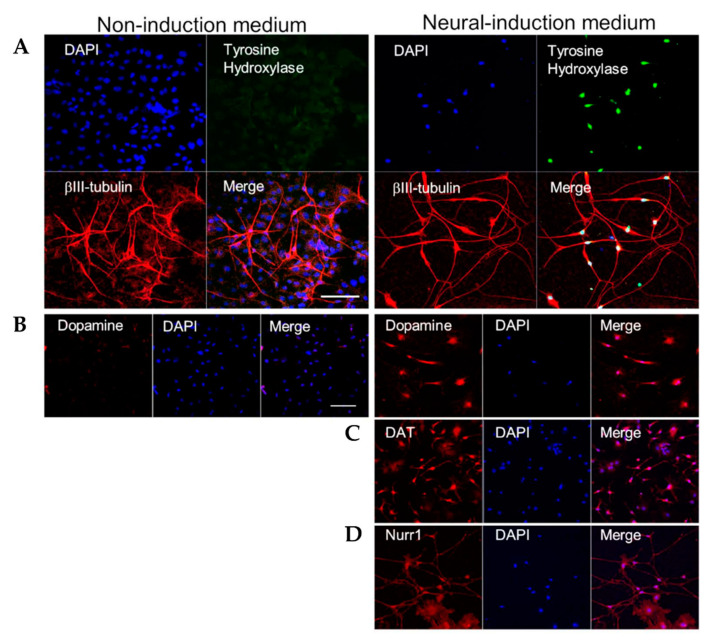
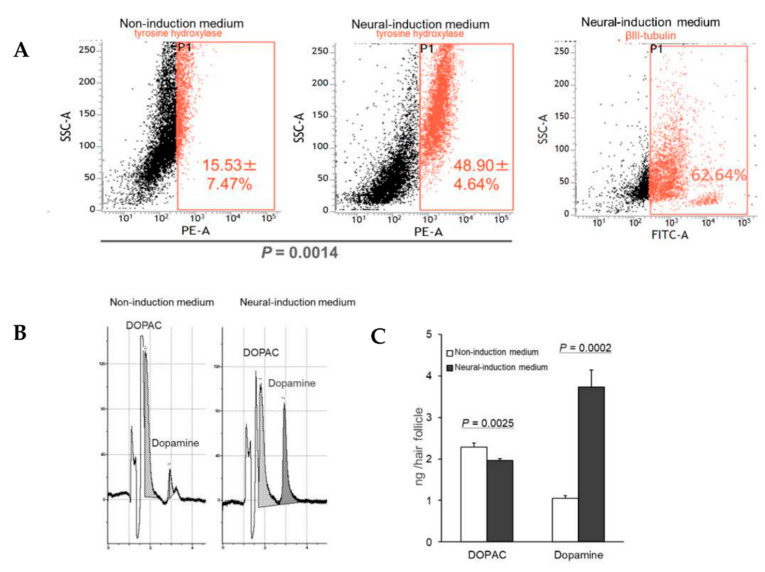
Hair-follicle-associated pluripotent (HAP) stem cells are located in the bulge area of hair follicles from mice and humans and have been shown to differentiate to neurons, glia, keratinocytes, smooth muscle cells, melanocytes and beating cardiac muscle cells in vitro. Subsequently, we demonstrated that HAP stem cells could effect nerve and spinal-cord regeneration in mouse models, differentiating to Schwann cells and neurons in this process. HAP stem cells can be banked by cryopreservation and preserve their ability to differentiate. In the present study, we demonstrated that mouse HAP stem cells cultured in neural-induction medium can extensively differentiate to dopaminergic neurons, which express tyrosine hydroxylase and secrete dopamine. These results indicate that the dopaminergic neurons differentiated from HAP stem cells may be useful in the future to improve the symptoms of Parkinson's disease in the clinic.
毛囊相关多能(HAP)干细胞位于小鼠和人类毛囊的隆起部位,已被证明可在体外分化为神经元、神经胶质细胞、角质形成细胞、平滑肌细胞、黑素细胞和搏动心肌细胞。随后,我们证明 HAP 干细胞可在小鼠模型中促进神经和脊髓再生,在此过程中分化为施万细胞和神经元。HAP 干细胞可通过冷冻保存保存其分化能力。在本研究中,我们证明在神经诱导培养基中培养的小鼠 HAP 干细胞可广泛分化为多巴胺能神经元,其表达酪氨酸羟化酶并分泌多巴胺。这些结果表明,从 HAP 干细胞分化而来的多巴胺能神经元在未来可能有助于改善临床帕金森病的症状。