Jiangsu Key Laboratory of Hazardous Chemicals Safety and Control, College of Safety Science and Engineering, Nanjing Tech University, Nanjing 210009, China.
School of Environment & Safety Engineering, Changzhou University, Changzhou 213164, China.
Molecules. 2021 Apr 10;26(8):2188. doi: 10.3390/molecules26082188.
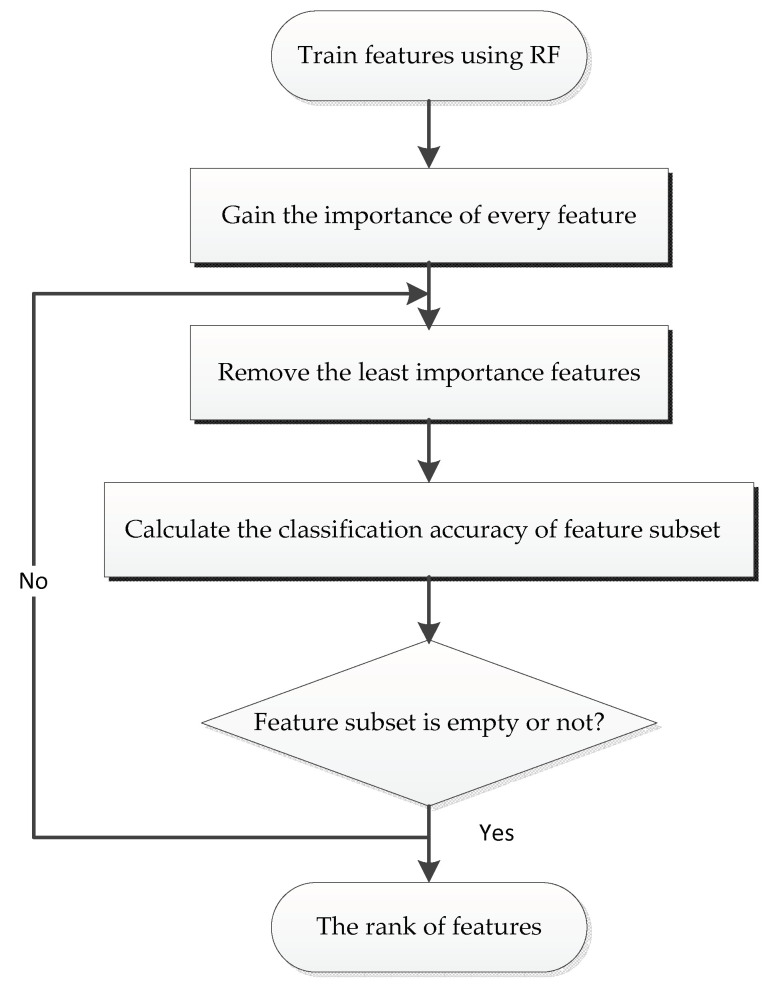
Nowadays, the impact of engineered nanoparticles (NPs) on human health and environment has aroused widespread attention. It is essential to assess and predict the biological activity, toxicity, and physicochemical properties of NPs. Computation-based methods have been developed to be efficient alternatives for understanding the negative effects of nanoparticles on the environment and human health. Here, a classification-based structure-activity relationship model for nanoparticles (nano-SAR) was developed to predict the cellular uptake of 109 functionalized magneto-fluorescent nanoparticles to pancreatic cancer cells (PaCa2). The norm index descriptors were employed for describing the structure characteristics of the involved nanoparticles. The Random forest algorithm (RF), combining with the Recursive Feature Elimination (RFE) was employed to develop the nano-SAR model. The resulted model showed satisfactory statistical performance, with the accuracy (ACC) of the test set and the training set of 0.950 and 0.966, respectively, demonstrating that the model had satisfactory classification effect. The model was rigorously verified and further extensively compared with models in the literature. The proposed model could be reasonably expected to predict the cellular uptakes of nanoparticles and provide some guidance for the design and manufacture of safer nanomaterials.
如今,工程纳米粒子(NPs)对人类健康和环境的影响引起了广泛关注。评估和预测 NPs 的生物活性、毒性和物理化学特性至关重要。基于计算的方法已经被开发出来,以有效地理解纳米粒子对环境和人类健康的负面影响。在这里,开发了一种基于分类的纳米粒子结构-活性关系模型(nano-SAR),以预测 109 种功能化磁荧光纳米粒子对胰腺癌细胞(PaCa2)的细胞摄取。规范指数描述符用于描述所涉及纳米粒子的结构特征。随机森林算法(RF)与递归特征消除(RFE)相结合,用于开发 nano-SAR 模型。所得到的模型表现出令人满意的统计性能,测试集和训练集的准确率(ACC)分别为 0.950 和 0.966,表明该模型具有令人满意的分类效果。该模型经过了严格的验证,并与文献中的模型进行了广泛的比较。可以合理地预期,所提出的模型可以预测纳米粒子的细胞摄取,并为设计和制造更安全的纳米材料提供一些指导。