Department of Physiology, Jessenius Faculty of Medicine in Martin, Comenius University in Bratislava, SK-03601 Martin, Slovakia.
Int J Mol Sci. 2021 Apr 17;22(8):4162. doi: 10.3390/ijms22084162.
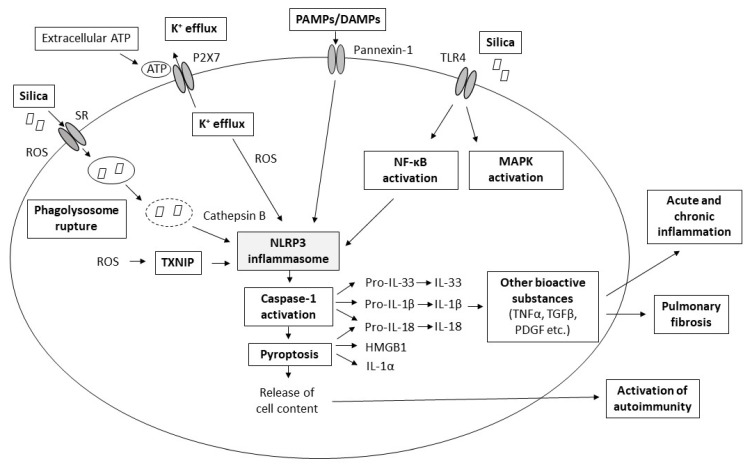
Inhalation of silica particles is an environmental and occupational cause of silicosis, a type of pneumoconiosis. Development of the lung silicosis is a unique process in which the vicious cycle of ingestion of inhaled silica particles by alveolar macrophages and their release triggers inflammation, generation of nodular lesions, and irreversible fibrosis. The pathophysiology of silicosis is complex, and interactions between the pathomechanisms have not been completely understood. However, elucidation of silica-induced inflammation cascades and inflammation-fibrosis relations has uncovered several novel possibilities of therapeutic targeting. This article reviews new information on the pathophysiology of silicosis and points out several promising treatment approaches targeting silicosis-related pathways.
吸入二氧化硅颗粒是矽肺(尘肺病的一种)的环境和职业病因。肺矽肺的发展是一个独特的过程,其中肺泡巨噬细胞吞噬吸入的二氧化硅颗粒及其释放引发炎症、结节病变的产生和不可逆转的纤维化。矽肺的病理生理学是复杂的,并且发病机制之间的相互作用尚未完全理解。然而,阐明二氧化硅诱导的炎症级联反应和炎症-纤维化关系揭示了几种有希望的治疗靶向的新可能性。本文综述了矽肺病理生理学的新信息,并指出了几种有前途的针对矽肺相关途径的治疗方法。