Institute of Human Biology and Evolution, Faculty of Biology, Adam Mickiewicz University Poznań, 61-614 Poznań, Poland.
Cells. 2021 Apr 15;10(4):912. doi: 10.3390/cells10040912.
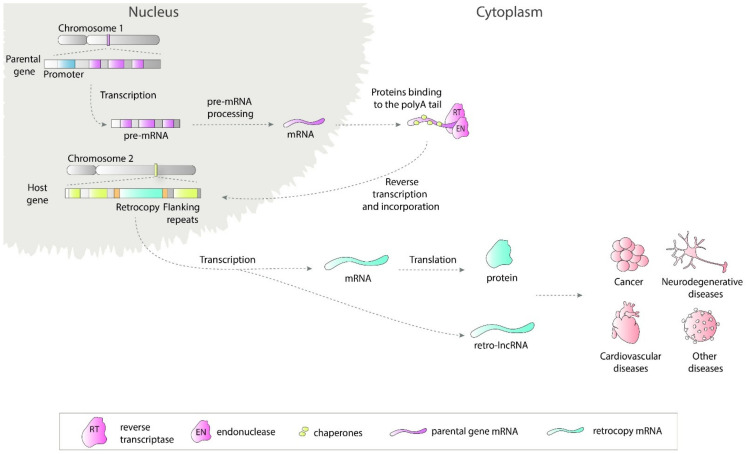
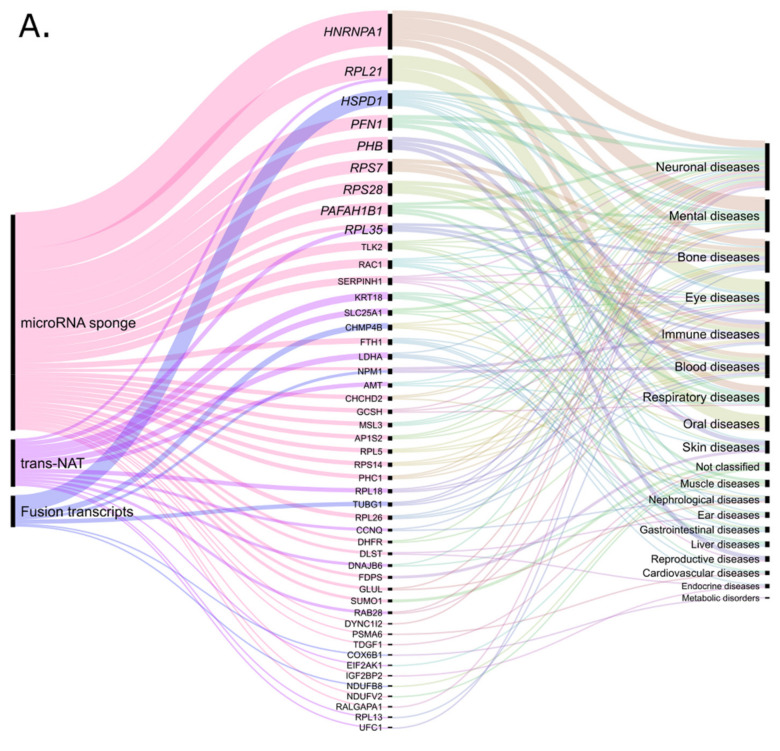
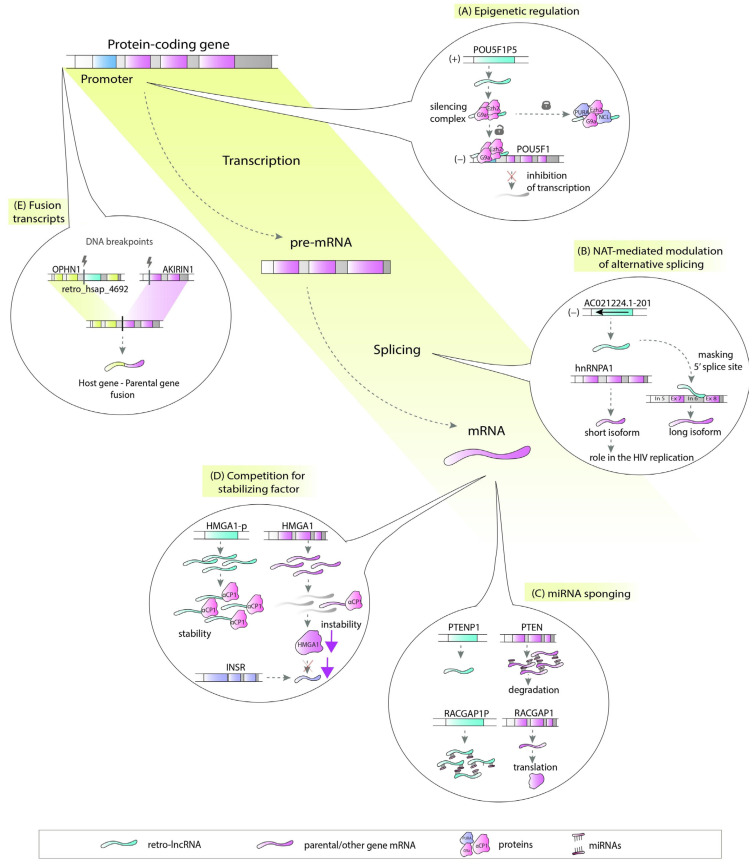
Retroposition is RNA-based gene duplication leading to the creation of single exon nonfunctional copies. Nevertheless, over time, many of these duplicates acquire transcriptional capabilities. In human in most cases, these so-called retrogenes do not code for proteins but function as regulatory long noncoding RNAs (lncRNAs). The mechanisms by which they can regulate other genes include microRNA sponging, modulation of alternative splicing, epigenetic regulation and competition for stabilizing factors, among others. Here, we summarize recent findings related to lncRNAs originating from retrocopies that are involved in human diseases such as cancer and neurodegenerative, mental or cardiovascular disorders. Special attention is given to retrocopies that regulate their progenitors or host genes. Presented evidence from the literature and our bioinformatics analyses demonstrates that these retrocopies, often described as unimportant pseudogenes, are significant players in the cell's molecular machinery.
反转录转座是一种基于 RNA 的基因复制过程,导致单外显子无功能拷贝的产生。然而,随着时间的推移,这些副本中的许多都获得了转录能力。在人类中,大多数情况下,这些所谓的反转录基因不编码蛋白质,而是作为调节性长非编码 RNA(lncRNA)发挥作用。它们能够调节其他基因的机制包括 miRNA 海绵作用、可变剪接的调节、表观遗传调节和稳定因子的竞争等。在这里,我们总结了与反转录产生的 lncRNA 相关的最新发现,这些 lncRNA 参与了人类疾病,如癌症和神经退行性、精神或心血管疾病。特别关注那些调节其前体或宿主基因的反转录基因。文献中的证据和我们的生物信息学分析表明,这些通常被描述为不重要的假基因的反转录基因,是细胞分子机制中的重要参与者。