Yamamoto Mai, Shanmuganathan Meera, Hart Lara, Pai Nikhil, Britz-McKibbin Philip
Department of Chemistry and Chemical Biology, McMaster University, Hamilton, ON L8S 4M1, Canada.
Department of Pediatrics, Division of Pediatric Gastroenterology and Nutrition, McMaster University, Hamilton, ON L8S 4K1, Canada.
Metabolites. 2021 Apr 15;11(4):245. doi: 10.3390/metabo11040245.
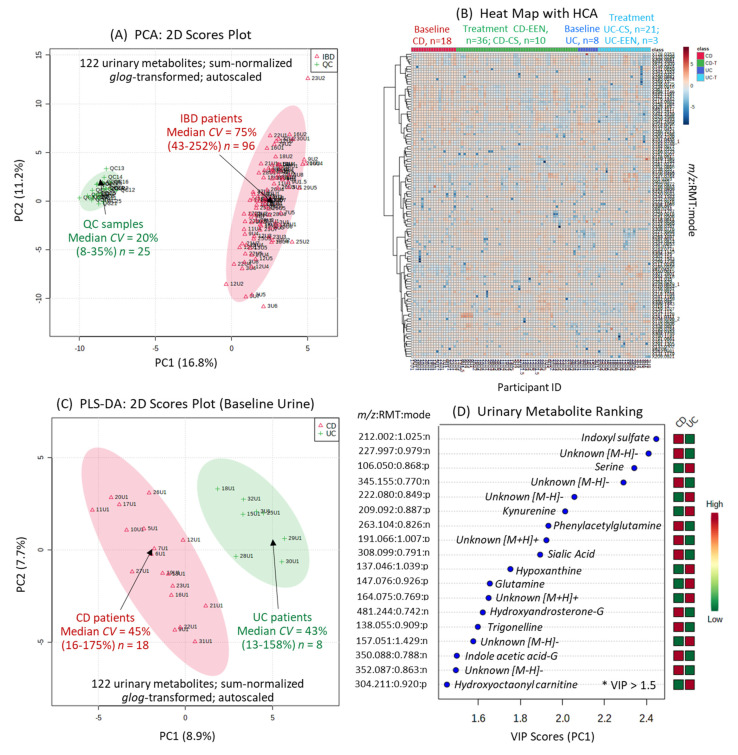
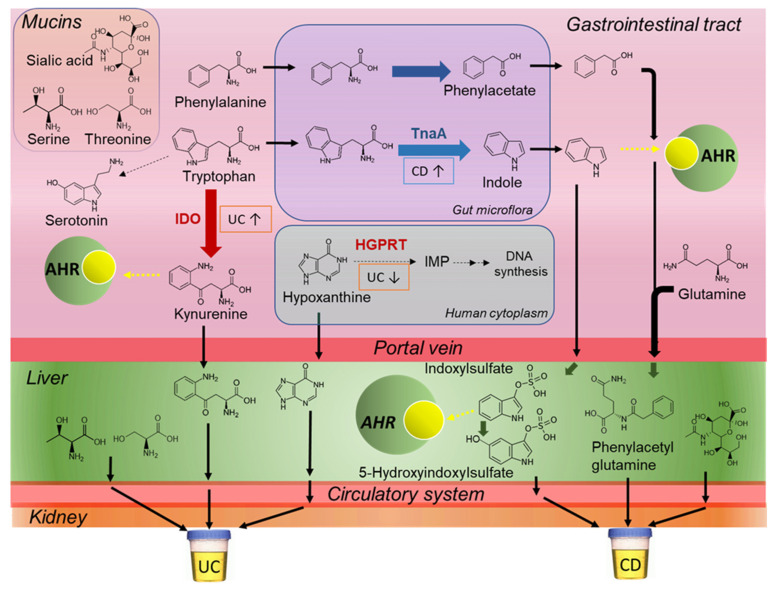
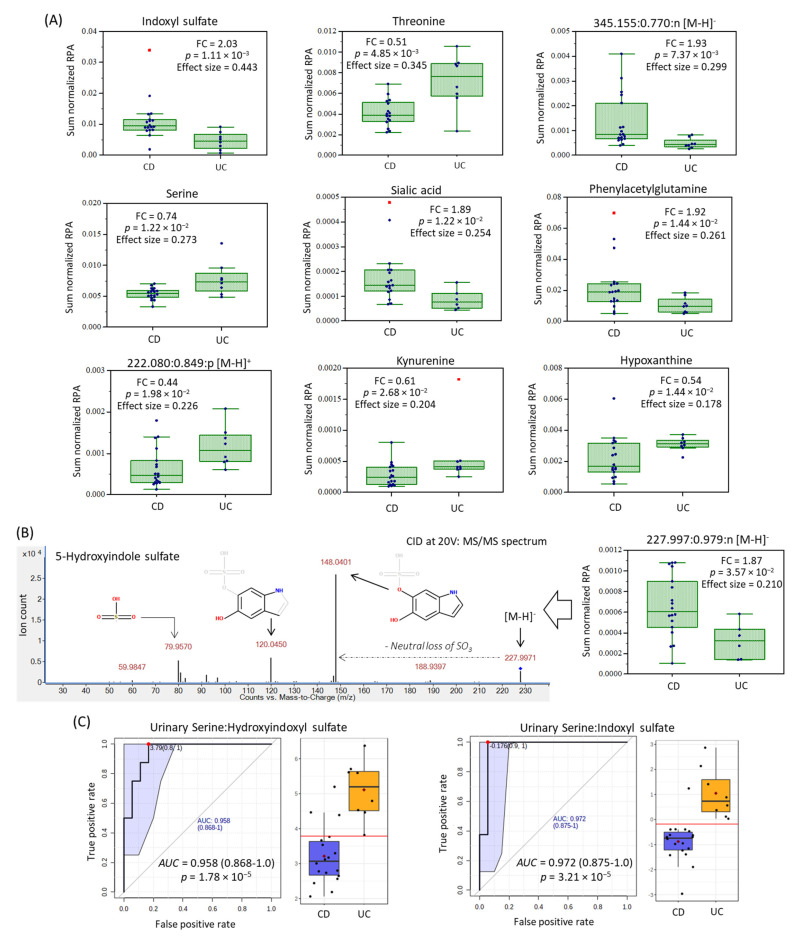
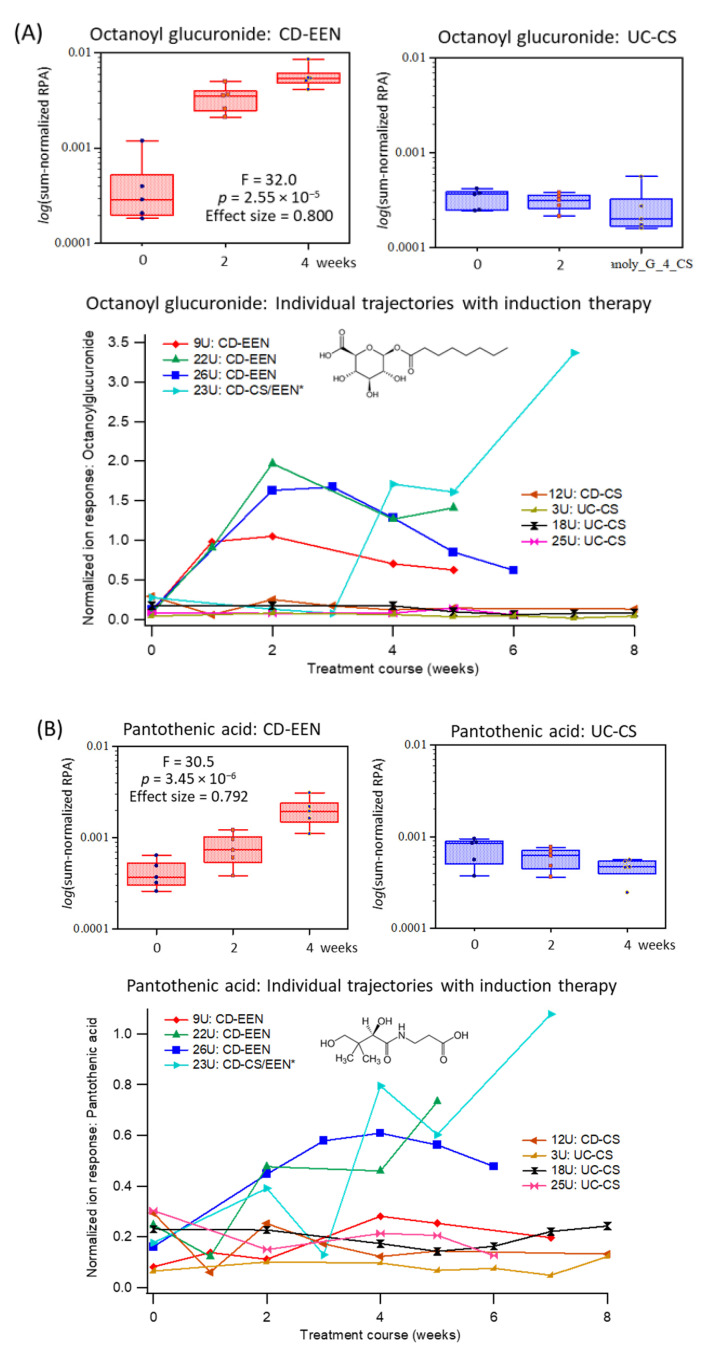
Rates of pediatric Crohn's disease (CD) and ulcerative colitis (UC) are increasing globally. Differentiation of these inflammatory bowel disease (IBD) subtypes however can be challenging when relying on invasive endoscopic approaches. We sought to identify urinary metabolic signatures of pediatric IBD at diagnosis, and during induction treatment. Nontargeted metabolite profiling of urine samples from CD ( = 18) and UC ( = 8) in a pediatric retrospective cohort study was performed using multisegment injection-capillary electrophoresis-mass spectrometry. Over 122 urinary metabolites were reliably measured from pediatric IBD patients, and unknown metabolites were identified by tandem mass spectrometry. Dynamic changes in sum-normalized urinary metabolites were also monitored following exclusive enteral nutrition (EEN) or corticosteroid therapy (CS) in repeat urine samples collected over 8 weeks. Higher urinary excretion of indoxyl sulfate, hydroxyindoxyl sulfate, phenylacetylglutamine, and sialic acid were measured in CD as compared to UC patients, but lower threonine, serine, kynurenine, and hypoxanthine ( < 0.05). Excellent discrimination of CD from UC was achieved based on the urinary serine:indoxylsulfate ratio ( = 0.972; = 3.21 × 10). Urinary octanoyl glucuronide, pantothenic acid, and pyridoxic acid were also identified as specific dietary biomarkers of EEN in pediatric IBD patients who achieved clinical remission. This work may complement or replace existing strategies in the diagnosis and early management of children with IBD.
全球儿童克罗恩病(CD)和溃疡性结肠炎(UC)的发病率正在上升。然而,当依赖侵入性内镜检查方法时,区分这些炎症性肠病(IBD)亚型可能具有挑战性。我们试图确定儿童IBD在诊断时以及诱导治疗期间的尿液代谢特征。在一项儿科回顾性队列研究中,使用多段进样-毛细管电泳-质谱法对CD(n = 18)和UC(n = 8)患儿的尿液样本进行非靶向代谢物谱分析。从儿科IBD患者中可靠地测量了超过122种尿液代谢物,并通过串联质谱法鉴定了未知代谢物。在8周内收集的重复尿液样本中,在进行全肠内营养(EEN)或皮质类固醇治疗(CS)后,还监测了总和标准化尿液代谢物的动态变化。与UC患者相比,CD患者尿液中硫酸吲哚酚、羟基硫酸吲哚酚、苯乙酰谷氨酰胺和唾液酸的排泄量更高,但苏氨酸、丝氨酸、犬尿氨酸和次黄嘌呤的排泄量更低(P < 0.05)。基于尿液丝氨酸:硫酸吲哚酚比值,CD与UC之间实现了出色的区分(AUC = 0.972;P = 3.21×10)。尿液辛酰葡萄糖醛酸、泛酸和吡哆酸也被确定为实现临床缓解的儿科IBD患者中EEN的特定饮食生物标志物。这项工作可能补充或取代IBD患儿诊断和早期管理中的现有策略。