Cardiovascular Diseases Research Group, Department of Cardiology, Vall d'Hebron Institut de Recerca (VHIR), Vall d'Hebron Barcelona Hospital Campus, Vall d'Hebron Hospital Universitari, Passeig Vall d'Hebron 119-129, 08035 Barcelona, Spain.
Departament de Medicina, Universitat Autònoma de Barcelona, 08193 Bellaterra, Spain.
Int J Mol Sci. 2021 Apr 23;22(9):4413. doi: 10.3390/ijms22094413.
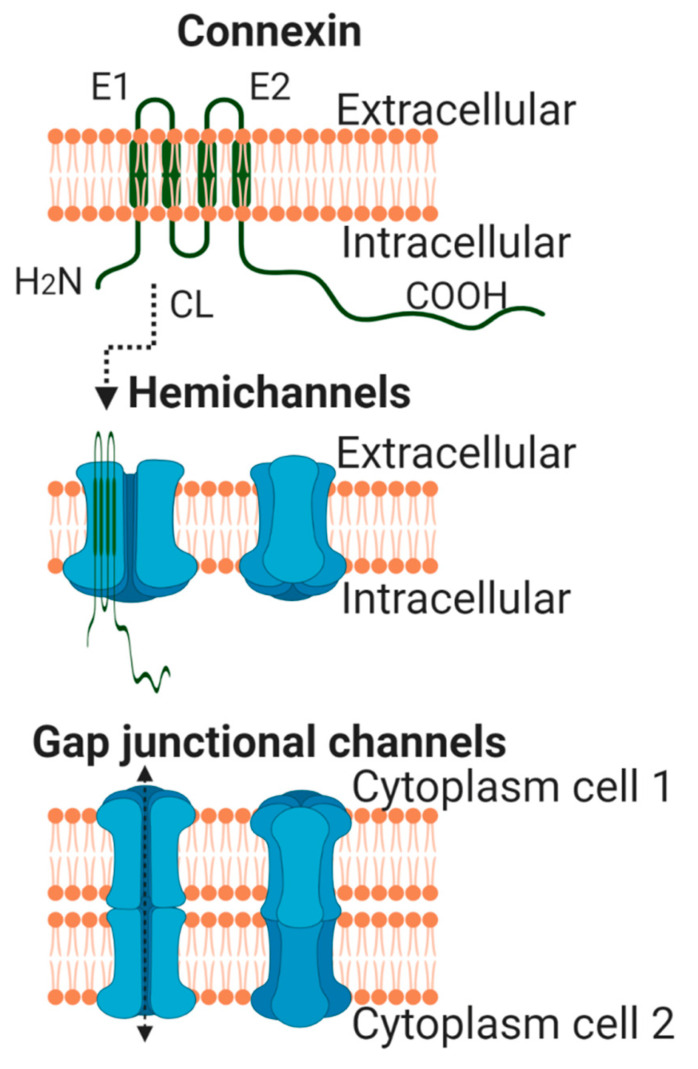
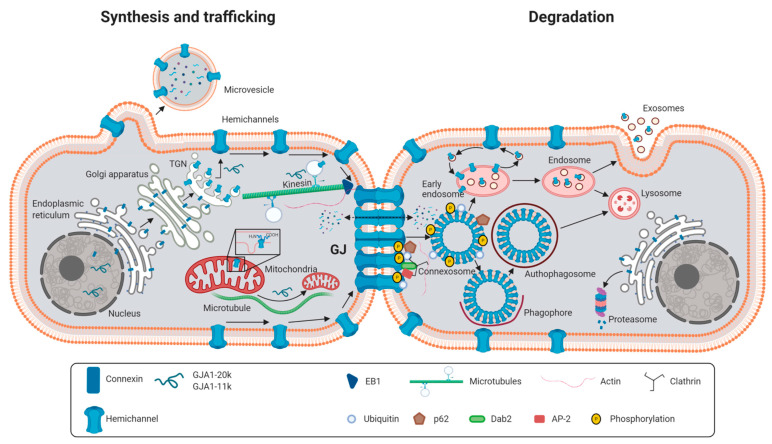
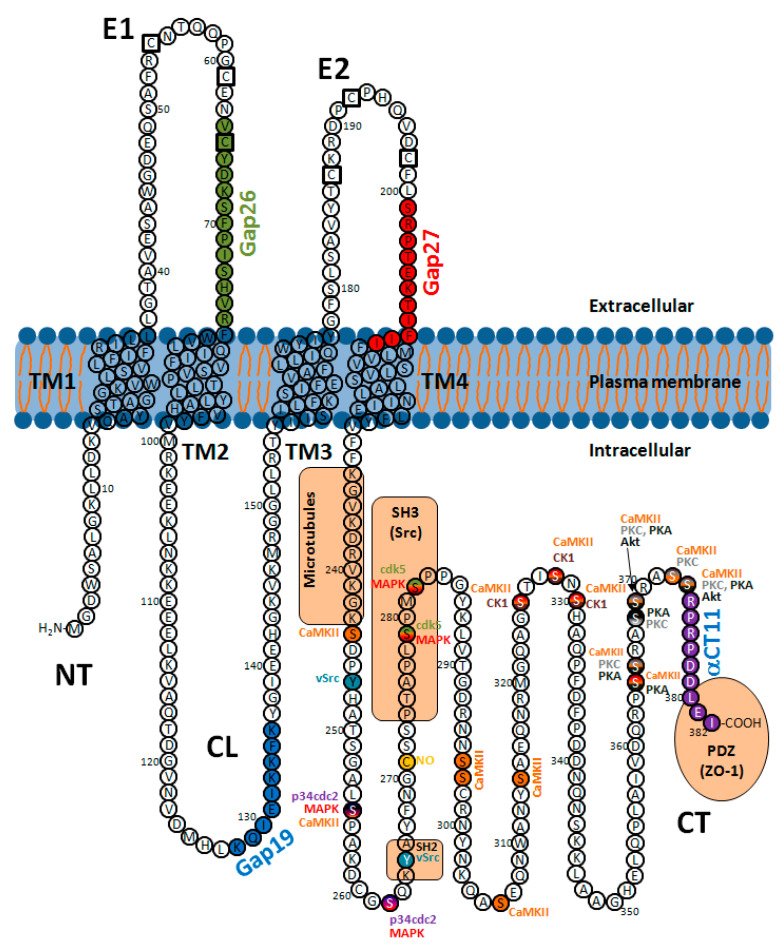
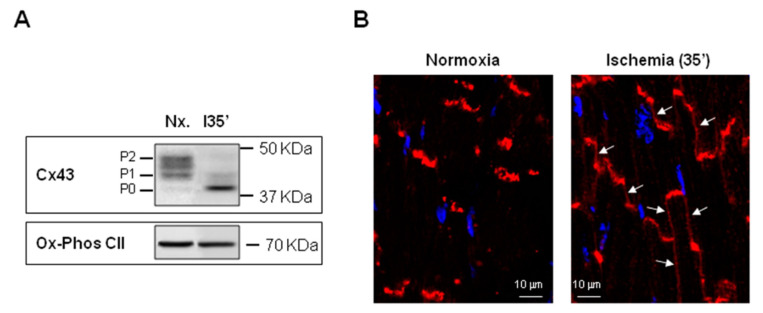
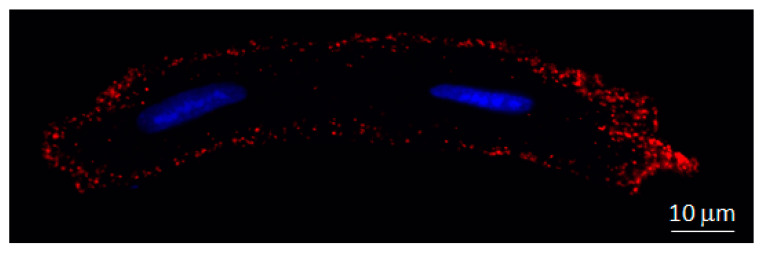
Connexins are a family of transmembrane proteins that play a key role in cardiac physiology. Gap junctional channels put into contact the cytoplasms of connected cardiomyocytes, allowing the existence of electrical coupling. However, in addition to this fundamental role, connexins are also involved in cardiomyocyte death and survival. Thus, chemical coupling through gap junctions plays a key role in the spreading of injury between connected cells. Moreover, in addition to their involvement in cell-to-cell communication, mounting evidence indicates that connexins have additional gap junction-independent functions. Opening of unopposed hemichannels, located at the lateral surface of cardiomyocytes, may compromise cell homeostasis and may be involved in ischemia/reperfusion injury. In addition, connexins located at non-canonical cell structures, including mitochondria and the nucleus, have been demonstrated to be involved in cardioprotection and in regulation of cell growth and differentiation. In this review, we will provide, first, an overview on connexin biology, including their synthesis and degradation, their regulation and their interactions. Then, we will conduct an in-depth examination of the role of connexins in cardiac pathophysiology, including new findings regarding their involvement in myocardial ischemia/reperfusion injury, cardiac fibrosis, gene transcription or signaling regulation.
间隙连接蛋白是一类跨膜蛋白,在心脏生理学中发挥着关键作用。缝隙连接通道将连接的心肌细胞的细胞质连接起来,允许电偶联的存在。然而,除了这个基本作用外,间隙连接蛋白还参与了心肌细胞的死亡和存活。因此,通过缝隙连接的化学偶联在连接细胞之间的损伤传播中起着关键作用。此外,除了它们在细胞间通讯中的作用外,越来越多的证据表明间隙连接蛋白具有其他不依赖缝隙连接的功能。位于心肌细胞侧面的无拮抗连接小体的开放可能会破坏细胞的内稳态,并可能与缺血/再灌注损伤有关。此外,位于非典型细胞结构(包括线粒体和细胞核)中的间隙连接蛋白已被证明参与了心脏保护以及细胞生长和分化的调节。在这篇综述中,我们首先概述了间隙连接蛋白的生物学特性,包括其合成和降解、调节及其相互作用。然后,我们将深入研究间隙连接蛋白在心脏病理生理学中的作用,包括它们在心肌缺血/再灌注损伤、心脏纤维化、基因转录或信号转导调节中的新发现。