Lee Hak-Il, Rhim Won-Kyu, Kang Eun-Young, Choi Bogyu, Kim Jun-Hyeok, Han Dong-Keun
Department of Biomedical Science, CHA University, 335 Pangyo-ro, Bundang-gu, Seongnam 13488, Gyenggi, Korea.
Pharmaceutics. 2021 Apr 23;13(5):614. doi: 10.3390/pharmaceutics13050614.
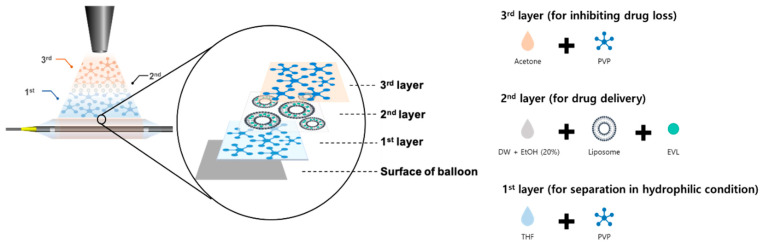
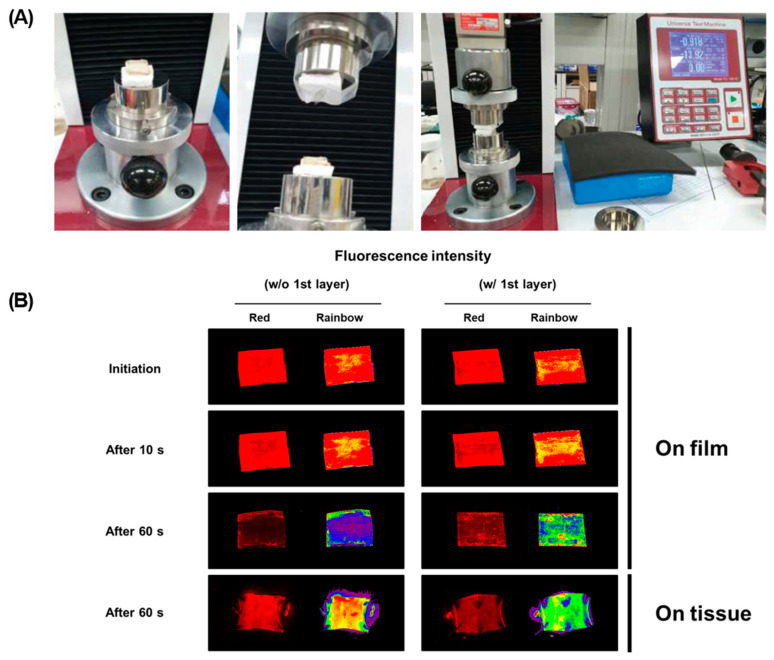
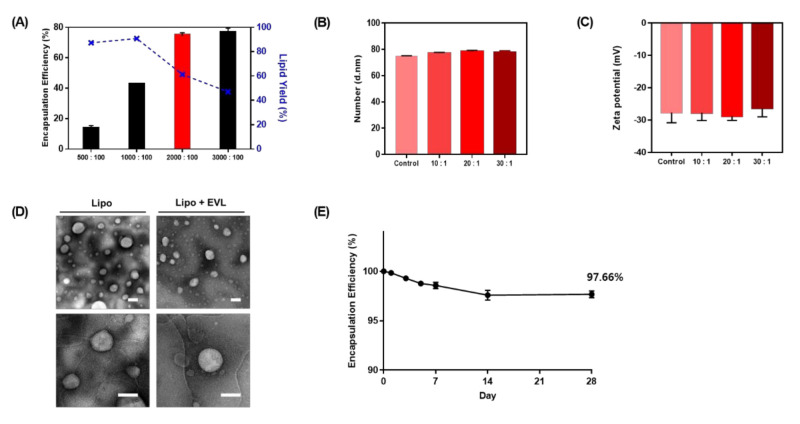
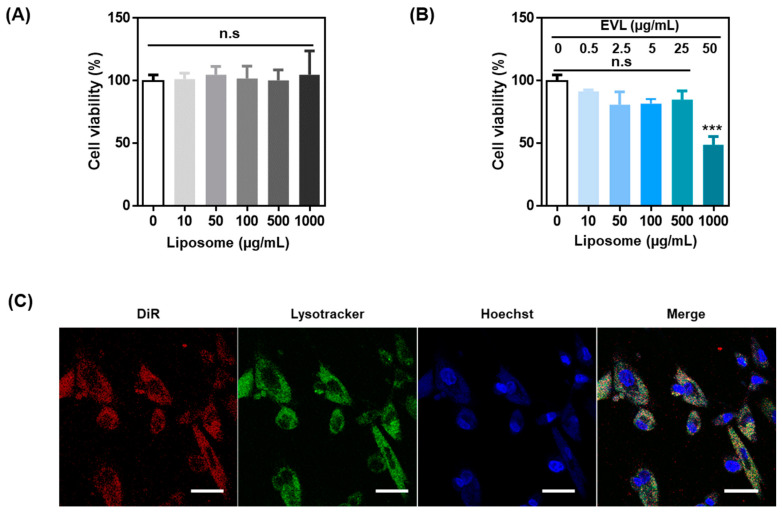
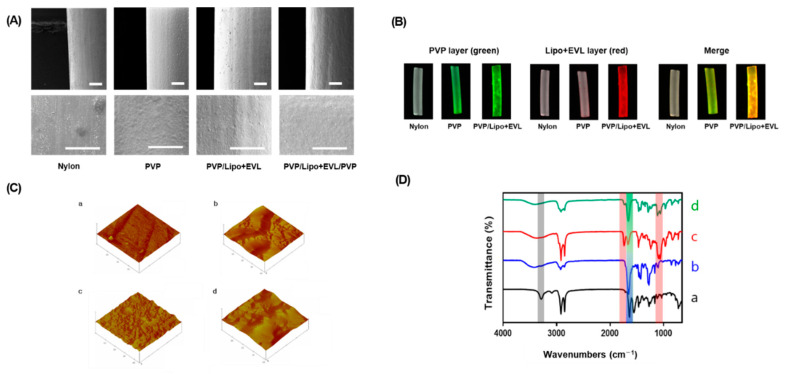
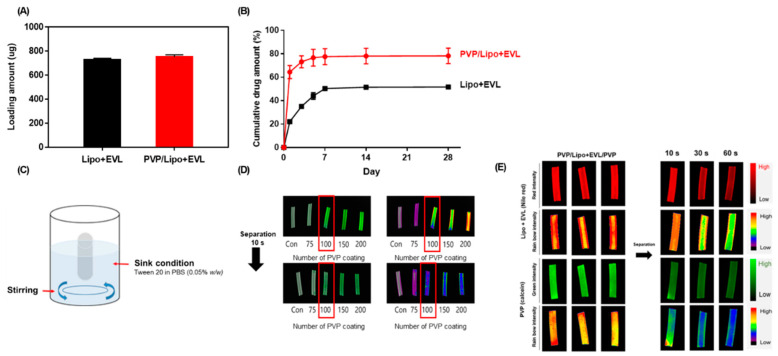
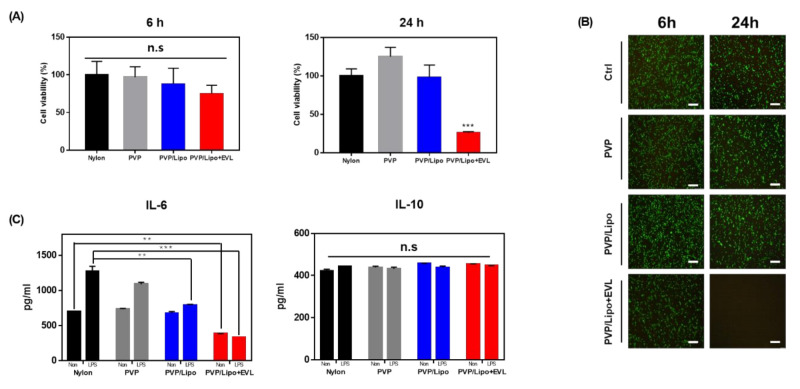
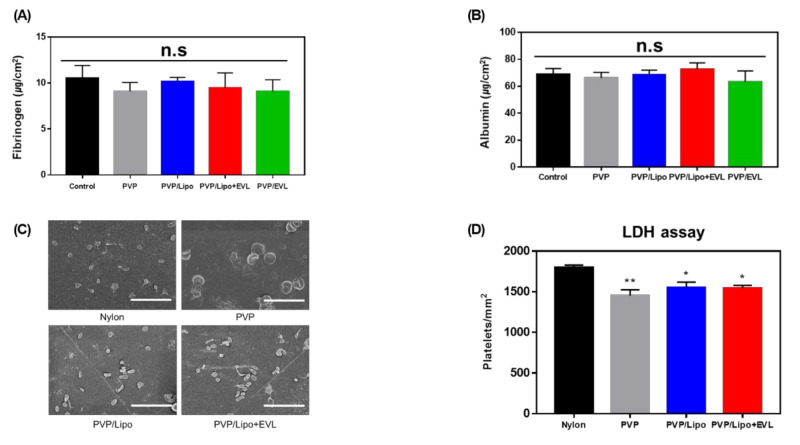
Drug-eluting balloons (DEBs) have been mostly exploited as an interventional remedy for treating atherosclerosis instead of cardiovascular stents. However, the therapeutic efficacy of DEB is limited due to their low drug delivery capability to the disease site. The aim of our study was to load drugs onto a balloon catheter with preventing drug loss during transition time and maximizing drug transfer from the surface of DEBs to the cardiovascular wall. For this, a multilayer-coated balloon catheter, composed of PVP/Drug-loaded liposome/PVP, was suggested. The hydrophilic property of 1st layer, PVP, helps to separate drug layer in hydrophilic blood vessel, and the 2nd layer with Everolimus (EVL)-loaded liposome facilitates drug encapsulation and sustained release to the targeted lesions during inflation time. Additionally, a 3rd layer with PVP can protect the inner layer during transition time for preventing drug loss. The deionized water containing 20% ethanol was utilized to hydrate EVL-loaded liposome for efficient coating processes. The coating materials showed negligible toxicity in the cells and did not induce pro-inflammatory cytokine in human coronary artery smooth muscle cells (HCASMCs), even in case of inflammation induction through LPS. The results of hemocompatibility for coating materials exhibited that protein adsorption and platelet adhesion somewhat decreased with multilayer-coated materials as compared to bare Nylon tubes. The ex vivo experiments to confirm the feasibility of further applications of multilayer-coated strategy as a DEB system demonstrated efficient drug transfer of approximately 65% in the presence of the 1st layer, to the tissue in 60 s after treatment. Taken together, a functional DEB platform with such a multilayer coating approach would be widely utilized for percutaneous coronary intervention (PCI).
药物洗脱球囊(DEB)大多被用作治疗动脉粥样硬化的介入性疗法,而非心血管支架。然而,由于DEB向疾病部位的药物递送能力较低,其治疗效果有限。我们研究的目的是将药物加载到球囊导管上,以防止在过渡期间药物流失,并使药物从DEB表面向心血管壁的转移最大化。为此,提出了一种由聚乙烯吡咯烷酮/载药脂质体/聚乙烯吡咯烷酮组成的多层涂层球囊导管。第一层聚乙烯吡咯烷酮的亲水性有助于在亲水性血管中分离药物层,而含有依维莫司(EVL)的脂质体的第二层有助于药物包封并在充盈期间向目标病变部位持续释放。此外,第三层聚乙烯吡咯烷酮可以在过渡期间保护内层,防止药物流失。使用含有20%乙醇的去离子水来水合载有EVL的脂质体,以进行高效的涂层过程。涂层材料在细胞中显示出可忽略不计的毒性,并且即使在通过脂多糖诱导炎症的情况下,也不会在人冠状动脉平滑肌细胞(HCASMCs)中诱导促炎细胞因子。涂层材料的血液相容性结果表明,与裸露的尼龙管相比,多层涂层材料的蛋白质吸附和血小板粘附有所降低。体外实验证实了多层涂层策略作为DEB系统进一步应用的可行性,结果表明在存在第一层的情况下,治疗后60秒内约65%的药物有效地转移到了组织中。综上所述,这种多层涂层方法的功能性DEB平台将广泛应用于经皮冠状动脉介入治疗(PCI)。