Baláž Matej, Bedlovičová Zdenka, Daneu Nina, Siksa Patrik, Sokoli Libor, Tkáčiková Ľudmila, Salayová Aneta, Džunda Róbert, Kováčová Mária, Bureš Radovan, Bujňáková Zdenka Lukáčová
Department of Mechanochemistry, Institute of Geotechnics, Slovak Academy of Sciences, Watsonova 45, 04001 Košice, Slovakia.
Department of Chemistry, Biochemistry and Biophysics, University of Veterinary Medicine and Pharmacy, Komenského 73, 04181 Košice, Slovakia.
Nanomaterials (Basel). 2021 Apr 28;11(5):1139. doi: 10.3390/nano11051139.
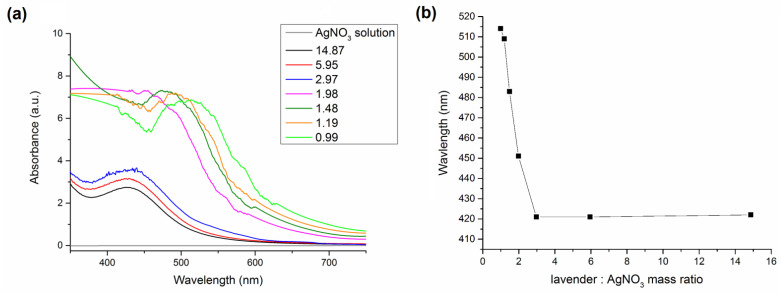
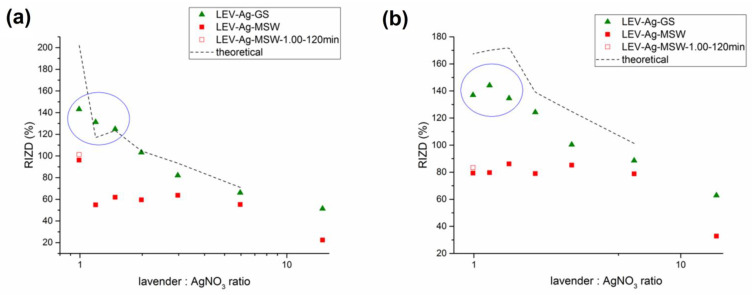
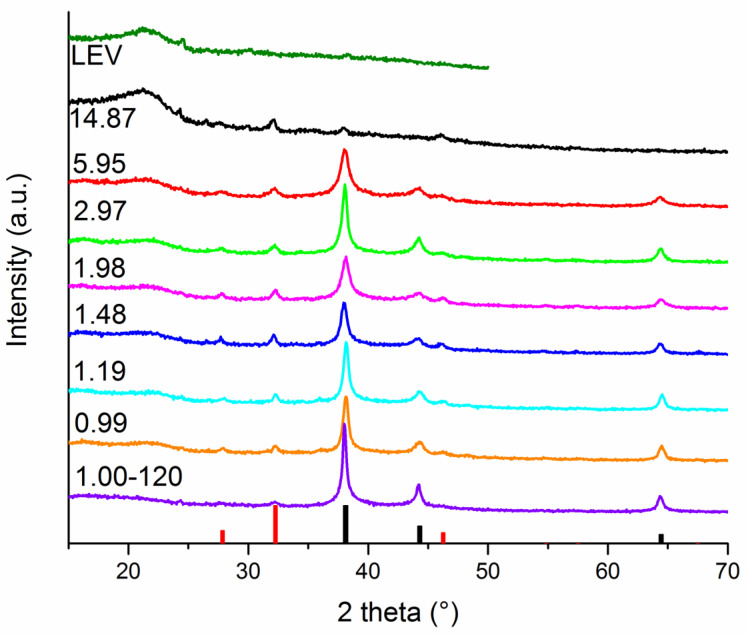
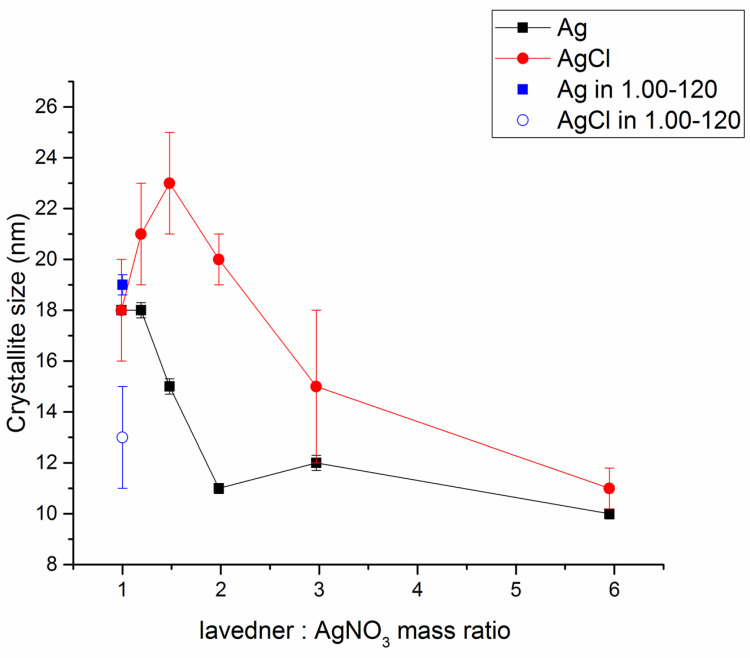
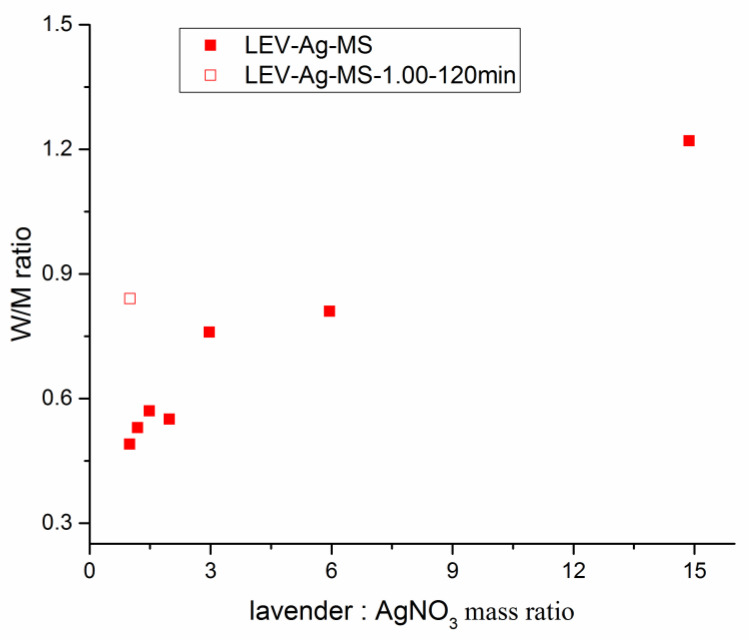
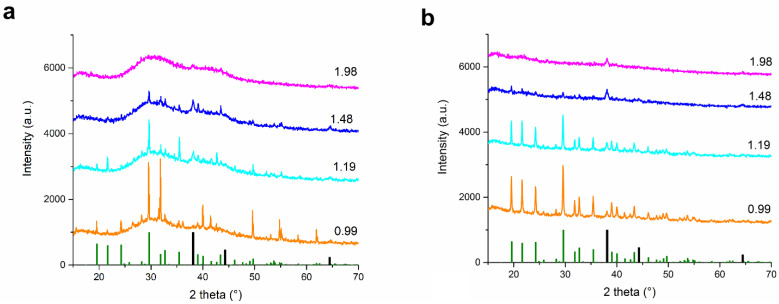
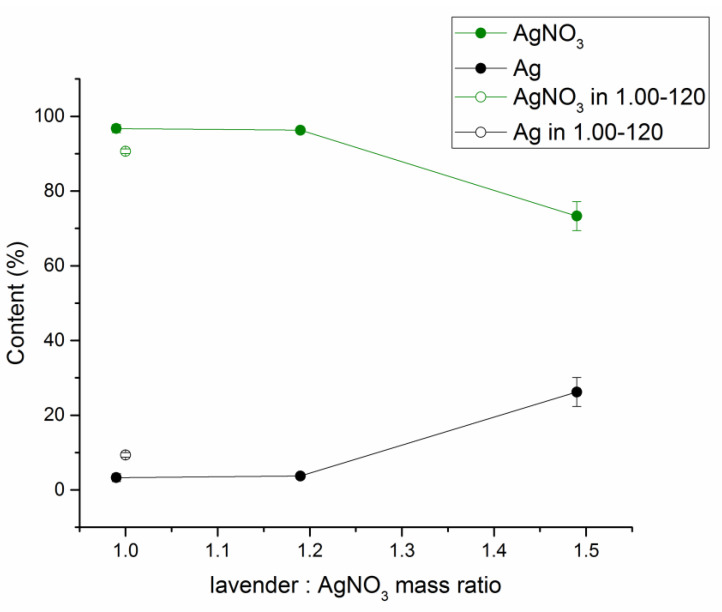
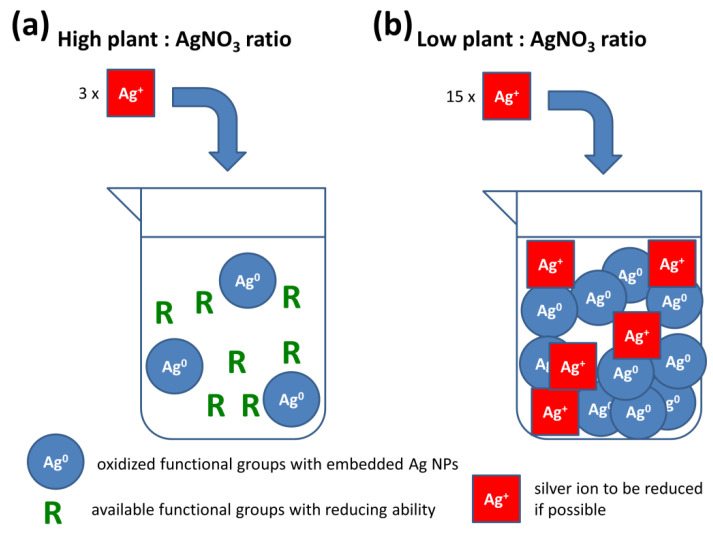
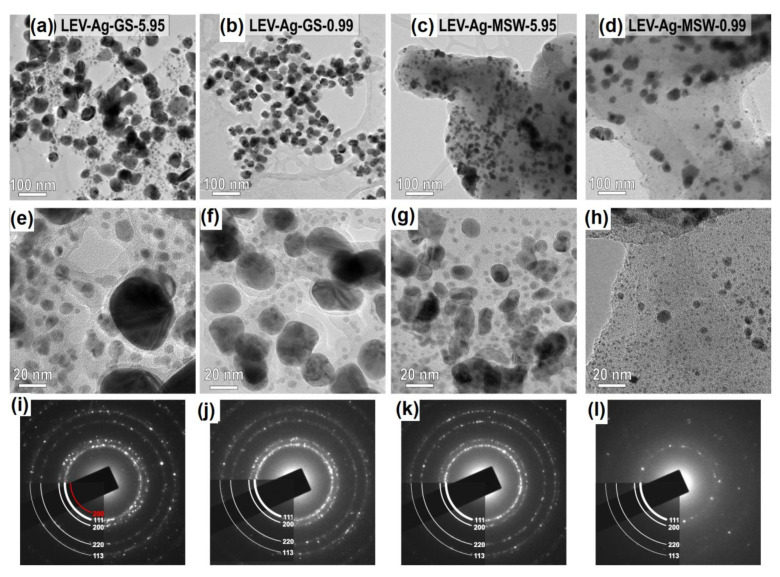
This study shows mechanochemical synthesis as an alternative method to the traditional green synthesis of silver nanoparticles in a comparative manner by comparing the products obtained using both methodologies and different characterization methods. As a silver precursor, the most commonly used silver nitrate was applied and the easily accessible lavender ( L.) plant was used as a reducing agent. Both syntheses were performed using 7 different lavender:AgNO mass ratios. The synthesis time was limited to 8 and 15 min in the case of green and mechanochemical synthesis, respectively, although a significant amount of unreacted silver nitrate was detected in both crude reaction mixtures at low lavender:AgNO ratios. This finding is of particular interest mainly for green synthesis, as the potential presence of silver nitrate in the produced nanosuspension is often overlooked. Unreacted AgNO has been removed from the mechanochemically synthesized samples by washing. The nanocrystalline character of the products has been confirmed by both X-ray diffraction (Rietveld refinement) and transmission electron microscopy. The latter has shown bimodal size distribution with larger particles in tens of nanometers and the smaller ones below 10 nm in size. In the case of green synthesis, the used lavender:AgNO ratio was found to have a decisive role on the crystallite size. Silver chloride has been detected as a side-product, mainly at high lavender:AgNO ratios. Both products have shown a strong antibacterial activity, being higher in the case of green synthesis, but this can be ascribed to the presence of unreacted AgNO. Thus, one-step mechanochemical synthesis (without the need to prepare extract and performing the synthesis as separate steps) can be applied as a sustainable alternative to the traditional green synthesis of Ag nanoparticles using plants.
本研究通过比较使用两种方法获得的产物以及不同的表征方法,以对比的方式展示了机械化学合成作为银纳米颗粒传统绿色合成的替代方法。作为银前驱体,使用了最常用的硝酸银,并使用易于获取的薰衣草(L.)植物作为还原剂。两种合成均使用7种不同的薰衣草与硝酸银质量比进行。绿色合成和机械化学合成的合成时间分别限制为8分钟和15分钟,尽管在低薰衣草与硝酸银比例的两种粗反应混合物中均检测到大量未反应的硝酸银。这一发现主要对绿色合成尤为重要,因为在生产的纳米悬浮液中硝酸银的潜在存在常常被忽视。通过洗涤已从机械化学合成的样品中去除了未反应的硝酸银。产物的纳米晶特性已通过X射线衍射(Rietveld精修)和透射电子显微镜得到证实。后者显示出双峰尺寸分布,较大的颗粒在几十纳米,较小的颗粒尺寸低于10纳米。在绿色合成中,发现使用的薰衣草与硝酸银比例对微晶尺寸起决定性作用。已检测到氯化银作为副产物,主要在高薰衣草与硝酸银比例时出现。两种产物均显示出较强的抗菌活性,绿色合成的情况下活性更高,但这可归因于未反应的硝酸银存在。因此,一步机械化学合成(无需制备提取物并将合成作为单独步骤进行)可作为使用植物传统绿色合成银纳米颗粒的可持续替代方法。