Kováčová Mária, Daneu Nina, Tkáčiková Ľudmila, Búreš Radovan, Dutková Erika, Stahorský Martin, Bujňáková Zdenka Lukáčová, Baláž Matej
Department of Mechanochemistry, Institute of Geotechnics, Slovak Academy of Sciences, Watsonova 45, 04001 Košice, Slovakia.
Advanced Materials Department, Jozef Štefan Institute, Jamova 39, 1000 Ljubljana, Slovenia.
Nanomaterials (Basel). 2020 Oct 25;10(11):2119. doi: 10.3390/nano10112119.
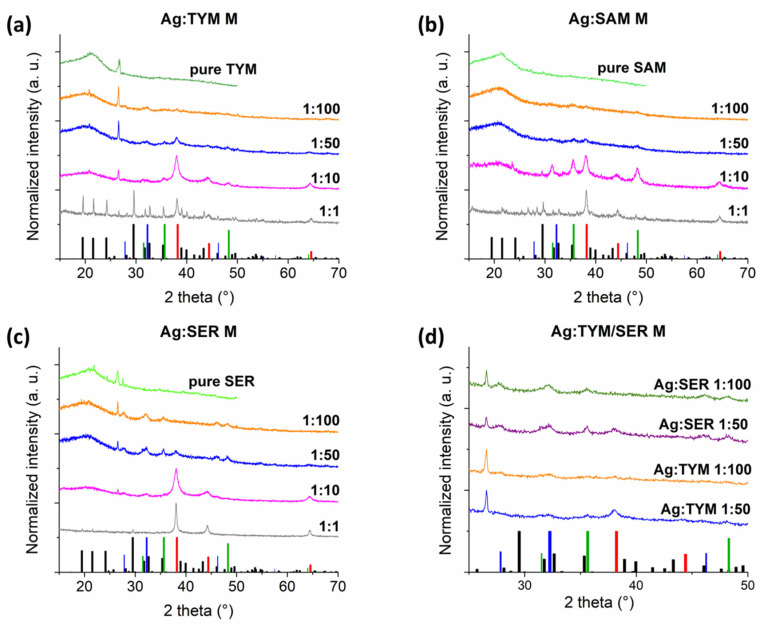
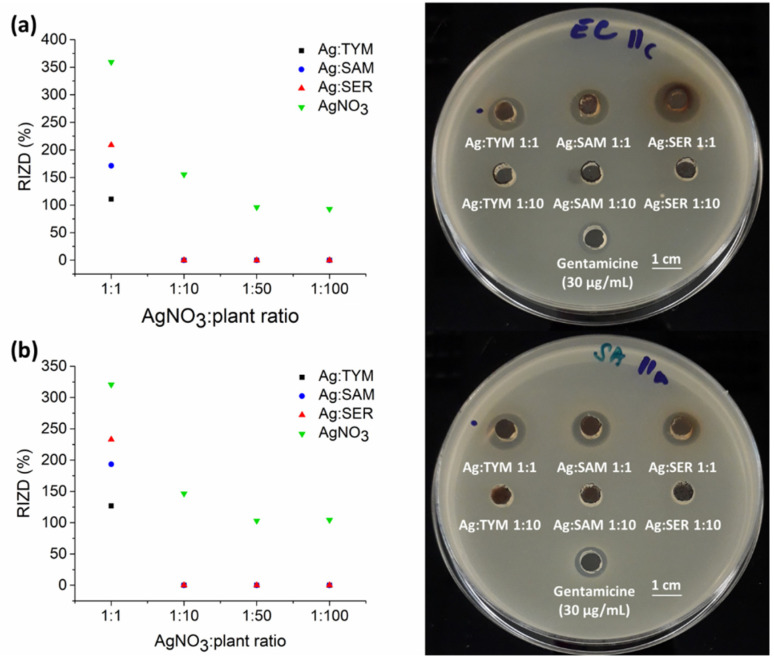
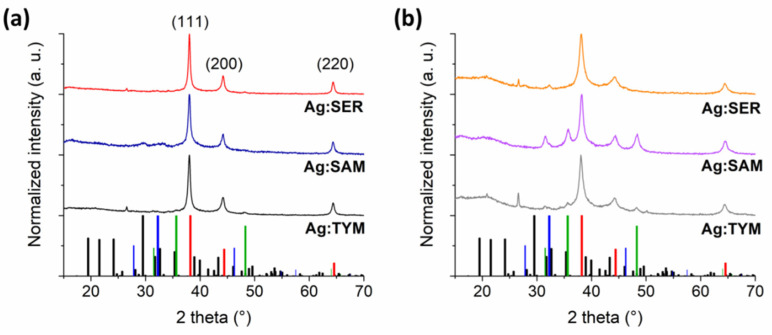
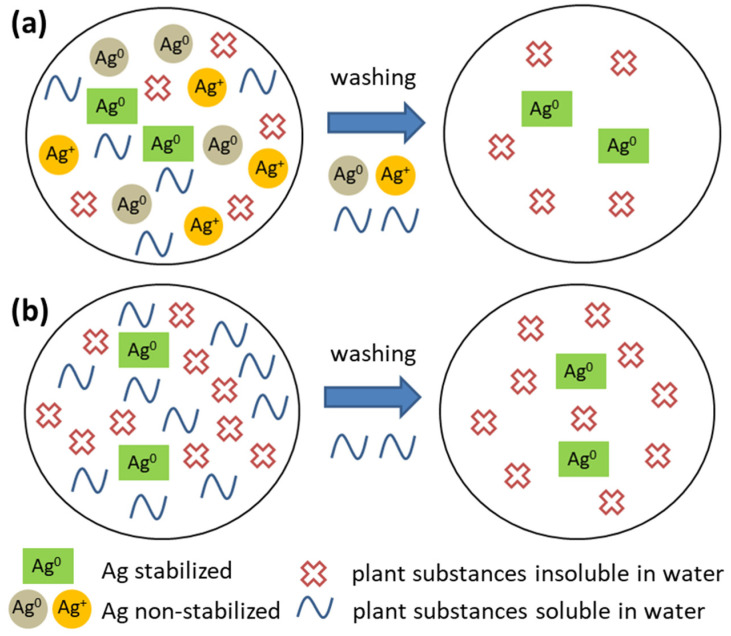
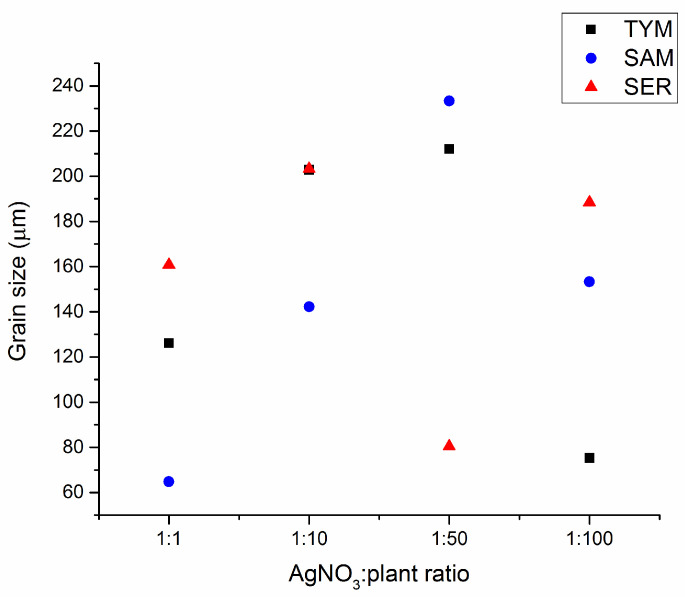
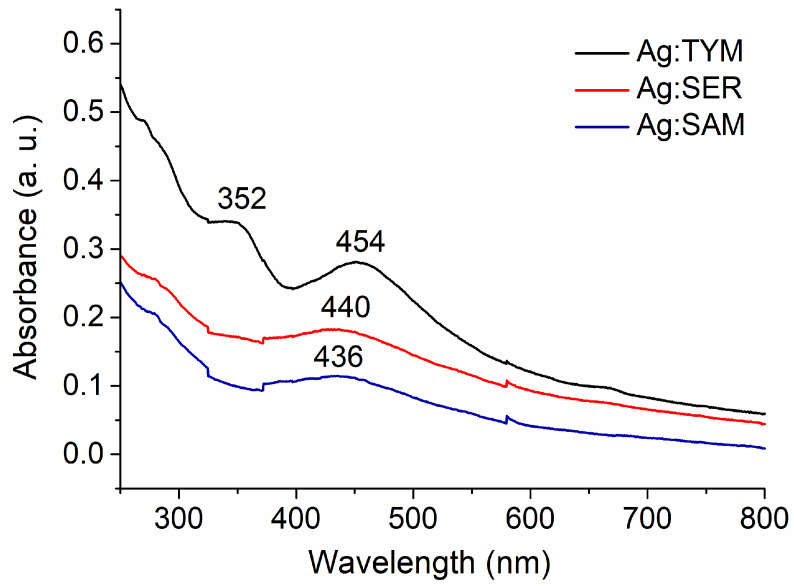
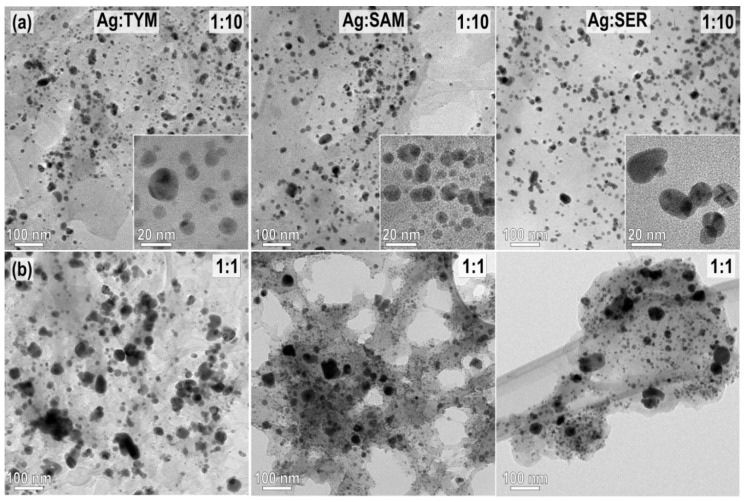
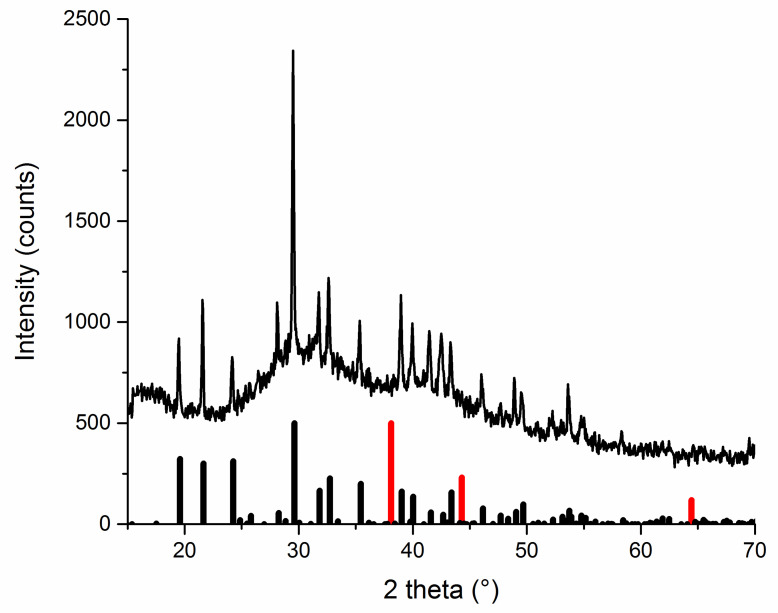
A combination of solid-state mechanochemical and green approaches for the synthesis of silver nanoparticles (AgNPs) is explored in this study. L. (SER), L. (SAM) and L. (TYM) plants were successfully applied to reduce AgNO to AgNPs, as confirmed by X-ray diffraction analysis, with SER being the best reducing agent, and TYM being the worst. The experiments were performed via a one-step planetary milling process, where various AgNO:plant mass ratios (1:1, 1:10, 1:50 and 1:100) were investigated. Atomic absorption spectrometry indicated that the stability of the mechanochemically produced AgNPs increased markedly when a sufficiently large quantity of the reducing plant was used. Furthermore, when larger quantities of plant material were employed, the crystallite size of the AgNPs decreased. TEM analysis revealed that all AgNPs produced from both AgNO:plant ratios 1:1 and 1:10 exhibit the bimodal size distribution with the larger fraction with size in tens of nm and the smaller one below 10 nm in size. The antibacterial activity of the produced AgNPs was observed only for AgNO:plant ratio 1:1, with the AgNPs prepared using SER showing the greatest antibacterial properties.
本研究探索了一种结合固态机械化学和绿色方法来合成银纳米颗粒(AgNPs)的途径。通过X射线衍射分析证实,L.(SER)、L.(SAM)和L.(TYM)植物成功地将AgNO还原为AgNPs,其中SER是最佳还原剂,而TYM是最差的。实验通过一步行星球磨工艺进行,研究了各种AgNO:植物质量比(1:1、1:10、1:50和1:100)。原子吸收光谱法表明,当使用足够大量的还原植物时,机械化学法制备的AgNPs的稳定性显著提高。此外,当使用更大量的植物材料时,AgNPs的微晶尺寸减小。透射电子显微镜分析表明,由AgNO:植物比例1:1和1:10产生的所有AgNPs均呈现双峰尺寸分布,较大部分尺寸在几十纳米,较小部分尺寸低于10纳米。仅在AgNO:植物比例1:1时观察到所制备的AgNPs具有抗菌活性,使用SER制备的AgNPs表现出最大的抗菌性能。