Oceanography Department, Faculty of Science, Alexandria University, Moharam Beih, Anfoushy, Alexandria, 21511, Egypt.
Botany and Microbiology Department, Faculty of Science, Alexandria University, Baghdad Street, Moharam Beih, Alexandria, Egypt.
Sci Rep. 2021 Apr 29;11(1):9314. doi: 10.1038/s41598-021-88843-y.
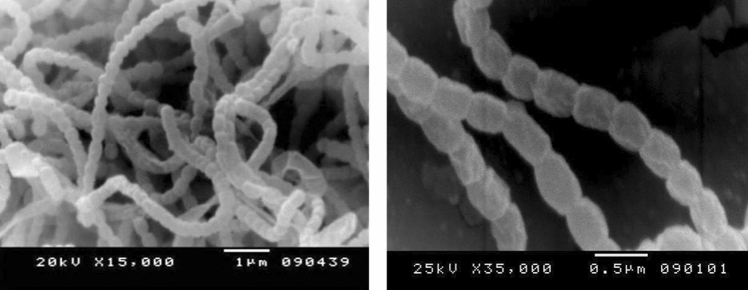
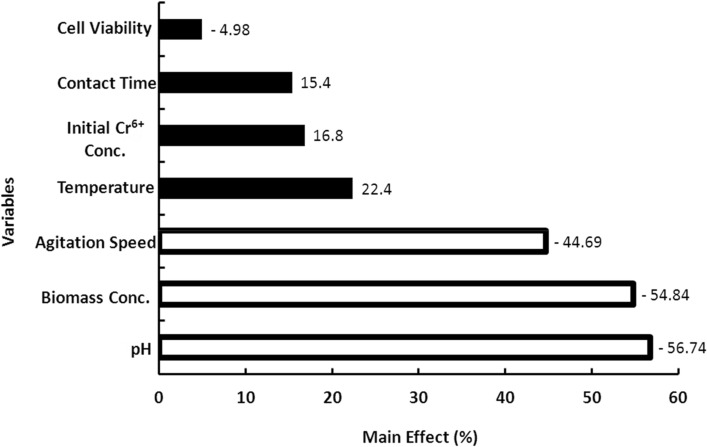
Microbial bioremediation of heavy metals-polluted industrial effluents has been adopted as one of the most effective eco-friendly tool to cope up with the harmful effects of metals. This study was designed to investigate the biosorption potential of marine actinomycetes isolated from the Alexandrian Mediterranean Seacoast, Egypt, with their potential use in metal remediation of industrial effluents. Among the nine marine actinomycetes isolates, Streptomyces rochei ANH showed the highest versatile metal resistance capability with MIC values of 125 mg/l for Cr and 60 mg/l for both Cd and Pb. Additionally, scanning electron micrographs showed complete disintegration of Cr-treated biomass compared with the control ones where spores remained intact and connected in long chains. The study also aimed to improve the percentage of Cr biosorption by S. rochei ANH biomass using the statistical designs of Plackett-Burman and Box-Behnken where up to 85% of Cr removal was recorded under the following conditions: pH (5), incubation temperature (30 °C), contact time (3 h), agitation speed (90 rpm), initial Cr concentration (50 mg/l) and living biomass concentration (10 mg/ml). The results also showed that the percentage of Cr biosorption by S. rochei ANH decreased gradually beyond these values. Moreover, the results revealed that the use of the biomass of S. rochei ANH is an effective biotechnological agent for the biological treatment of heavy metal-contaminated tannery effluent where the percentages of metal removal were in the following order: Ni (100%) ≥ Cu ≥ Mn ≥ Fe > Pb (95%) ≥ Cd > Cr (86%). Furthermore, the treated effluent exhibited a stimulating effect on the germination process of Lepidium sativum seeds. Therefore, the present study implies that S. rochei ANH can be considered a powerful candidate to mitigate hazardous heavy metals pollution from industrial effluents and improve the water quality for agricultural purposes.
微生物修复重金属污染的工业废水已被采用为应对金属危害的最有效环保工具之一。本研究旨在研究从埃及亚历山大地中海海岸分离的海洋放线菌的生物吸附潜力,及其在工业废水金属修复中的潜在用途。在 9 株海洋放线菌分离物中,链霉菌 ANH 表现出最高的广谱金属抗性能力,其 Cr 的 MIC 值为 125mg/l,Cd 和 Pb 的 MIC 值均为 60mg/l。此外,扫描电子显微镜照片显示,Cr 处理的生物量完全解体,而对照物中的孢子保持完整并以长链连接。该研究还旨在通过 Plackett-Burman 和 Box-Behnken 的统计设计来提高 S. rochei ANH 生物量对 Cr 的吸附百分比,在以下条件下记录到高达 85%的 Cr 去除率:pH(5)、孵育温度(30°C)、接触时间(3 小时)、搅拌速度(90rpm)、初始 Cr 浓度(50mg/l)和活生物质浓度(10mg/ml)。结果还表明,超过这些值后,S. rochei ANH 对 Cr 的吸附百分比会逐渐降低。此外,结果表明,S. rochei ANH 生物质的使用是一种有效的生物技术剂,可用于处理重金属污染的制革废水,金属去除率的顺序如下:Ni(100%)≥Cu(95%)≥Mn(90%)≥Fe(80%)>Pb(95%)≥Cd(80%)>Cr(86%)。此外,处理后的废水对萝卜种子的萌发过程表现出刺激作用。因此,本研究表明,S. rochei ANH 可以被认为是减轻工业废水中有害重金属污染并提高农业用水水质的有力候选物。