KTH Royal Institute of Technology, School of Chemistry, Biotechnology and Health, Science for Life Laboratory, Stockholm, Sweden.
State Key Laboratory of Genetic Resources and Evolution, Kunming Institute of Zoology, Chinese Academy of Sciences, Kunming, China.
Genome Biol Evol. 2021 Apr 5;13(4). doi: 10.1093/gbe/evab076.
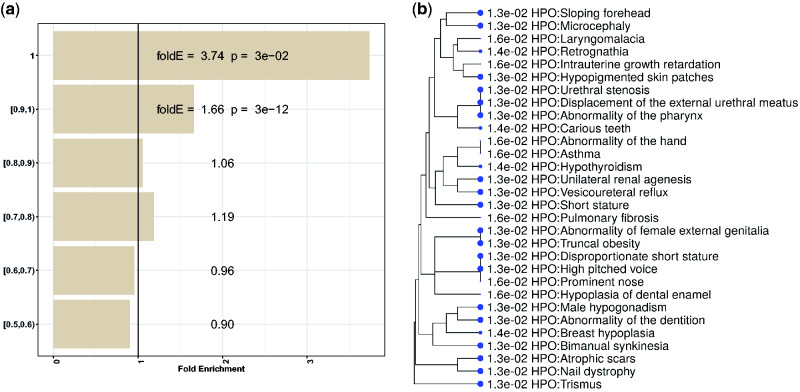
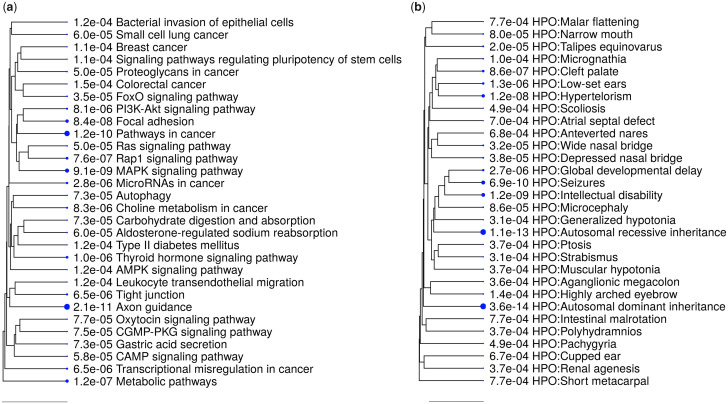
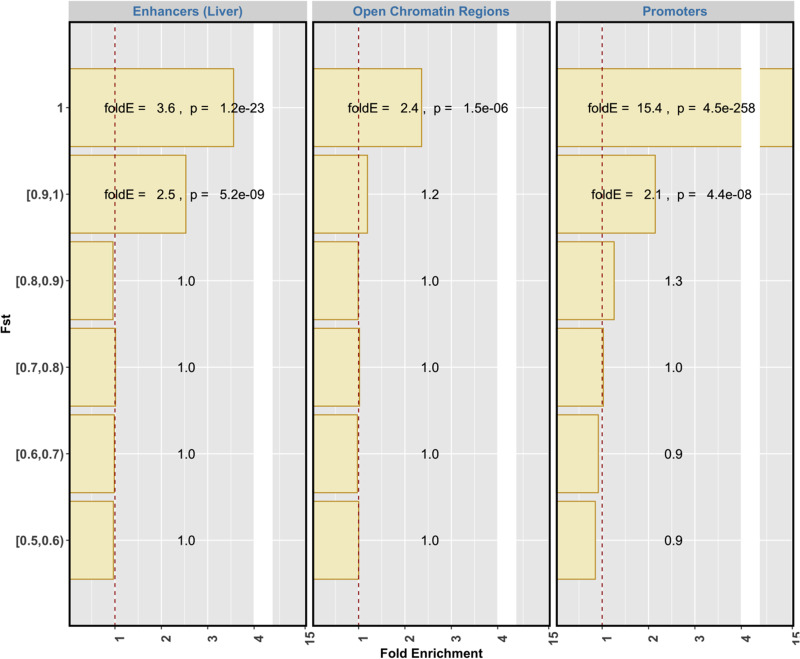
Research on the genetics of domestication most often focuses on the protein-coding exons. However, exons cover only a minor part (1-2%) of the canine genome, whereas functional mutations may be located also in regions beyond the exome, in regulatory regions. Therefore, a large proportion of phenotypical differences between dogs and wolves may remain genetically unexplained. In this study, we identified variants that have high allelic frequency differences (i.e., highly differentiated variants) between wolves and dogs across the canine genome and investigated the potential functionality. We found that the enrichment of highly differentiated variants was substantially higher in promoters than in exons and that such variants were enriched also in enhancers. Several enriched pathways were identified including oxytocin signaling, carbohydrate digestion and absorption, cancer risk, and facial and body features, many of which reflect phenotypes of potential importance during domestication, including phenotypes of the domestication syndrome. The results highlight the importance of regulatory mutations during dog domestication and motivate the functional annotation of the noncoding part of the canine genome.
驯化的遗传学研究通常集中在蛋白质编码外显子上。然而,外显子仅占犬基因组的一小部分(1-2%),而功能突变也可能位于外显子以外的调节区域。因此,狗和狼之间的大部分表型差异可能在遗传上仍无法解释。在这项研究中,我们确定了在犬基因组中狼和狗之间具有高等位基因频率差异(即高度分化的变体)的变体,并研究了它们的潜在功能。我们发现,高度分化变体在启动子中的富集程度明显高于外显子,并且这种变体在增强子中也有富集。鉴定出了几个富集途径,包括催产素信号、碳水化合物消化和吸收、癌症风险以及面部和身体特征,其中许多途径反映了在驯化过程中可能具有重要意义的表型,包括驯化综合征的表型。这些结果强调了在犬驯化过程中调节突变的重要性,并激发了犬基因组非编码部分的功能注释。