Cui Yuxin, Li Liting, Li Zhilei, Yin Jie, Lane Jane, Ji Jiafu, Jiang Wen G
Cardiff China Medical Research Collaborative, Cardiff University School of Medicine, Cardiff University, Heath Park, Cardiff, CF14 4XN, UK.
China-Japan Friendship Hospital, Yinghuayuan East Street, Beijing, 10029, China.
Cancer Cell Int. 2021 Apr 30;21(1):243. doi: 10.1186/s12935-021-01949-1.
S100A11 is a member of the S100 family of proteins containing two EF-hand calcium-binding motifs. The dysregulated expression of the S100A11 gene has been implicated in tumour metastasis. However, the role of S100A11 protein in tumour cell response to chemotherapeutic drugs has not been characterised.
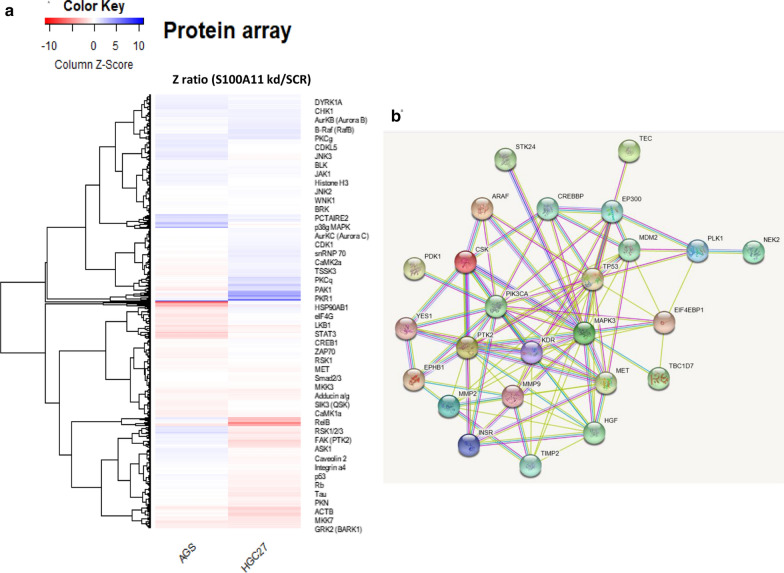
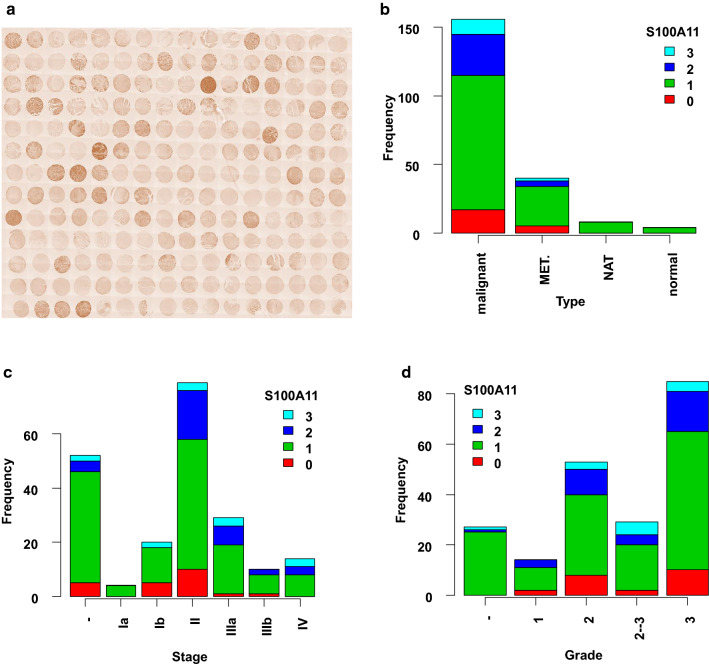
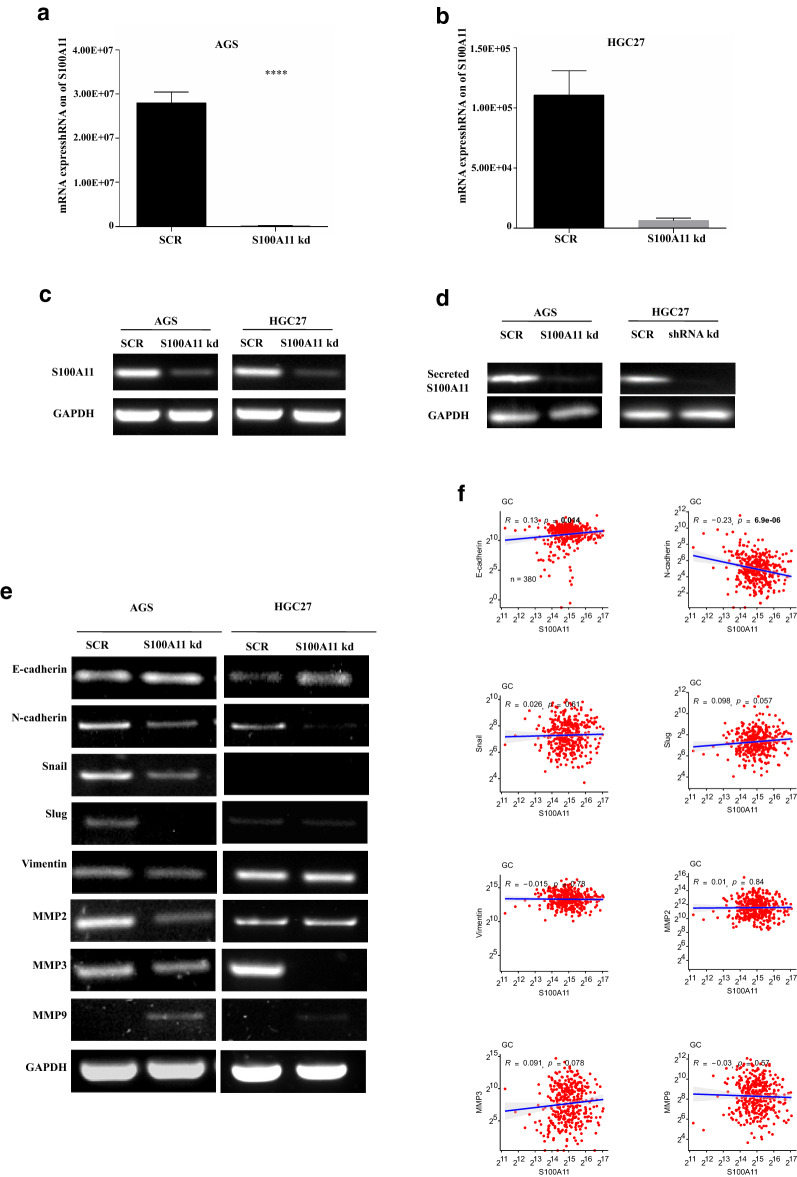
Transcript levels of S100A11 in gastric cancer were evaluated using an in-house patient cohort. Protein expression of S100A11 in gastric cancer was estimated by immunohistochemistry of a tissue microarray. The stable gastric cancer cell lines were established using lentiviral shRNA vectors. The knockdown of S100A11 was validated by qRT-PCR, PCR, and Western blot. The cellular function of S100A11 was estimated by assays of cell adhesion, migration, and invasion. The cell cytotoxic assay was performed to investigate the response to chemotherapeutic drugs. An unsupervised hierarchical clustering and principal component analysis (HCPC) was applied to unveil the dimensional role of S100A11 among all S100 family members in gastric cancer.
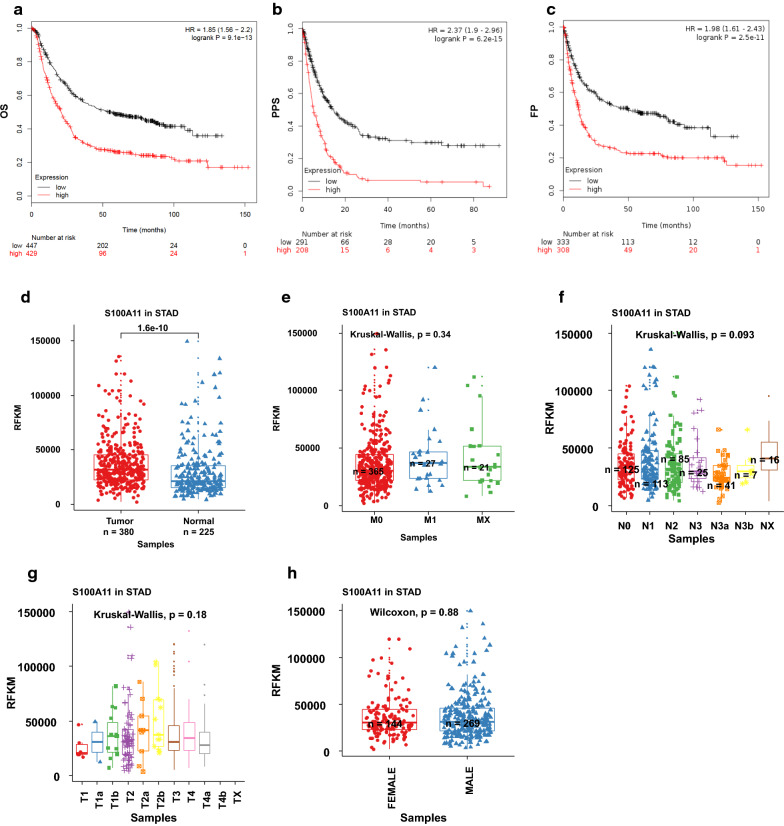
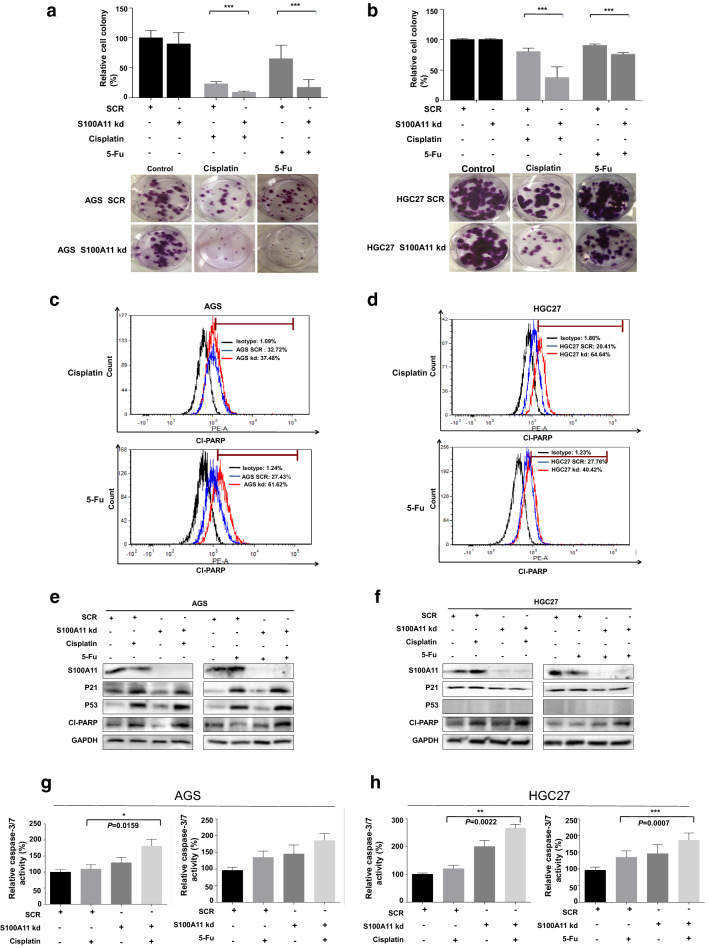
High expression of S100A11 is associated with poor survival of gastric cancer patients (p < 0.001, HR = 1.85) and is an independent prognostic factor of gastric cancer. We demonstrate that S100A11 plays its role as a tumour promoter through regulating the MMP activity and the epithelial-mesenchymal transition (EMT) process. The stable knockdown of S100A11 suppresses the metastatic properties of gastric cancer cells, which include enhancing cell adhesion, but decelerating cell migration and invasion. Furthermore, the knockdown of S100A11 gene expression dramatically induces the cellular response of gastric cancer cells to the first-line chemotherapeutic drugs fluoropyrimidine 5-fluorouracil (5-FU) and cisplatin.
The present study identifies S100A11 as a tumour promoter in gastric cancer. More importantly, the S100A11-specific targeting potentially presents dual therapeutic benefits by not only controlling tumour progression but also sensitising chemotherapeutic cytotoxic response.
S100A11是S100蛋白家族的成员,含有两个EF手型钙结合基序。S100A11基因的表达失调与肿瘤转移有关。然而,S100A11蛋白在肿瘤细胞对化疗药物反应中的作用尚未明确。
使用内部患者队列评估胃癌中S100A11的转录水平。通过组织芯片免疫组化估计胃癌中S100A11的蛋白表达。使用慢病毒shRNA载体建立稳定的胃癌细胞系。通过qRT-PCR、PCR和蛋白质印迹验证S100A11的敲低。通过细胞黏附、迁移和侵袭试验评估S100A11的细胞功能。进行细胞毒性试验以研究对化疗药物的反应。应用无监督层次聚类和主成分分析(HCPC)揭示S100A11在胃癌所有S100家族成员中的多维作用。
S100A11的高表达与胃癌患者的不良生存相关(p<0.001,HR=1.85),是胃癌的独立预后因素。我们证明S100A11通过调节MMP活性和上皮-间质转化(EMT)过程发挥肿瘤促进作用。S100A11的稳定敲低抑制胃癌细胞的转移特性,包括增强细胞黏附,但减缓细胞迁移和侵袭。此外,S100A11基因表达的敲低显著诱导胃癌细胞对一线化疗药物氟嘧啶5-氟尿嘧啶(5-FU)和顺铂的细胞反应。
本研究确定S100A11为胃癌中的肿瘤促进因子。更重要的是,靶向S100A11可能具有双重治疗益处,不仅可以控制肿瘤进展,还可以使化疗细胞毒性反应敏感化。