Wang Pengjie, Yu Jiaxin, Jin Shan, Chen Shuai, Yue Chuan, Wang Wenling, Gao Shuilian, Cao Hongli, Zheng Yucheng, Gu Mengya, Chen Xuejin, Sun Yun, Guo Yuqiong, Yang Jiangfan, Zhang Xingtan, Ye Naixing
College of Horticulture, Fujian Agriculture and Forestry University/Key Laboratory of Tea Science in Universities of Fujian Province, 350002, Fuzhou, China.
Shenzhen Branch, Guangdong Laboratory for Lingnan Modern Agriculture, Genome Analysis Laboratory of the Ministry of Agriculture, Agricultural Genomics Institute at Shenzhen, Chinese Academy of Agricultural Sciences, 518120, Shenzhen, China.
Hortic Res. 2021 May 1;8(1):107. doi: 10.1038/s41438-021-00542-x.
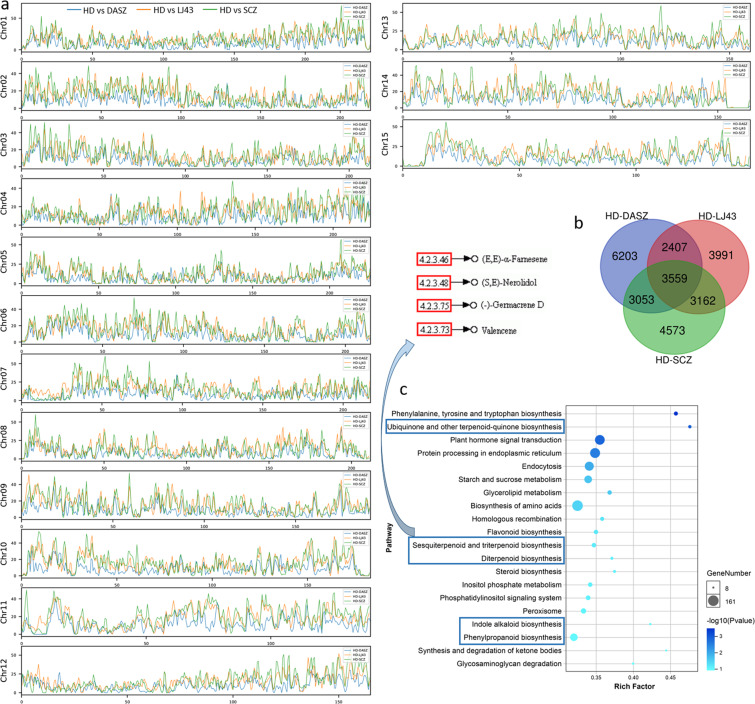
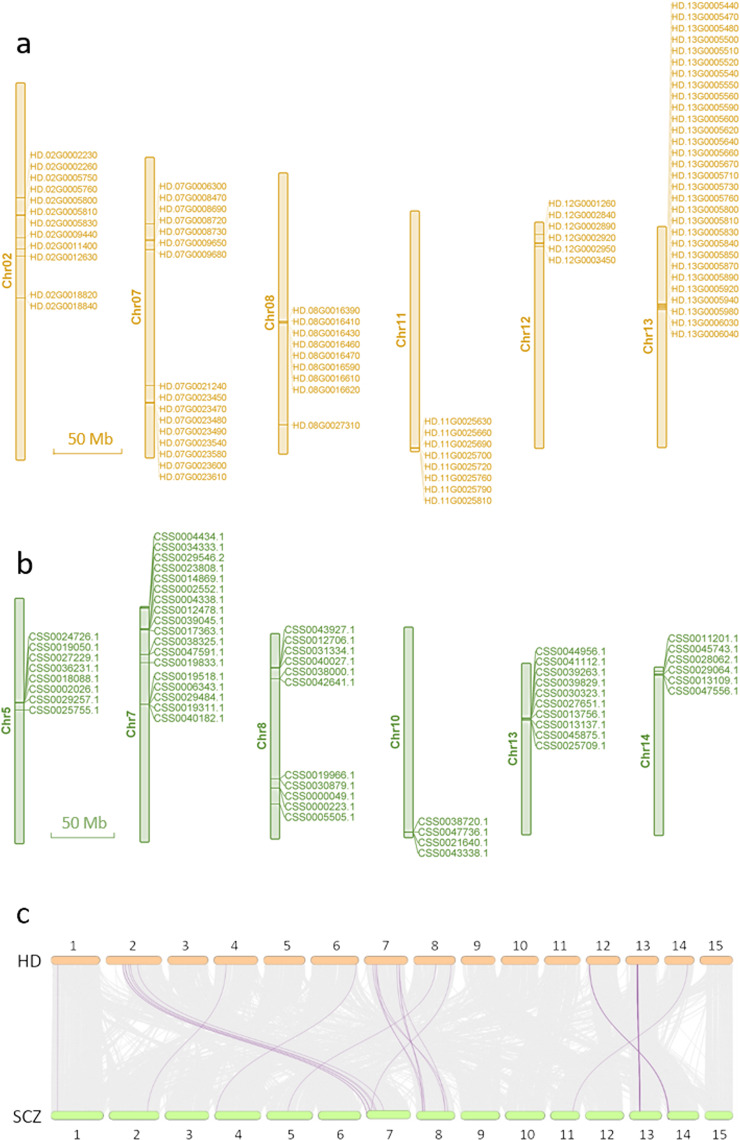
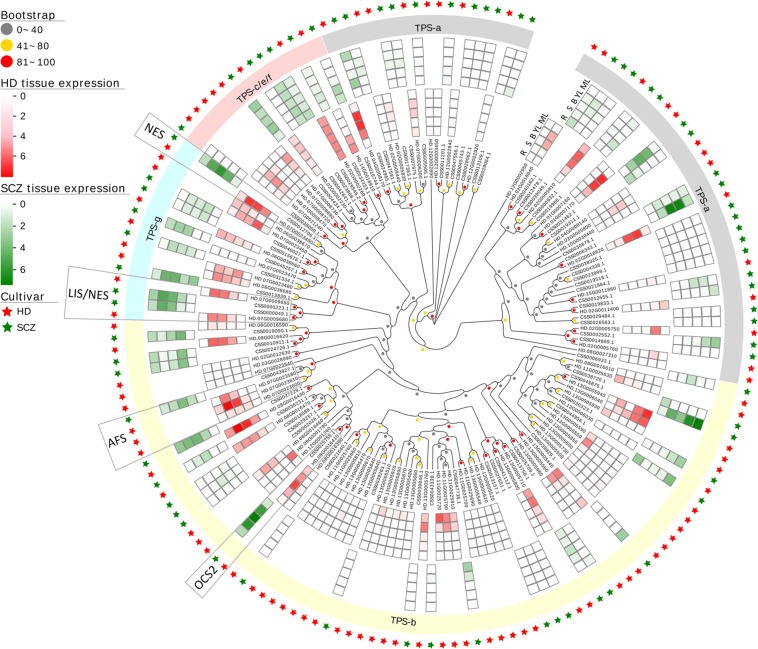
Tea plants (Camellia sinensis) are commercially cultivated in >60 countries, and their fresh leaves are processed into tea, which is the most widely consumed beverage in the world. Although several chromosome-level tea plant genomes have been published, they collapsed the two haplotypes and ignored a large number of allelic variations that may underlie important biological functions in this species. Here, we present a phased chromosome-scale assembly for an elite oolong tea cultivar, "Huangdan", that is well known for its high levels of aroma. Based on the two sets of haplotype genome data, we identified numerous genetic variations and a substantial proportion of allelic imbalance related to important traits, including aroma- and stress-related alleles. Comparative genomics revealed extensive structural variations as well as expansion of some gene families, such as terpene synthases (TPSs), that likely contribute to the high-aroma characteristics of the backbone parent, underlying the molecular basis for the biosynthesis of aroma-related chemicals in oolong tea. Our results uncovered the genetic basis of special features of this oolong tea cultivar, providing fundamental genomic resources to study evolution and domestication for the economically important tea crop.
茶树(Camellia sinensis)在60多个国家进行商业化种植,其鲜叶被加工成茶叶,而茶是世界上消费最广泛的饮品。尽管已经发表了几个染色体水平的茶树基因组,但这些基因组将两个单倍型合并在一起,忽略了大量可能是该物种重要生物学功能基础的等位基因变异。在此,我们展示了一个优良乌龙茶品种“黄旦”的染色体水平的单倍型组装,该品种以其高香气而闻名。基于两组单倍型基因组数据,我们鉴定出了大量的遗传变异以及与重要性状相关的相当比例的等位基因不平衡,包括与香气和胁迫相关的等位基因。比较基因组学揭示了广泛的结构变异以及一些基因家族的扩张,如萜烯合酶(TPSs),这可能有助于骨干亲本的高香气特征,为乌龙茶中香气相关化学物质的生物合成提供了分子基础。我们的结果揭示了这个乌龙茶品种特殊特征的遗传基础,为研究这种经济上重要的茶树作物的进化和驯化提供了基础基因组资源。