Felczak Magdalena M, Bowers Robert M, Woyke Tanja, TerAvest Michaela A
Department of Biochemistry and Molecular Biology, Michigan State University, East Lansing, MI, 48824, USA.
U.S. Department of Energy Joint Genome Institute, Lawrence Berkeley National Laboratory, Berkeley, CA, 94720, USA.
Biotechnol Biofuels. 2021 May 1;14(1):112. doi: 10.1186/s13068-021-01958-2.
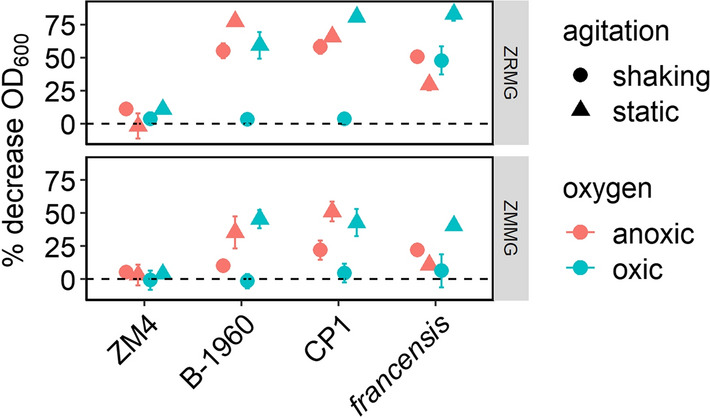
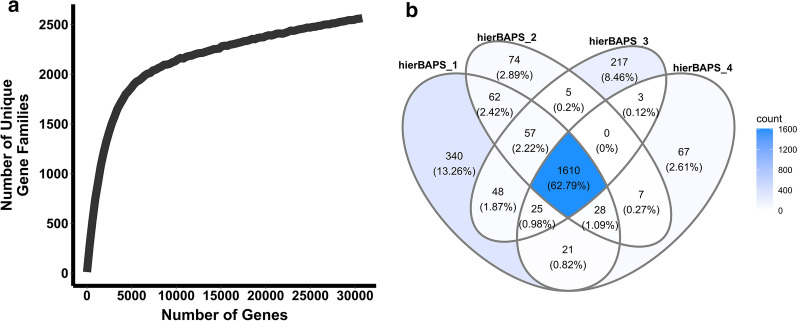
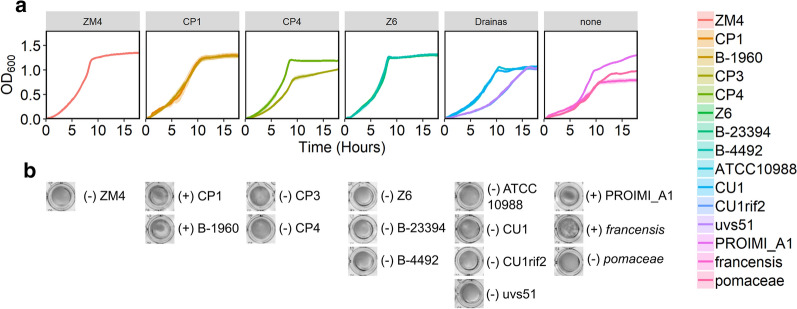
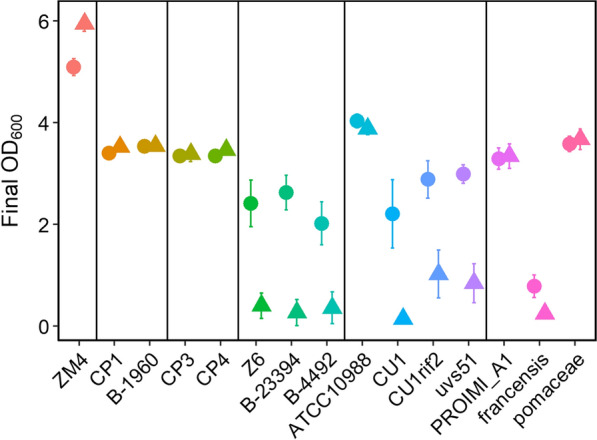
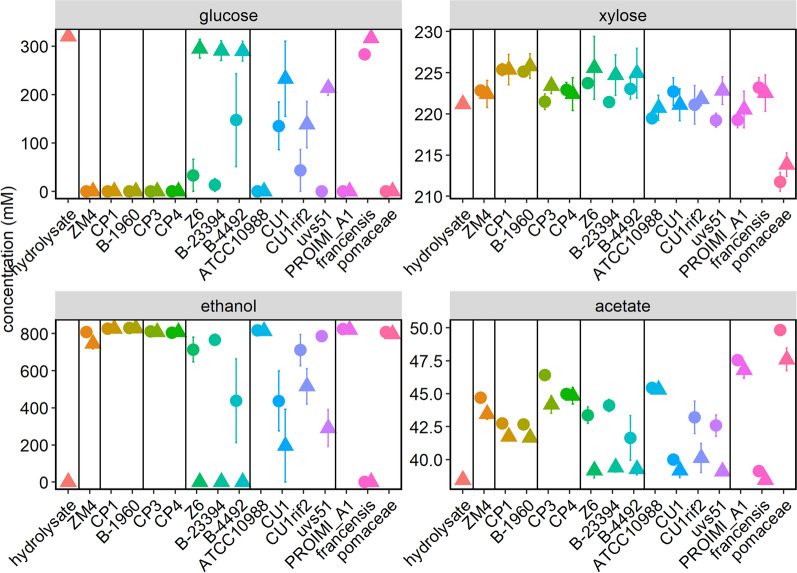
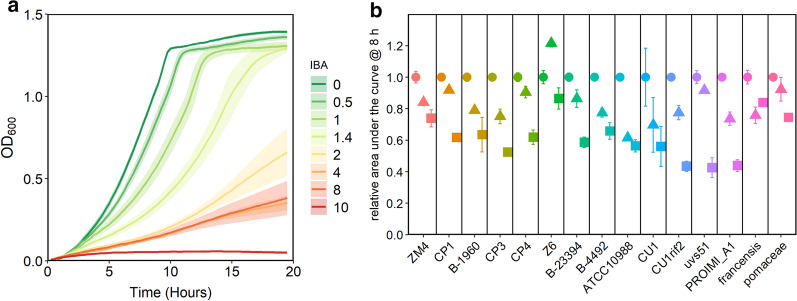
Zymomonas mobilis is an aerotolerant α-proteobacterium, which has been genetically engineered for industrial purposes for decades. However, a comprehensive comparison of existing strains on the genomic level in conjunction with phenotype analysis has yet to be carried out. We here performed whole-genome comparison of 17 strains including nine that were sequenced in this study. We then compared 15 available Zymomonas strains for their natural abilities to perform under conditions relevant to biofuel synthesis. We tested their growth in anaerobic rich media, as well as growth, ethanol production and xylose utilization in lignocellulosic hydrolysate. We additionally compared their tolerance to isobutanol, flocculation characteristics, and ability to uptake foreign DNA by electroporation and conjugation.
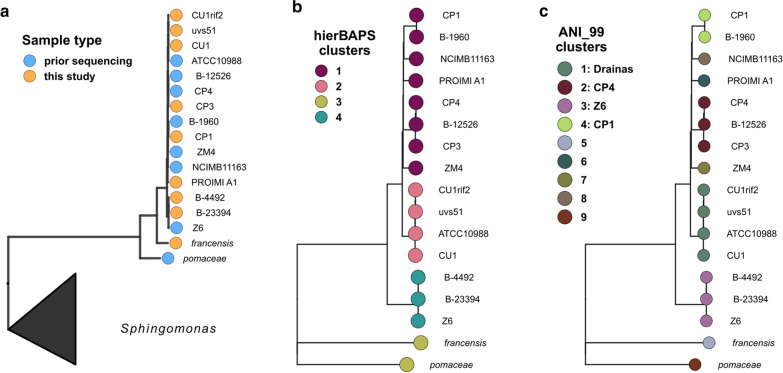
Using clustering based on 99% average nucleotide identity (ANI), we classified 12 strains into four clusters based on sequence similarity, while five strains did not cluster with any other strain. Strains belonging to the same 99% ANI cluster showed similar performance while significant variation was observed between the clusters. Overall, conjugation and electroporation efficiencies were poor across all strains, which was consistent with our finding of coding potential for several DNA defense mechanisms, such as CRISPR and restriction-modification systems, across all genomes. We found that strain ATCC31821 (ZM4) had a more diverse plasmid profile than other strains, possibly leading to the unique phenotypes observed for this strain. ZM4 also showed the highest growth of any strain in both laboratory media and lignocellulosic hydrolysate and was among the top 3 strains for isobutanol tolerance and electroporation and conjugation efficiency.
Our findings suggest that strain ZM4 has a unique combination of genetic and phenotypic traits that are beneficial for biofuel production and propose investing future efforts in further engineering of ZM4 for industrial purposes rather than exploring new Zymomonas isolates.
运动发酵单胞菌是一种耐氧α-变形菌,几十年来一直为工业目的进行基因工程改造。然而,尚未在基因组水平上结合表型分析对现有菌株进行全面比较。我们在此对17株菌株进行了全基因组比较,其中9株是本研究中测序的。然后,我们比较了15株可用的运动发酵单胞菌菌株在与生物燃料合成相关条件下的天然性能。我们测试了它们在厌氧丰富培养基中的生长情况,以及在木质纤维素水解物中的生长、乙醇生产和木糖利用情况。我们还比较了它们对异丁醇的耐受性、絮凝特性以及通过电穿孔和接合摄取外源DNA的能力。
基于99%的平均核苷酸同一性(ANI)进行聚类,我们根据序列相似性将12株菌株分为四个簇,而五株菌株未与任何其他菌株聚类。属于同一99%ANI簇的菌株表现出相似的性能,而不同簇之间观察到显著差异。总体而言,所有菌株的接合和电穿孔效率都很差,这与我们在所有基因组中发现的几种DNA防御机制(如CRISPR和限制修饰系统)的编码潜力一致。我们发现菌株ATCC31821(ZM4)的质粒图谱比其他菌株更多样化,这可能导致该菌株观察到独特的表型。ZM4在实验室培养基和木质纤维素水解物中的生长也是所有菌株中最高的,并且在异丁醇耐受性、电穿孔和接合效率方面位列前三。
我们的研究结果表明,菌株ZM4具有独特的遗传和表型特征组合,有利于生物燃料生产,并建议未来投入更多努力对ZM4进行工业用途的进一步工程改造,而不是探索新的运动发酵单胞菌分离株。