School of Biotechnology and Biomolecular Sciences, UNSW Sydney, Sydney, NSW, Australia.
School of Biotechnology and Biomolecular Sciences, UNSW Sydney, Sydney, NSW, Australia.
J Biol Chem. 2021 Jan-Jun;296:100731. doi: 10.1016/j.jbc.2021.100731. Epub 2021 Apr 30.
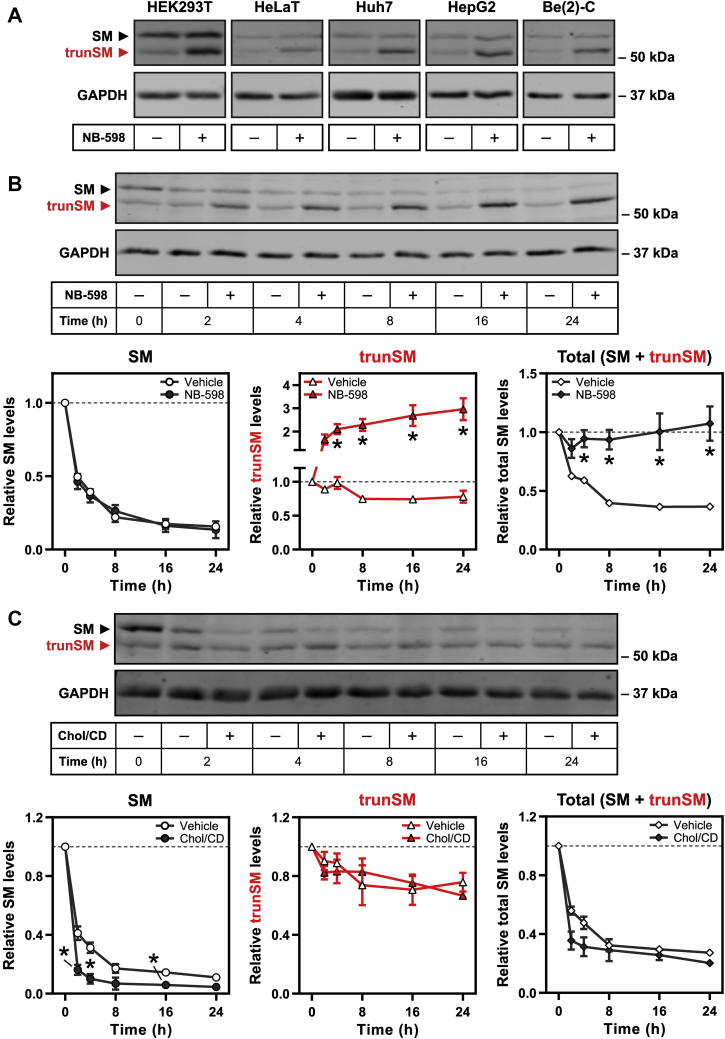
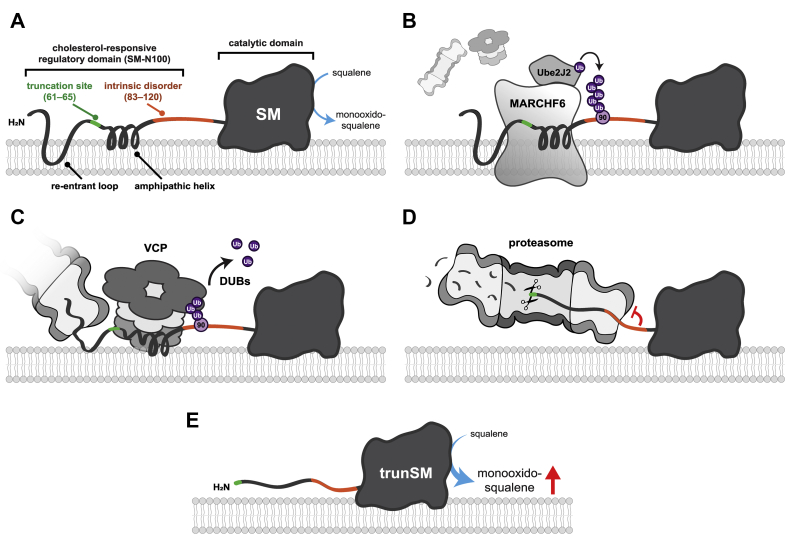
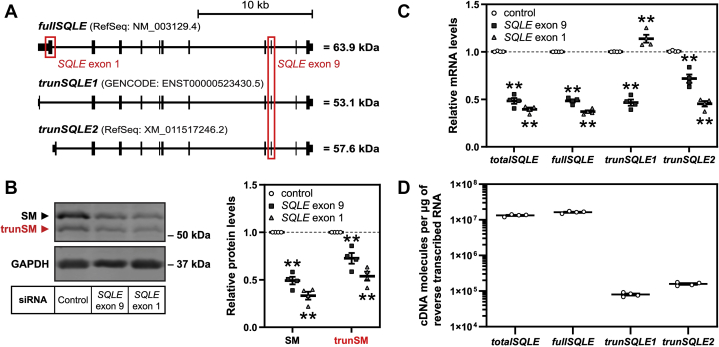
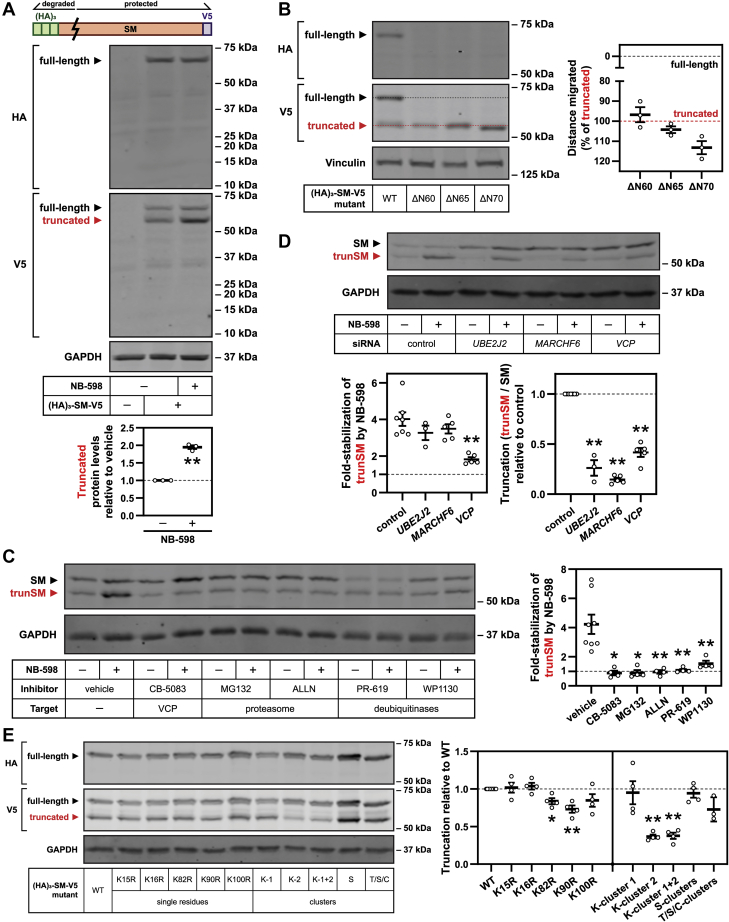
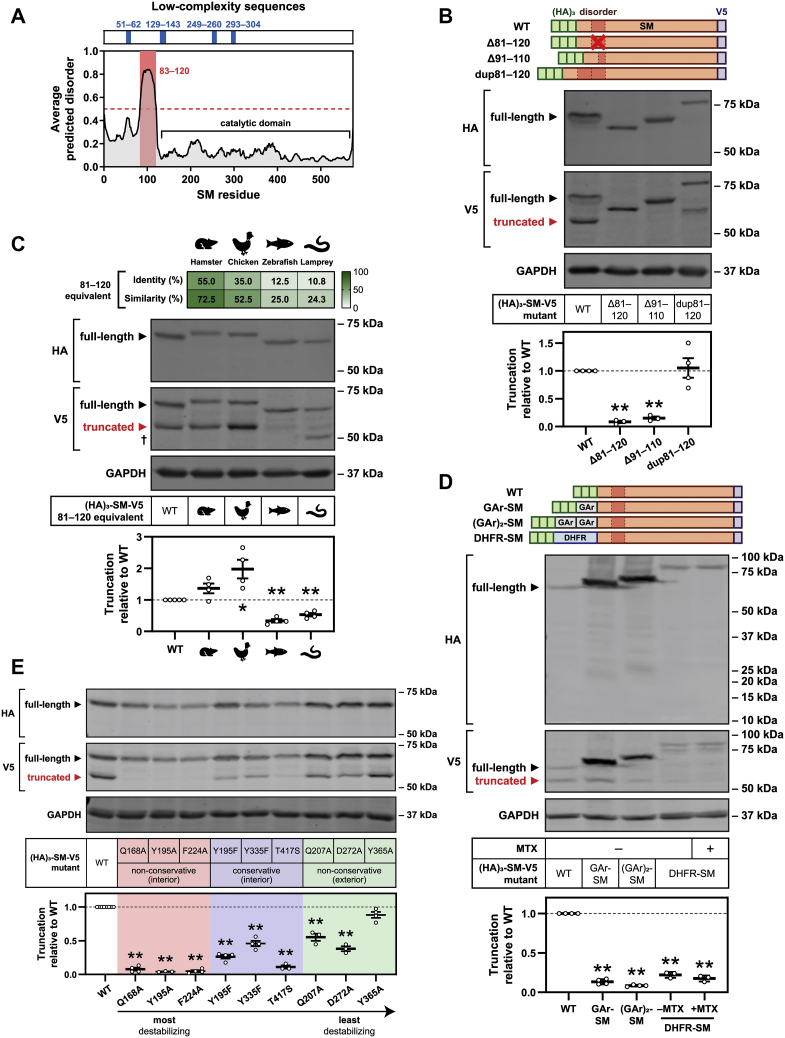
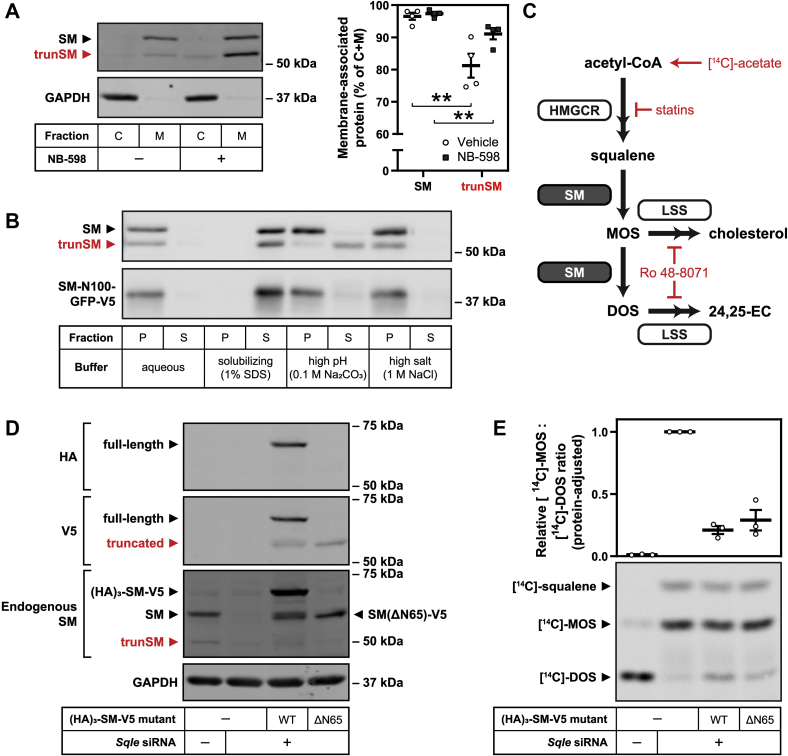
Squalene monooxygenase (SM, also known as squalene epoxidase) is a rate-limiting enzyme of cholesterol synthesis that converts squalene to monooxidosqualene and is oncogenic in numerous cancer types. SM is subject to feedback regulation via cholesterol-induced proteasomal degradation, which depends on its lipid-sensing N-terminal regulatory domain. We previously identified an endogenous truncated form of SM with a similar abundance to full-length SM, but whether this truncated form is functional or subject to the same regulatory mechanisms as full-length SM is not known. Here, we show that truncated SM differs from full-length SM in two major ways: it is cholesterol resistant and adopts a peripheral rather than integral association with the endoplasmic reticulum membrane. However, truncated SM retains full SM activity and is therefore constitutively active. Truncation of SM occurs during its endoplasmic reticulum-associated degradation and requires the proteasome, which partially degrades the SM N-terminus and disrupts cholesterol-sensing elements within the regulatory domain. Furthermore, truncation relies on a ubiquitin signal that is distinct from that required for cholesterol-induced degradation. Using mutagenesis, we demonstrate that partial proteasomal degradation of SM depends on both an intrinsically disordered region near the truncation site and the stability of the adjacent catalytic domain, which escapes degradation. These findings uncover an additional layer of complexity in the post-translational regulation of cholesterol synthesis and establish SM as the first eukaryotic enzyme found to undergo proteasomal truncation.
鲨烯单加氧酶(SM,也称为鲨烯环氧化酶)是胆固醇合成的限速酶,可将鲨烯转化为单氧鲨烯,并且在多种癌症类型中具有致癌性。SM 通过胆固醇诱导的蛋白酶体降解受到反馈调节,这取决于其脂质感应的 N 端调节结构域。我们之前鉴定出一种与全长 SM 丰度相似的内源性截短形式的 SM,但这种截短形式是否具有功能以及是否受全长 SM 相同的调节机制的影响尚不清楚。在这里,我们表明,截短的 SM 在两个主要方面与全长 SM 不同:它对胆固醇具有抗性,并且与内质网膜呈外周而不是整体关联。然而,截短的 SM 保留了完整的 SM 活性,因此是组成型激活的。SM 的截短发生在其内质网相关降解过程中,需要蛋白酶体,蛋白酶体部分降解 SM 的 N 端并破坏调节结构域内的胆固醇感应元件。此外,截短依赖于不同于胆固醇诱导降解所需的泛素信号。通过突变分析,我们证明 SM 的部分蛋白酶体降解依赖于截断位点附近的一个固有无序区域和相邻催化结构域的稳定性,该结构域逃避降解。这些发现揭示了胆固醇合成的翻译后调节的另一个复杂性,并确立了 SM 作为第一个被发现经历蛋白酶体截断的真核酶。