Dartmouth College, Hanover, NH, USA.
Department of Epidemiology, Geisel School of Medicine at Dartmouth, Lebanon, NH, USA.
Curr Environ Health Rep. 2021 Jun;8(2):71-88. doi: 10.1007/s40572-021-00312-w. Epub 2021 May 1.
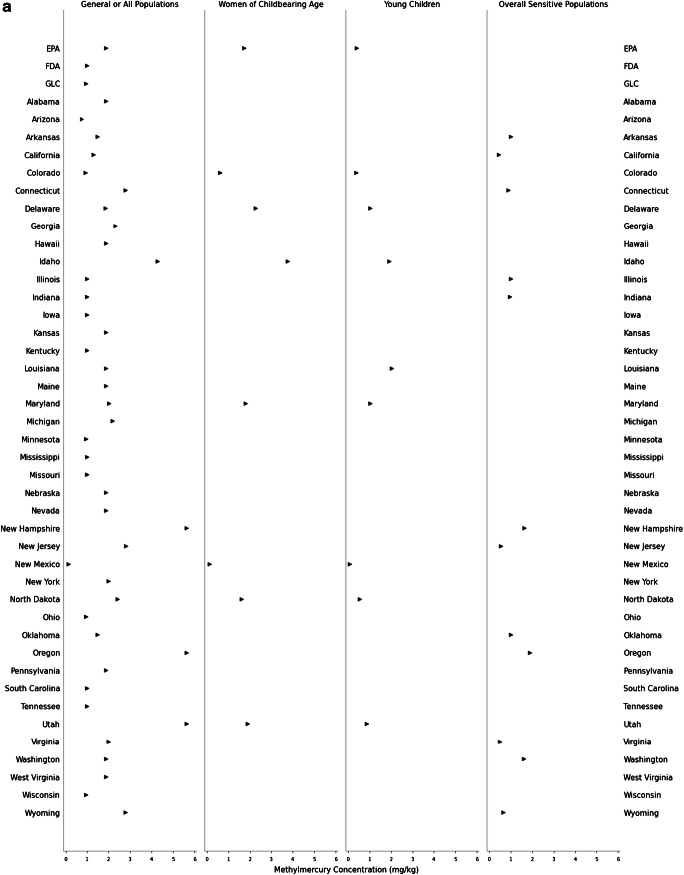
Our comparative analysis sought to understand the factors which drive differences in fish consumption advisories across the USA - including exposure scenarios (acute and chronic health risk, non-cancer and cancer health endpoints), toxicity values (reference dose, cancer slope factor, acute tolerance level), and meal size and bodyweight assumptions.
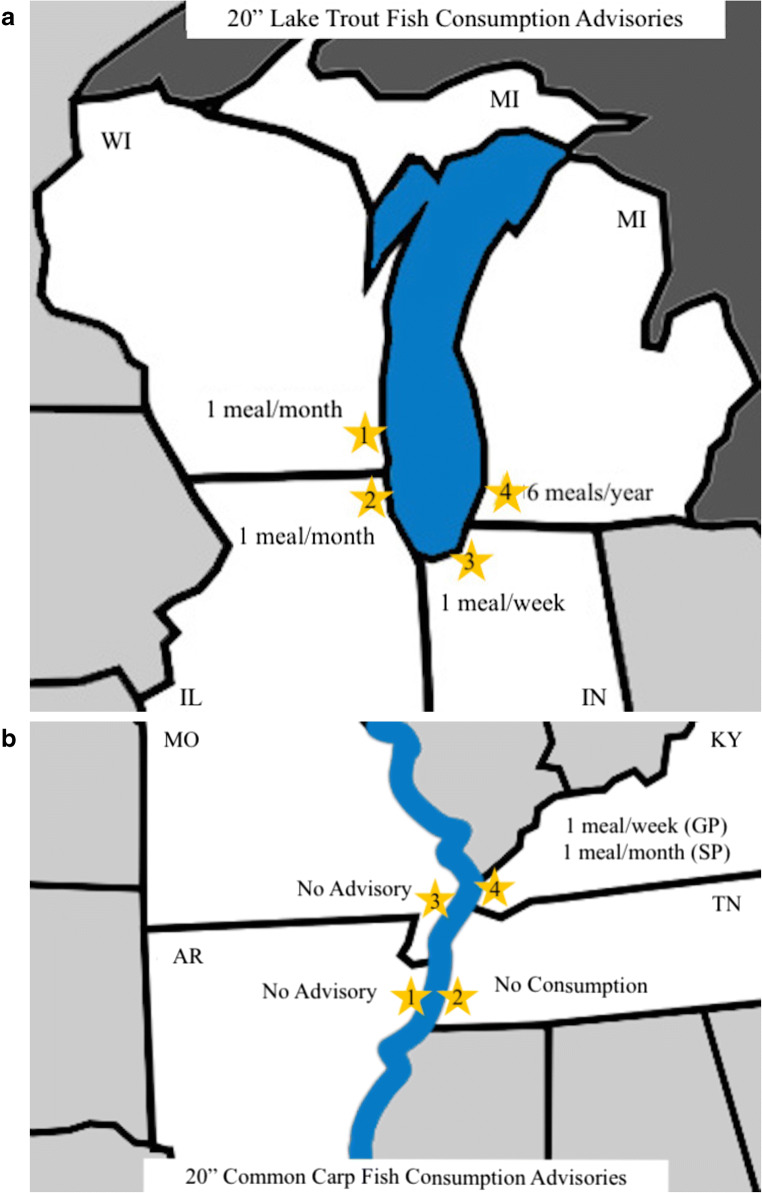
Fish consumption provides essential nutrients but also results in exposure to contaminants such as PCBs and methylmercury. To protect consumers from the risks of fish contaminants, fish consumption advisories are established, most often by state jurisdictions, to estimate the amount of a certain fish species a person could consume throughout their lifetime without harm. However, inconsistencies in advisories across the USA confuse consumers and undermine the public health goals of fish advisory programs. To date, no rigorous comparison of state and national fish consumption advisories has been reported. Our work identifies discrepancies in key assumptions used to derive risk-based advisories between US states, reflecting differences in the interpretation of toxicity science. We also address the implications for these differences by reviewing advisories issued by contiguous states bordering two waterbodies: Lake Michigan and the Lower Mississippi River. Our findings highlight the importance of regional collaboration when issuing advisories, so that consumers of self-caught fish are equipped with clear knowledge to make decisions to protect their health.
综述目的:我们的比较分析旨在了解美国各地鱼类消费建议存在差异的原因——包括暴露情景(急性和慢性健康风险、非癌症和癌症健康终点)、毒性值(参考剂量、癌症斜率因子、急性耐受水平)以及餐量和体重假设。
最近的发现:鱼类消费提供了必需的营养物质,但也会导致接触到污染物,如多氯联苯和甲基汞。为了保护消费者免受鱼类污染物的风险,通常由州政府制定鱼类消费建议,以估计一个人在其一生中可以食用一定数量的某种鱼类而不会受到伤害。然而,美国各地的建议不一致会使消费者感到困惑,并破坏鱼类咨询计划的公共卫生目标。迄今为止,尚未有关于州和国家鱼类消费建议的严格比较报告。我们的工作确定了美国各州在推导基于风险的建议时使用的关键假设存在差异,这反映了对毒理学科学的不同解释。我们还通过审查毗邻两个水体的两个州(密歇根湖和密西西比河下游)发布的建议来探讨这些差异的影响。我们的研究结果强调了在发布建议时进行区域合作的重要性,以便自己捕捞鱼类的消费者能够获得明确的知识,从而做出保护自己健康的决策。