Lim Sophie Soyeon, Ohn Jungyoon, Mun Je-Ho
Alfred Health, Melbourne, VIC, Australia.
Department of Dermatology, Seoul National University College of Medicine, Seoul, South Korea.
Front Med (Lausanne). 2021 Apr 15;8:637216. doi: 10.3389/fmed.2021.637216. eCollection 2021.
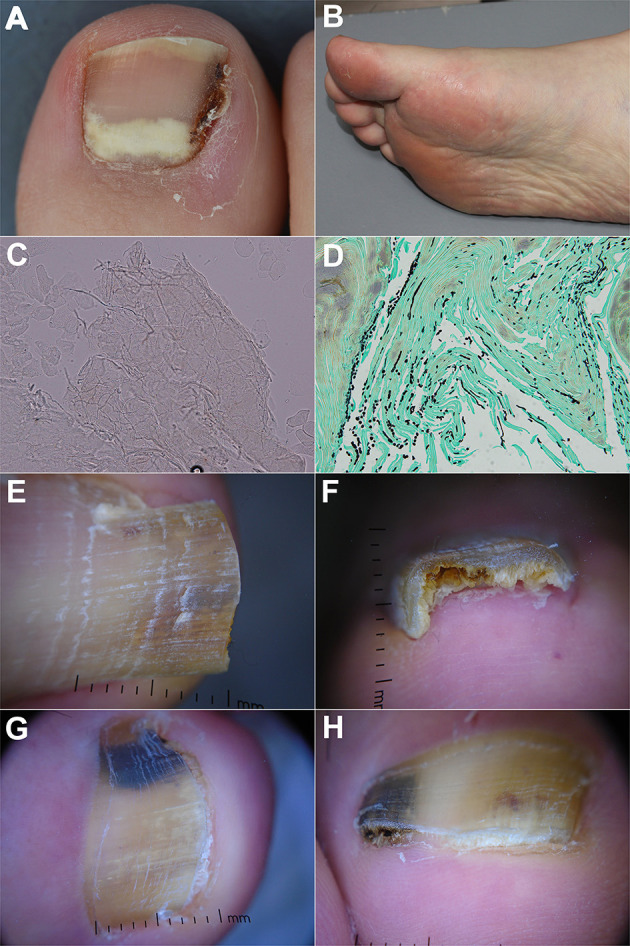
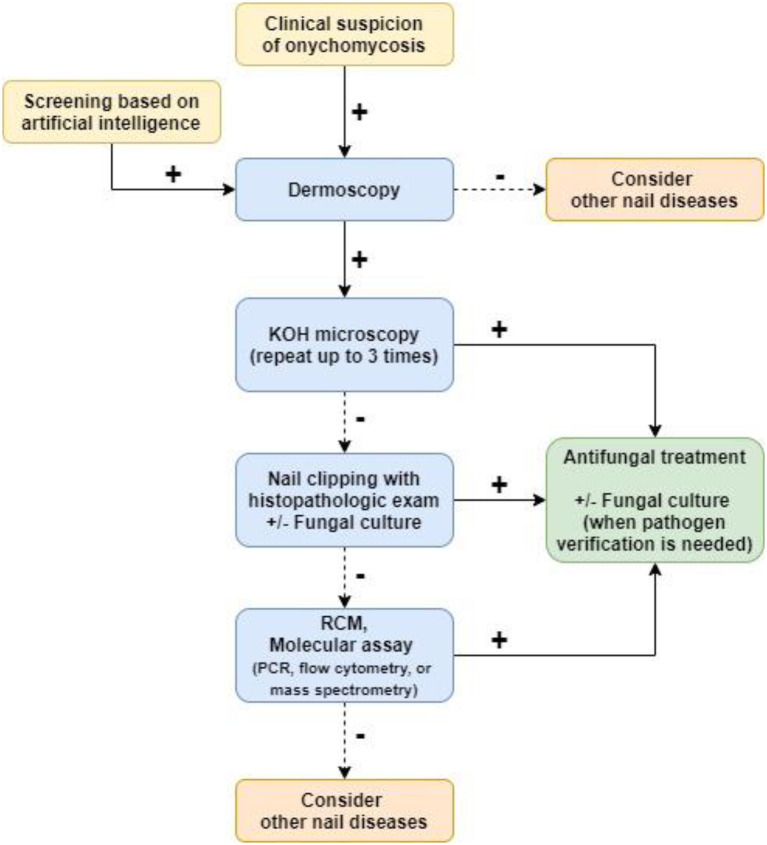
Onychomycosis is a common fungal nail infection. Accurate diagnosis is critical as onychomycosis is transmissible between humans and impacts patients' quality of life. Combining clinical examination with mycological testing ensures accurate diagnosis. Conventional diagnostic techniques, including potassium hydroxide testing, fungal culture and histopathology of nail clippings, detect fungal species within nails. New diagnostic tools have been developed recently which either improve detection of onychomycosis clinically, including dermoscopy, reflectance confocal microscopy and artificial intelligence, or mycologically, such as molecular assays. Dermoscopy is cost-effective and non-invasive, allowing clinicians to discern microscopic features of onychomycosis and fungal melanonychia. Reflectance confocal microscopy enables clinicians to observe bright filamentous septate hyphae at near histologic resolution by the bedside. Artificial intelligence may prompt patients to seek further assessment for nails that are suspicious for onychomycosis. This review evaluates the current landscape of diagnostic techniques for onychomycosis.
甲癣是一种常见的指甲真菌感染。准确诊断至关重要,因为甲癣可在人与人之间传播,并影响患者的生活质量。将临床检查与真菌学检测相结合可确保准确诊断。传统的诊断技术,包括氢氧化钾检测、真菌培养和指甲剪的组织病理学检查,可检测指甲内的真菌种类。最近开发了新的诊断工具,这些工具要么在临床上改善甲癣的检测,包括皮肤镜检查、反射共聚焦显微镜检查和人工智能,要么在真菌学方面,如分子检测。皮肤镜检查具有成本效益且非侵入性,使临床医生能够辨别甲癣和真菌性黑甲的微观特征。反射共聚焦显微镜检查使临床医生能够在床边以接近组织学分辨率观察明亮的丝状分隔菌丝。人工智能可能会促使患者对可疑甲癣的指甲寻求进一步评估。本综述评估了当前甲癣诊断技术的现状。